


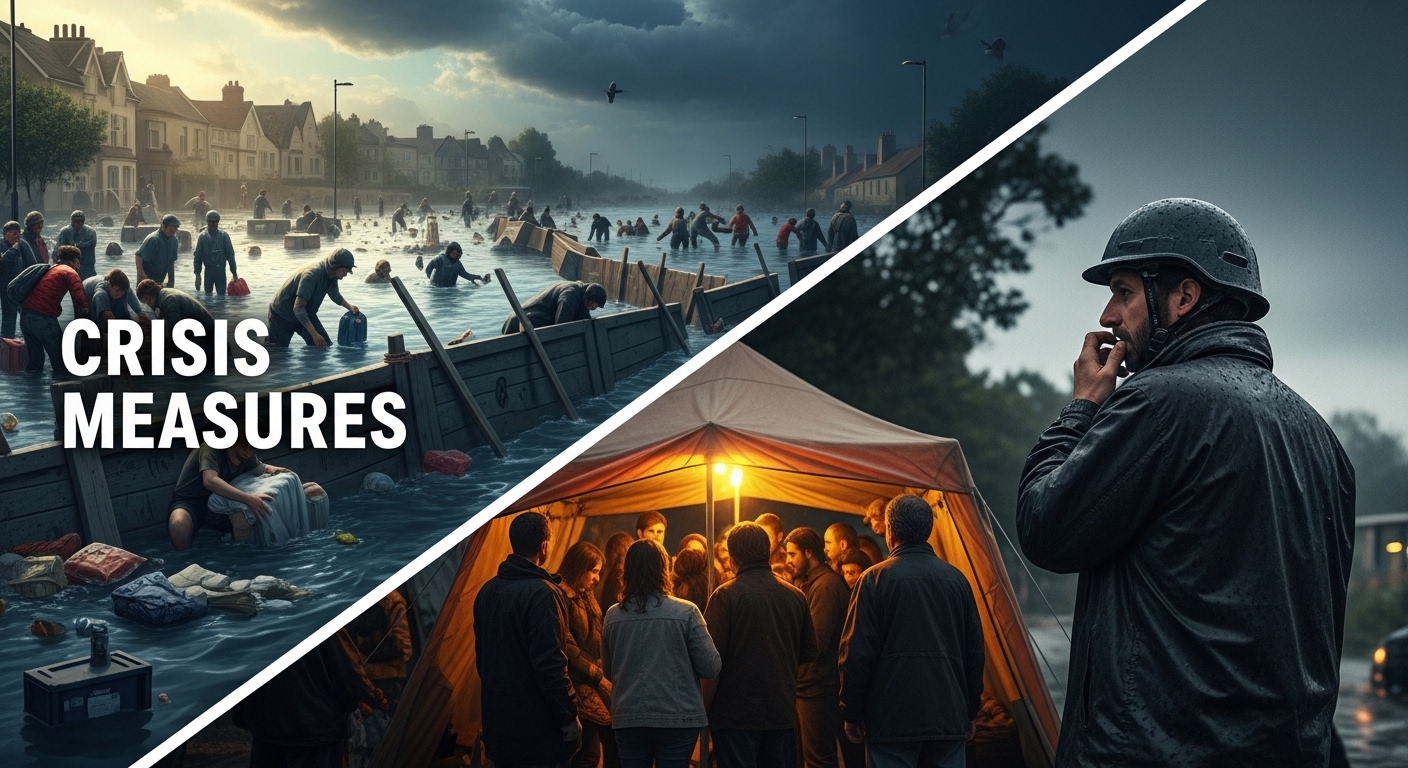
Crisis Measures or Long-Term Reset?
The recent threat posed by the International Energy Agency occurs when there is an urgent geopolitical tension. Through the war in the Middle East one of the most vital energy routes in the world,...

The recent threat posed by the International Energy Agency occurs when there is an urgent geopolitical tension. Through the war in the Middle East one of the most vital energy routes in the world, the Strait of Hormuz, the oil market of the world is this time again put to its greatest weakness, which is excessive reliance on supply chains that are otherwise vulnerable. The proposed solutions of the agency, remote work and lower speed limit, can seem insignificant, even inconvenient. However, more importantly, they bring out an even bigger question, do such measures provide short term quick fixes or indications of a long overdue change in the way the world uses energy?
To a naive individual, the suggestions are hard to digest. Requesting the populations to stay home or travel at lower velocities does not have the political weight of strategic reserves or diplomatic breakthroughs. But their power is just their immediacy. These measures can be executed overnight, unlike the difficult policy changes. Similar adjustments of demand side worked well in stabilizing consumption in the past crises like the oil shock of 1970s. Reduced speed limits will greatly decrease the amount of fuel burnt, and remote work will decrease the number of commuters to zero. During a crisis, when the supply routes are a physical bottleneck in nature, it becomes not only feasible but also essential to bring the demand down.
However, these actions differ radically by region. Remote working is now a feasible possibility to large proportions of the workforce in developed economies with robust digital infrastructure. On the contrary, informal economies and uneven access to digital devices in developing countries, where the informal sector is dominant, might find such suggestions unrelated to the reality. Physical presence is not an option to surviving in the case of millions of people. On the same note, the imposition of reduced speed limits necessitates governance capacity which is not available in all states. Such policies cannot be useful without proper monitoring and compliance among the citizens, hence it might be turned into a mere gesture, without the actual intervention.
Psychological aspect should also be taken into account. The acceptability of crisis-induced restrictions by people usually depends on the trust on government and the effectiveness of communication. In case the citizens feel that these measures are temporary, specific, and essential, they will tend to comply. However, when they are perceived as arbitrary or overly burdensome, easelback can soon be produced. The difficulty facing policymakers then is not necessarily to come up with effective responses but to frame them effectively.
In addition to the short-term crisis control, the recommendations of IEA unintentionally show a structural problem: the ongoing instability of a fossil fuel-based world economy. Every geopolitical shock, such as wars or sanctions, is reflected in global energy markets and leads to inflation, energy shortage, and economic uncertainty. Such tactics as work-offsite and lower speed limits, although reactive, are indicators of the more sustainable course. They highlight the possibility of behavioral modification to lead to the decrease in energy demand, an aspect that is frequently neglected in the context of supply-oriented policies.
The critics can claim that these measures are inadequate when it comes to a historical disruption. They are not wrong. They are not the remedies to the crisis, but the means of minimising the effects of the crisis. Nevertheless, their artificial rejection does not give due consideration to their compound impact. Even tiny cuts in consumption multiplied worldwide would purchase time – time to negotiate, time to pluralize the supply, and time to reposition strategically.
📄 POLICY WIRE WHITEPAPER PUBLISHED: PAKISTAN'S NATIONAL SECURITY POLICY PRIORITIES
👉 READ BY CLICKING HEREFinally, the energy security of geopolitical stability remains unseparable in the present oil shock. The suggestions of the International Energy Agency cannot be regarded as an independent discussion but as the continuation of a wider debate on resilience. The future of energy policy in the world will be determined by whether the world looks upon them as transient nuisances or as stepping stones to a more flexible and less oil-dependent future.
Even the slightest of modifications can be very weighty in the times of crisis. The true issue is whether the world is ready to welcome them, not only as a response to an emergency, but as the changes, that can bring long-term impact.
Author