


Cricket’s New Order: Ahmedabad’s Billions, Beyond the Boundary Lines
POLICY WIRE — Ahmedabad, India — In a nation where cricket isn’t merely a sport but an economic juggernaut—a cultural colossus, really—another fixture on the Indian Premier League calendar...

POLICY WIRE — Ahmedabad, India — In a nation where cricket isn’t merely a sport but an economic juggernaut—a cultural colossus, really—another fixture on the Indian Premier League calendar might seem just that: another fixture. But Friday’s emphatic demolition of Sunrisers Hyderabad by the Gujarat Titans wasn’t just a lopsided scorecard from the gargantuan Narendra Modi Stadium. No, it was a flashing neon sign illuminating the raw, unchecked financial power—and increasingly, the soft-power ambitions—of Indian cricket, stretching well beyond the Subcontinent’s immediate neighbors, even as it bypasses others entirely.
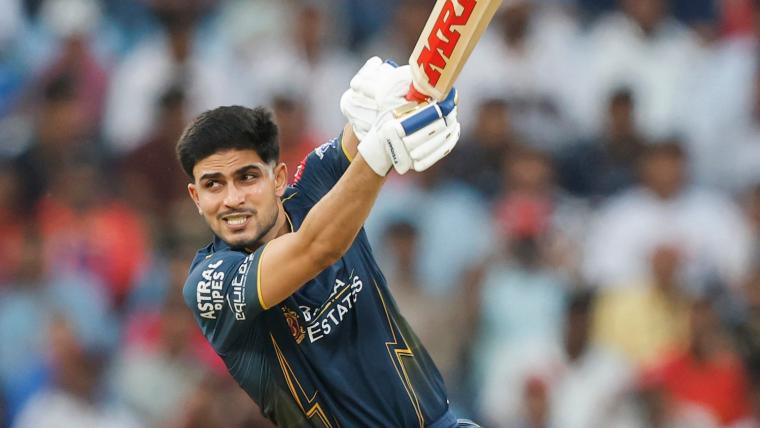
It began as many an IPL night does. Sunrisers Hyderabad skipper Pat Cummins, fresh from some recent, lucrative endorsement deals one presumes, won the toss and opted to bowl first. A strategic choice, perhaps, given Ahmedabad’s penchant for dew later in the evening, or maybe just a gut feeling; we’ll never truly know, will we? What followed was a disciplined, if not exactly explosive, batting performance from the Titans, who scratched their way to a respectable 168 for 5 in their allotted twenty overs. Sai Sudharsan, in particular, fought a commendable rearguard action, anchoring the innings when others seemed content to throw their wickets away in the relentless pursuit of quick runs.
But the real drama unfolded, predictably, under the dazzling stadium lights during the chase. And what a chase it wasn’t. Kagiso Rabada, a South African quick known for his pace and fiery demeanor, tore through the Sunrisers’ top order like a child through wrapping paper on Christmas morning. It was ruthless. By the time SRH had limped to a paltry 56 for 5 after just six overs, the game was—let’s be honest—over. Finished. A done deal. The win probability graphics, often more of a distraction than an insight, confirmed it: GT stood at an 85% chance of victory, a near mathematical certainty at that point. It’s almost anticlimactic when the statistics align so perfectly with the on-field butchery.
“The IPL isn’t just a league; it’s an industry. It’s a statement about where India stands on the global economic stage, and frankly, what we can achieve when we blend enterprise with passion,” declared Anurag Thakur, India’s Minister for Youth Affairs and Sports, a familiar face at such high-profile events. He often speaks with an almost paternal pride about the league’s success, a sentiment certainly backed by hard numbers. For context, reports suggest the Indian Premier League’s brand value soared to an estimated US$8.4 billion in 2023, a figure that undoubtedly grows with each passing season.
Yet, for all its boundless energy and billions, the league’s reach isn’t universally welcomed—or even accessible. The match, like many an IPL contest, had ‘No Broadcast’ in Pakistan. It’s a curious silence, isn’t it? A nation obsessed with cricket, geographically adjacent, yet systematically excluded from the sport’s biggest spectacle on its doorstep. “Our fans, they yearn for the quality, for the spectacle of it all, but geopolitics casts a long shadow over even our beloved sport,” lamented Salman Iqbal, a prominent Pakistani media proprietor. “It’s not just about broadcast rights; it’s about a disconnect that robs a generation of shared cricketing moments.” Because, really, isn’t sports supposed to transcend boundaries?
What This Means
This match, in its stark finality, isn’t just about the Gujarat Titans flexing their considerable cricketing muscle. It’s a microcosm of the larger geopolitical — and economic currents that swirl around South Asia’s favorite pastime. The IPL’s financial behemoth status allows India to project soft power and economic confidence, solidifying its position as a global sports hub. It attracts top talent from every corner of the cricketing world—Rabada, Cummins, Buttler, Rashid Khan (Afghanistan’s enigmatic spinner who turns out for GT), et al.—and offers them unparalleled remuneration. This pulls a vast swathe of the Muslim cricketing world, particularly players from Afghanistan and Bangladesh, into its orbit, cementing ties and allegiances.
But that ‘No Broadcast’ label for Pakistan isn’t just a technical detail; it’s a policy decision, one loaded with years of fraught relations and political antagonism. It underscores a fragmented regional identity, where the shared passion for cricket is ironically unable to bridge deeper chasms. While India’s cricketing capital—and therefore, economic clout—grows seemingly unbound, this deliberate media blackout means Pakistani fans are increasingly alienated from the very game that binds them to their South Asian heritage. It’s an interesting tactic in what can only be described as an evolving global chessboard, isn’t it? The spectacle continues, of course, but for some, it plays out behind a digital iron curtain.