


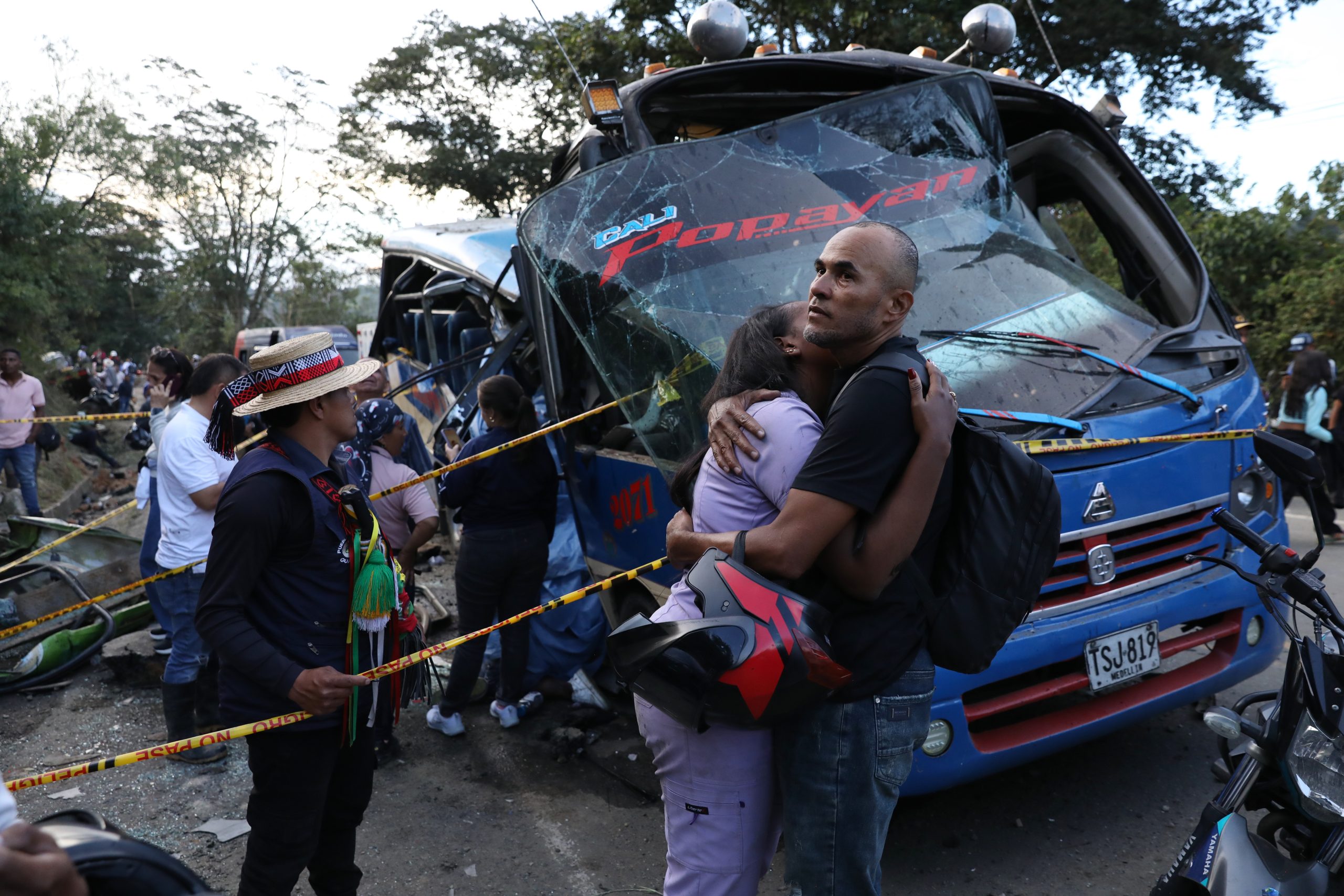
Colombia’s Unending Echo: Peace Talks Fade as Civilian Agony Mounts
POLICY WIRE — Bogotá, Colombia — The faint hum of machinery has long been the soundtrack of progress, of development. But across swaths of rural Colombia, the prevailing sound isn’t an engine...

POLICY WIRE — Bogotá, Colombia — The faint hum of machinery has long been the soundtrack of progress, of development. But across swaths of rural Colombia, the prevailing sound isn’t an engine of prosperity. No, it’s the whimper of displaced children, the guttural thud of conflict, the hollow ache of broken promises.
While official narratives sometimes pivot to the complexities of peace talks, for ordinary Colombians, 2023 was anything but a tranquil chapter. Last year marked the most brutal period for civilians in over a decade, a harsh dose of reality delivered by the International Committee of the Red Cross (ICRC). It wasn’t supposed to be like this. After the 2016 accord with the FARC—that supposed epoch-defining moment—many thought the worst was behind them. Foolish, isn’t it, to think a signature could erase generations of blood feuds?
Because, despite the pomp and circumstance of government-led negotiations with various armed groups—from the ELN to reconfigured FARC factions and others just looking for a slice of the illicit economy—civilians became the ultimate, unwitting pawns. You’ve got families torn from their ancestral lands. Kids denied an education because gunmen patrol their school routes. It’s an endless, insidious loop. The government’s ‘Total Peace’ agenda? More like ‘Total Pain’ for too many folks trying to scrape by.
“It’s a stark reminder that even as headlines shift, the ground truth for millions remains brutal,” noted Ana María Gómez, head of the ICRC’s Colombia delegation, speaking from a recent humanitarian outreach mission. “The promises of peace don’t often filter down to those caught in the crossfire. For them, every day is a gamble, — and the stakes are life itself.” Her frustration? Palpable.
This isn’t some distant memory, a history lesson; it’s right now. And it isn’t just about bullets — and bombs, though there’s plenty of that. It’s about insidious control, extortion, forced recruitment, and the systemic breakdown of any semblance of civilian life. Consider the silent epidemic of mental health issues—children waking up to nightmares, adults battling a relentless despair. These are wounds that won’t show up on a casualty list, but they’re deep. The ICRC reports over 7,000 cases of severe international humanitarian law violations just in 2023. Seven thousand, — and that’s only what they could document.
“We’re absolutely committed to securing peace, but these are deeply entrenched conflicts, layered with narcotics, illegal mining—you name it. It’s not a switch you can just flip off,” offered Minister of Interior Luis Fernando Velasco, responding to criticism of the administration’s strategy. He’s not wrong about the complexity, of course. But that complexity, from a street-level view, looks an awful lot like inaction. Or maybe, more cynically, calculated neglect.
But the reverberations of conflict in nations like Colombia don’t just stay within their borders. Instability in a resource-rich nation—especially one situated on critical shipping routes—has a way of unsettling global commodity markets and drawing in unwanted geopolitical players. Imagine the ripple effect. When Colombia stumbles, so too does a chunk of the regional stability. It mirrors, in some painful ways, the struggle seen in other conflict zones, places like Lebanon, where ongoing instability means youth education dries up amidst a regional firestorm. It’s that grim global constant: civilians always get the blunt end of the stick.
It gets worse. Think about how these patterns repeat themselves elsewhere. You look at areas in Pakistan’s Balochistan province, or parts of rural Afghanistan—not the same kind of conflict, no, but the same suffocating pressure on non-combatants, caught between state forces, insurgents, criminal enterprises. People just trying to exist, caught in an unending game of strategic power grabs they didn’t sign up for. Their lives, their futures, evaporate in the shadow of someone else’s political calculus. The faces change, the flags differ, but the despair, it’s pretty universal.
What This Means
The ICRC report, dry as its figures might be, paints a dire picture of policy failure in Colombia. This isn’t simply a bump in the road for the ‘Total Peace’ agenda; it’s a gaping crater. Politically, President Petro’s administration faces increasing scrutiny. Their negotiation strategy, lauded as ambitious, now looks dangerously naive when confronted with hardening realities on the ground. Economically, prolonged conflict in key agricultural and mining regions disrupts supply chains, discourages investment (both domestic and foreign), and exacerbates rural poverty. It directly impedes efforts to formalize the economy and generate legal opportunities, leaving many vulnerable to the allure of illegal groups. Long-term, this escalating civilian harm risks eroding the delicate social fabric further, making any eventual peace, should it ever truly arrive, a shallow, fractured thing. It’s an economic drag, a social catastrophe, — and a profound failure of the state to protect its most vulnerable. The international community, accustomed to declarations of progress, ought to take a harder look. What are we truly celebrating, when so many are suffering so deeply?