


Collision Course: Gaza Strike’s Ripple Effect Challenges Military Narratives
POLICY WIRE — Tel Aviv / Gaza City — “No interest in targeting him.” It’s a line you hear often from military spokesmen after a strike goes a bit sideways. But when ‘him’ turns out to be a...

POLICY WIRE — Tel Aviv / Gaza City — “No interest in targeting him.” It’s a line you hear often from military spokesmen after a strike goes a bit sideways. But when ‘him’ turns out to be a high-ranking Hamas political leader’s kid, seriously banged up in a Gaza incident, those assurances begin to sound… thin. Real thin.
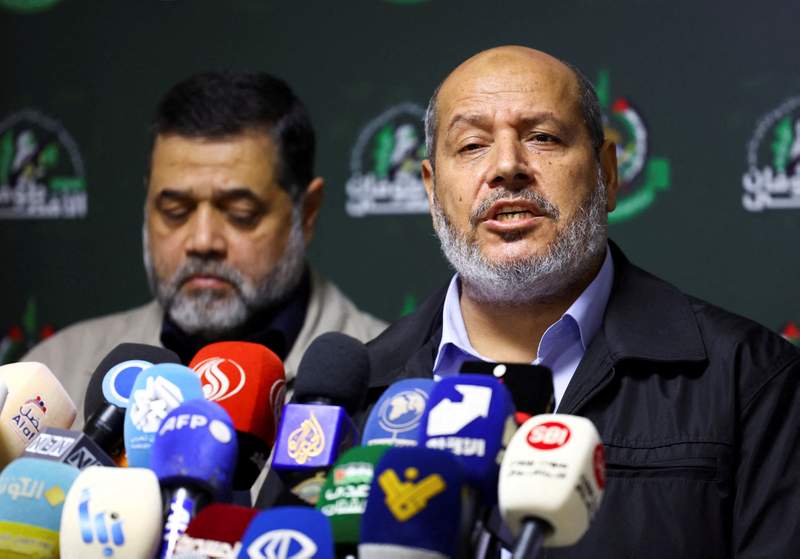
Because that’s exactly what happened this week. Reports from the battered Gaza Strip confirm that a son of senior Hamas political bureau member Khalil al-Hayya sustained serious injuries. Initial statements from the Israeli military quickly surfaced, asserting they had absolutely no intention of specifically hitting Al-Hayya’s kin. But the fog of war, it seems, has a way of obscuring convenient truths, doesn’t it?
It’s a sticky situation, one that’s getting harder to manage with each passing day in that perpetual pressure cooker of a territory. The Israeli military insists their operational calculus doesn’t consider family ties; it’s all about disabling terror assets, pure and simple. Or so they say. A source within the Israel Defense Forces (IDF), speaking off the record due to the sensitive nature of operations, told Policy Wire, “We engage targets based on intelligence directly related to security threats. The collateral presence of a family member, while regrettable, isn’t something we prioritize over operational necessity when a clear threat exists.” They always manage to tie it back to “threats,” don’t they?
And yet, such incidents — regardless of intent — resonate like a thunderclap across the region, especially in the Muslim world. They don’t just amplify narratives of civilian suffering; they harden them into concrete grievances. From Islamabad to Istanbul, images and news like this fuel public outrage and complicate the already fragile diplomatic tightropes governments must walk. It’s not just about a missile strike anymore; it’s about a constant, grinding erosion of trust.
This particular incident puts the spotlight on the relentless, ugly calculus of urban conflict, where precision is an aspirational myth more often than a grim reality. Independent monitoring groups routinely highlight this disconnect. For instance, according to data compiled by the United Nations Office for the Coordination of Humanitarian Affairs (OCHA), civilian casualties in Gaza have consistently dwarfed combatant deaths during recent flare-ups, often at a ratio of 5:1 or higher in certain operations. That’s a brutal math equation, no matter how you spin it.
Back in Gaza, official Palestinian reaction was swift and, predictably, furious. “They say ‘no interest’ but their bombs speak a different language,” retorted Bassem Naim, a senior official in the Hamas political department. “This is a clear message to our leadership: that no one is safe. It’s part of a broader policy of collective punishment and terror meant to break our will.” It’s a familiar refrain, one heard far too often in that corner of the world.
But the consequences stretch beyond the immediate confines of the Gaza Strip. Think about countries like Pakistan, often caught between their domestic public’s impassioned support for the Palestinian cause and their intricate, evolving foreign policy interests. Such events force their hand, demanding vocal condemnation — and sometimes even more tangible, though symbolic, actions. Pakistan’s strategic thinkers, already navigating choppy regional waters, are continuously looking for ways to bolster their position. A New Era in Pakistan–China Maritime Security, for instance, underscores Islamabad’s ongoing recalibration of alliances in the face of persistent geopolitical friction. Every flashpoint in Gaza sends tremors right through these regional alignments.
What This Means
This episode, seemingly minor in the grand scheme of an ongoing conflict, packs a serious punch. Politically, it complicates any whispers of de-escalation. How do you negotiate with sincerity when military actions appear to target, even if inadvertently, the very families of those you’d be negotiating with? It casts a long shadow over the credibility of military claims, eroding confidence among international observers and amplifying calls for more robust accountability. Economically, prolonged instability and continued incidents only further destabilize an already teetering Palestinian economy, which in turn necessitates more humanitarian aid—an expensive band-aid for an untreated wound. But this constant tension? It’s not just about humanitarian costs. It’s also a constant drain on international diplomatic resources, pushing other pressing global issues further down the priority list. And frankly, it hardens the divisions, making any long-term resolution feel impossibly distant. The narrative shift, from ‘surgical strike’ to ‘targeting leadership’s children,’ no matter how much the military tries to reframe it, sticks. And that, folks, is a problem that won’t just blow over.