


Gaza’s Unyielding Echo: Another Strike, Another Scar on the Global Conscience
POLICY WIRE — Gaza City, Palestine — The grim arithmetic unfolded as it always does. Three more lives extinguished, dozens more bearing the fresh imprints of a conflict that seems perpetually in...

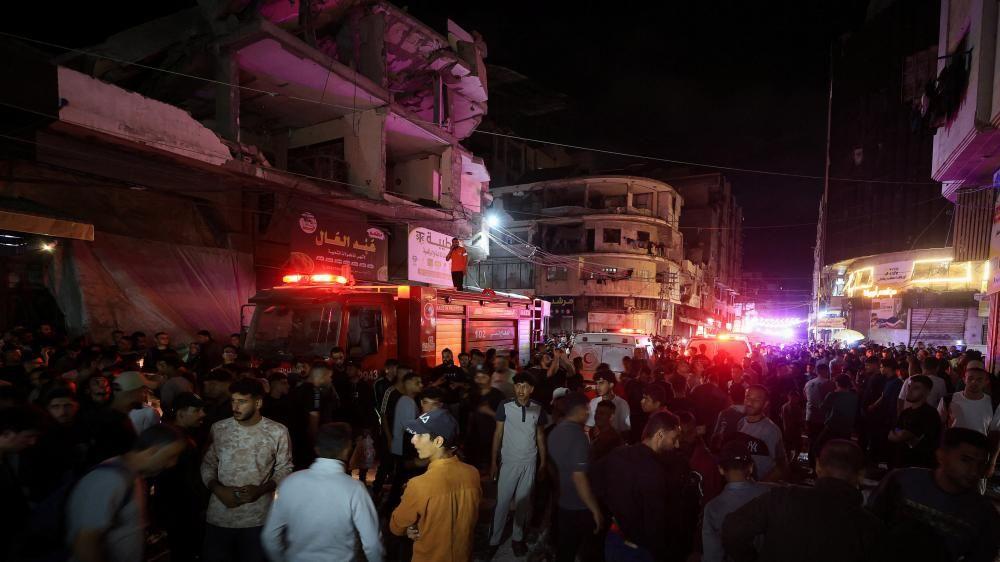
POLICY WIRE — Gaza City, Palestine — The grim arithmetic unfolded as it always does. Three more lives extinguished, dozens more bearing the fresh imprints of a conflict that seems perpetually in motion—a brutal, cyclical waltz between aggression and despair. You’d think, after so many iterations, the world would react with something beyond the ritualistic hand-wringing. But today, a fresh crater in Gaza City’s urban sprawl, amidst the familiar ruins, spoke volumes about the globe’s jaded sensibilities.
It wasn’t a seismic shift in the region’s perpetual tug-of-war. It wasn’t even the deadliest day this week. Yet, medics and local witnesses, their voices hoarse from recounting tragedy, confirmed the Israeli strike ripped through what they identified as residential structures, turning a Wednesday morning into another vignette of terror. Three souls, unquantifiable in their individual impact, vanished. Dozens more, some critically, will carry the physical — and psychological scars for years to come. And that’s if they’re lucky enough to survive the precarious healthcare infrastructure.
Because that’s the rub, isn’t it? The sheer, almost mechanical rhythm of it all. It’s a backdrop, an unholy symphony of destruction that barely registers above the white noise of other global crises for most. But for those caught in its unrelenting snare, it’s everything. Every single explosion shatters more than just glass; it splinters trust, obliterates nascent hopes, and cements a narrative of inescapable hardship.
The Israeli military, naturally, offered its standard rationale. "Our operations are surgically precise, aimed squarely at terrorist infrastructure and operatives embedded within civilian areas," stated Brigadier General Amit Sarusi, a spokesperson for the IDF. "We go to extreme lengths to minimize collateral damage. Regrettably, those who shield themselves behind their own populace bear the ultimate responsibility for any civilian loss of life." A familiar tune, sung with unflinching conviction.
But on the other side, the Palestinian Ministry of Health spokesman, Dr. Tarek Al-Hajjar, countered with a weary exasperation. "They call it ‘precision.’ We call it state-sanctioned murder of innocents. The world hears their rhetoric, but we feel the shrapnel, we count the bodies of children. How many more families must be wiped out before conscience finally takes hold? This isn’t self-defense; it’s collective punishment." Two diametrically opposed truths, meeting, as always, over the bleeding heart of Gaza.
This particular episode—three fatalities, 32 injured (numbers are always fluid, mind you, always rising, never falling)—highlights more than just the immediate physical toll. It spotlights the relentless psychological drain on a population penned into what many describe as an open-air prison. Think about it: a population whose children know the whistle of incoming ordnance before they know the lullaby of peace. According to recent UN figures, since the onset of intensified hostilities in late 2023, over 60% of Gaza’s residential units have been either damaged or completely destroyed. It’s an unsustainable reality.
📄 POLICY WIRE WHITEPAPER PUBLISHED: PAKISTAN'S NATIONAL SECURITY POLICY PRIORITIES
👉 READ BY CLICKING HEREThis ceaseless attrition also echoes profoundly across the wider Muslim world. From Islamabad to Jakarta, public sentiment often simmers with outrage, spilling onto streets, exerting pressure on governments already navigating complex geopolitical currents. Pakistan, for instance, a nation steeped in its own internal political dramas and regional tensions, consistently condemns such actions through official channels. Its foreign ministry often issues boilerplate statements, but the public mood is anything but boilerplate; it’s visceral, tied to shared religious and humanistic bonds. They watch, they rage. Their leaders, then, must perform a diplomatic tightrope walk, condemning effectively enough to satisfy their populace, but not so vehemently as to irrevocably alienate powerful Western allies. It’s a delicate dance, always.
What This Means
This latest incident, however small in the grand scheme of regional conflicts, isn’t just another bullet point in a grim casualty report. It’s another turn of the screw, tightening the humanitarian crisis, further polarizing international opinion, and solidifying the ‘us vs. them’ narrative. Economically, Gaza remains in perpetual ruin. Reconstruction is a Sisyphean task, endlessly undone by subsequent cycles of destruction. International aid, funneled through increasingly choked conduits, often feels like a bandage on a gaping wound—necessary, but ultimately insufficient to heal the systemic trauma. Politically, every such strike pushes the already distant prospect of a meaningful peace process even further into the realm of fantasy. It also tests the mettle of nascent diplomatic overtures in the broader Middle East. Arab nations contemplating normalization deals with Israel have their carefully constructed bridges severely shaken by these kinds of actions, forcing a reevaluation, or at least a public distancing. Gaza’s grim cycle continues, and with every strike, the fault lines of geopolitical alliances deepen, making global stability feel less like a given and more like a constantly imperiled fantasy. And who’s truly winning in that scenario? Not the children, certainly not the families whose homes become graves. Not even the leaders who proclaim victory amidst the rubble. It’s just more entropy.