


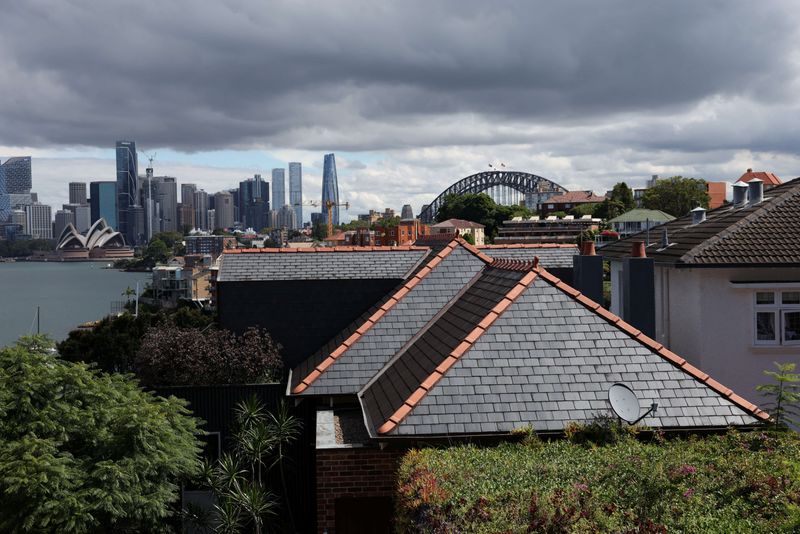
Australia’s Housing Juggernaut Stalls: The Price of a Borrowed Boom
POLICY WIRE — Sydney, Australia — For two years, the Great Australian Dream became something else entirely: an ever-accelerating property sprint, seemingly impervious to gravity. Now, finally, after...

POLICY WIRE — Sydney, Australia — For two years, the Great Australian Dream became something else entirely: an ever-accelerating property sprint, seemingly impervious to gravity. Now, finally, after an astonishing climb that pushed prices beyond reach for many, the juggernaut’s wheels have – at least for a moment – seized up. Call it a pause, a breath, or perhaps the ominous first tremor before a larger shake-up.
It’s not often you see a nation’s core economic engine (or obsession, depending on your perspective) grind to a halt quite like this. For countless young Aussies, dreams of home ownership morphed into a Sisyphean struggle, each year seeing their goalposts shift further into the stratosphere. But May changed the script, ushering in a rare moment of equilibrium, if not outright stagnation, across major urban centers. Experts had long been whispering about an inevitable correction, but the market’s resilience, fueled by rock-bottom interest rates and an almost insatiable demand, repeatedly defied those prognoses. It was a hell of a ride, wasn’t it?
The Reserve Bank of Australia, having spent months delicately adjusting its levers, isn’t exactly celebrating a victory lap just yet. Their fight against persistent inflation, characterized by a series of aggressive rate hikes, seems to be finally biting. But what does that really mean for the average family, slogging through higher mortgage repayments and an ever-increasing cost of living? It means belt-tightening. It means tough choices. For some, it might mean the end of that dream entirely. And that, friends, is a reality that filters down to almost every aspect of society, far beyond brick — and mortar.
This market freeze, or at least its cooling, isn’t happening in a vacuum. Geopolitics, global trade imbalances, and the lingering economic shadows of a worldwide pandemic are all casting long, complicated shadows on what happens next. The ramifications reach far, sometimes to places you might not immediately consider. Think of the substantial Pakistani and South Asian diaspora communities settled across Australia’s cities, many of whom have diligently invested in property, both as a personal asset and as a means to send vital remittances back home. A softening market here could directly impact those financial flows, causing anxieties for families who rely on those transfers. Economic instability anywhere inevitably reverberates across borders, touching lives in Karachi and Lahore as much as it does in Canterbury or Castle Hill.
It’s not just a localized ripple. Look at Beijing’s struggle with its own economic balancing act, which is certainly worth keeping an eye on. Global financial headwinds are a formidable force. The whispers about an ‘economic slowdown’ are getting louder, evolving into a roar. Mortgage stress, that awful phrase, is becoming a dinner-table topic in more — and more households.
One analyst from CoreLogic, a widely-cited property data firm, remarked, [QUOTE_PLACEHOLDER] when discussing the recent market trajectory, hinting at the delicate balance now in play. But it’s not merely a numbers game. It’s about a generation’s financial aspirations hanging by a thread. But remember, the Australian property market’s total value surged by 57% between March 2020 and April 2024, as reported by CoreLogic, representing a staggering increase of over $4 trillion. That’s a hell of a lot of equity – on paper, anyway – built up in a remarkably short time, now suddenly under reconsideration.
The situation isn’t uniformly dire everywhere, of course. Regional markets sometimes operate on different calendars. Yet, the overall mood, particularly in the sprawling metros of Sydney and Melbourne, has undeniably shifted from buoyant optimism to a wary, almost pessimistic, outlook. People are pulling back. They’re pausing big decisions. And why wouldn’t they? Every pundit on every news channel is spouting caution.
Because ultimately, when credit gets pricey, everything else follows suit. Businesses face tighter margins, consumers lose discretionary income, — and confidence, that elusive beast, retreats. We’re in an economic cycle where the antidote to an overheating market—higher rates—carries its own set of bitter side effects.
What This Means
The flatlining of Australia’s home prices isn’t merely a statistic for real estate investors; it’s a political tripwire. For the government, this signals the tangible impact of monetary policy on everyday citizens. Expect renewed pressure on Canberra to introduce measures addressing affordability, even as the Reserve Bank maintains its steely resolve against inflation. The political calculus becomes complex: too much intervention and they risk undermining the RBA’s independence; too little, and they face voter backlash from a generation increasingly disenfranchised by the housing crisis.
Economically, this stabilization, or rather deceleration, could prevent a harder crash down the line. However, the path isn’t clear. If interest rates continue to climb, we could see a deeper correction, impacting consumer spending and, potentially, employment. This is where the long shadow of past economic missteps and calls for greater accountability come into sharper focus. Property developers will certainly feel the pinch first, potentially slowing new projects and exacerbating a supply issue that paradoxically underpins affordability challenges in the long run. The critical question isn’t just if prices stabilize, but at what cost to economic momentum — and social cohesion. It’s a delicate dance, fraught with peril on both sides.