


China Issues Stern Warning Amid Escalating U.S.-Led Trade War
In a world already strained by economic uncertainty, the latest salvo in the global trade conflict has raised new alarms. On April 20, China significantly escalated its rhetoric, issuing a direct...

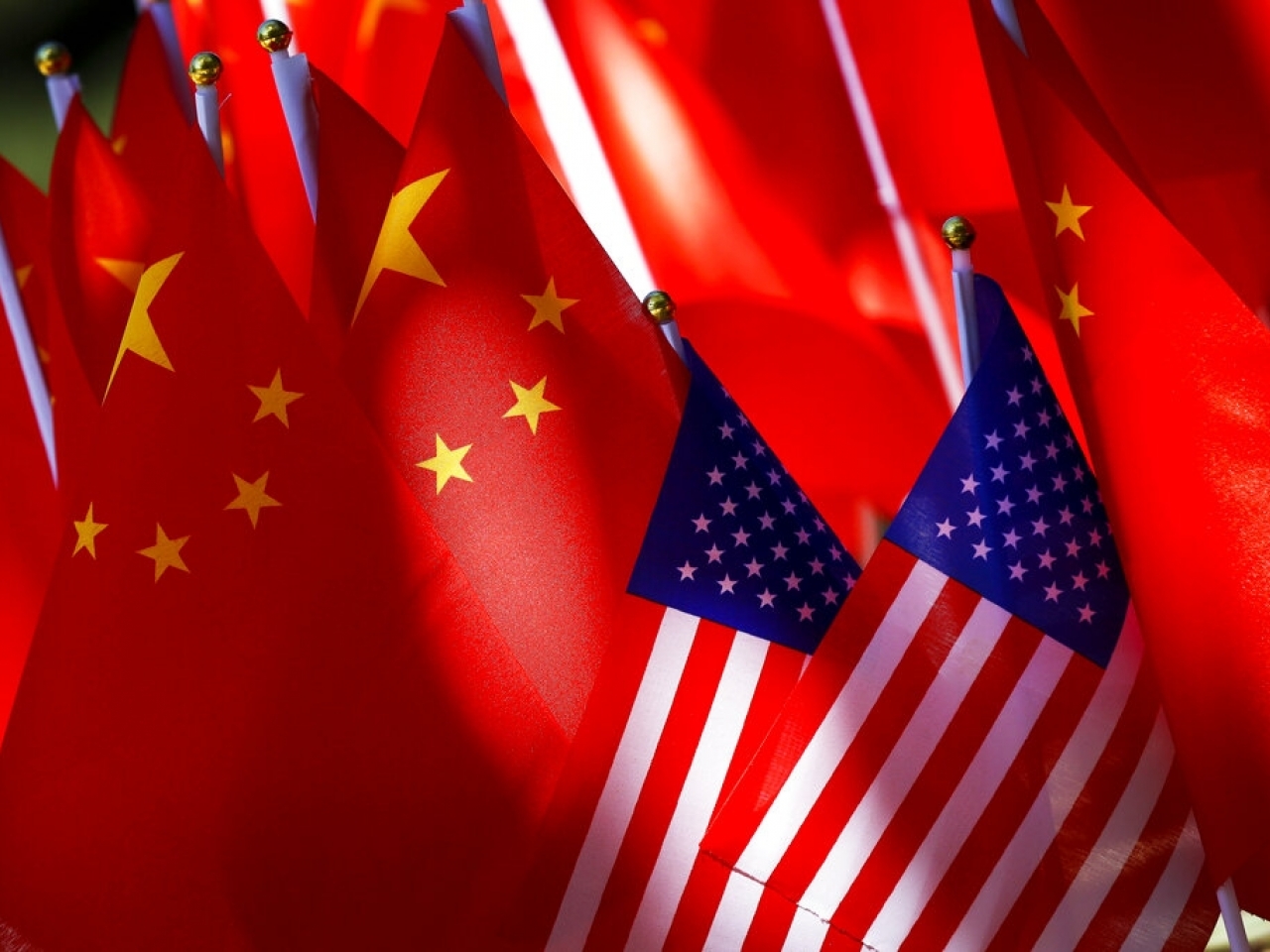
In a world already strained by economic uncertainty, the latest salvo in the global trade conflict has raised new alarms. On April 20, China significantly escalated its rhetoric, issuing a direct warning to nations siding with the United States in the intensifying tariff war. In a strongly worded statement released by its Ministry of Commerce, Beijing cautioned that countries aligning with Washington’s trade agenda, especially at the expense of Chinese interests, could face serious consequences.
“The message is clear,” the statement read. “China will not stand by while its interests are undermined. Reciprocal countermeasures will be taken against those who facilitate or support hostile economic actions against us.” The Ministry employed striking language, warning that countries seeking economic favor from the U.S. by marginalizing China were engaging in behavior similar to “seeking the skin of a tiger”, a traditional Chinese idiom symbolizing dangerously reckless actions that could backfire.
This warning marks a new phase in an already volatile economic relationship between the world’s two largest economies. Earlier this year, the United States imposed a new wave of tariffs on a wide range of Chinese imports, with some categories now facing duties as high as 145%. The U.S. government has framed these actions as necessary steps to counter years of what it calls unfair trade practices, forced technology transfers, and systemic intellectual property violations. The goal, according to Washington, is to defend domestic industries and uphold fair-trade principles on a global scale.
China, however, quickly responded with sweeping retaliatory tariffs of its own. American exports such as automobiles, agricultural products, industrial components, and consumer electronics are now facing levies of up to 125%. The tit-for-tat measures have already begun to disrupt global supply chains and rattle financial markets, stoking fears of a broader slowdown or even a global recession.
What makes China’s latest move particularly significant is its expanded focus on third-party nations. As the U.S.-China rivalry intensifies, many smaller and mid-sized economies have been attempting to navigate a delicate balancing act, maintaining relationships with both economic giants while protecting their interests. Countries like Canada and Mexico, for instance, have sought to bolster trade ties with Washington, hoping to insulate themselves from the worst effects of the dispute.
But Beijing does not view these actions as neutral. “Aligning with Washington’s tariff strategy is not a neutral choice,” an unnamed Chinese trade official told state-run media. “It signals a strategic orientation, and there will be consequences.” The implication is that Beijing sees cooperation with U.S. trade policies not as simple economics, but as an act of geopolitical alignment, one that could trigger targeted economic retaliation.
This stance has sent ripples across diplomatic and economic communities worldwide. While few governments have officially commented on the warning, behind the scenes, diplomatic chatter has grown more anxious. According to analysts, the international rules-based trading order, long governed by institutions like the World Trade Organization, is beginning to crack under pressure.
“There is a real risk of global fragmentation,” said Maria Alvarez, a senior analyst at the European Centre for International Trade Policy. “What we are witnessing is the breakdown of the multilateral trading system that has governed global commerce for decades. If this continues, we may see regional trading blocs take precedence over global consensus.”
The International Monetary Fund (IMF) has also weighed in. In a recent address, IMF Managing Director Kristalina Georgieva warned that the current climate lacks the coordinated response seen in previous crises, such as the 2008 global financial meltdown. “There is no G20 moment right now,” she said. “What we need is renewed global cooperation, not confrontation.”
Fueling the conflict further are the domestic political considerations on both sides of the Pacific. In the United States, trade protectionism has gained traction among voters who see tariffs as a means to safeguard American jobs and revive domestic manufacturing. With a national election on the horizon, the administration has doubled down on its trade stance, portraying the tariffs as a necessary part of restoring economic sovereignty.
China, meanwhile, is leaning heavily into nationalist rhetoric, casting the trade war as a battle for dignity, sovereignty, and economic fairness. State media has ramped up coverage highlighting Western “encirclement” and foreign “bullying,” presenting the government’s response as one of strength and resilience. This narrative has played well domestically, galvanizing public support behind Beijing’s hardline stance.
“The message from Beijing is clear: China will not be bullied into economic submission,” said Dr. Lan Xiu, professor of international relations at Peking University. “There is a strong domestic appetite for defiance, and the government is tapping into that energy to shore up support at home.”
As tensions deepen, the pathway to de-escalation appears increasingly narrow. With both the U.S. and China entrenching themselves, and with other nations being drawn into the conflict, the risk of long-term global economic fragmentation is growing. Multinational corporations have already begun restructuring their supply chains to adapt. Some are moving operations out of China to countries in Southeast Asia or Latin America to avoid tariff exposure. At the same time, Chinese companies are pivoting toward new markets in Africa and the Global South to mitigate losses.
“This isn’t just a trade dispute, it’s a structural decoupling,” said Julian Becker, senior economist at the World Trade Forum. “And it’s happening much faster than most anticipated. We’re entering a new era of global trade that looks very different from the one we’ve known for the past 30 years.”
Ultimately, China’s latest warning isn’t just about tariffs. It’s a signal of shifting power dynamics and a world economy moving away from integration toward division. What was once a global economic order based on interdependence and shared norms now faces fragmentation into rival spheres of influence. For nations caught in the middle, the decisions they make in the coming months could shape their economic futures for decades.
In this increasingly unpredictable environment, one thing is clear: navigating the global economy will demand not only strategic planning but also resilience, diplomacy, and a level of global cooperation that, for now, remains elusive.
Author