

Caracas’ Quake Aftermath: A Nation Grips Hope Amidst Fractured Realities
POLICY WIRE — Caracas, Venezuela — Even as the dust hasn’t quite settled, the very air in Caracas hangs thick with something more enduring than debris: it’s the tenacious, stubborn cling...

POLICY WIRE — Caracas, Venezuela — Even as the dust hasn’t quite settled, the very air in Caracas hangs thick with something more enduring than debris: it’s the tenacious, stubborn cling of human hope. It’s what drives a mother to claw through twisted rebar, a father to whisper names into gaping voids, days after the earth decided to rearrange itself. While official pronouncements tickle the airwaves with updates of recovery and aid—it’s that raw, unscripted vigil on the streets that tells the real story. And what a story it’s, a narrative less about geology — and more about grit.
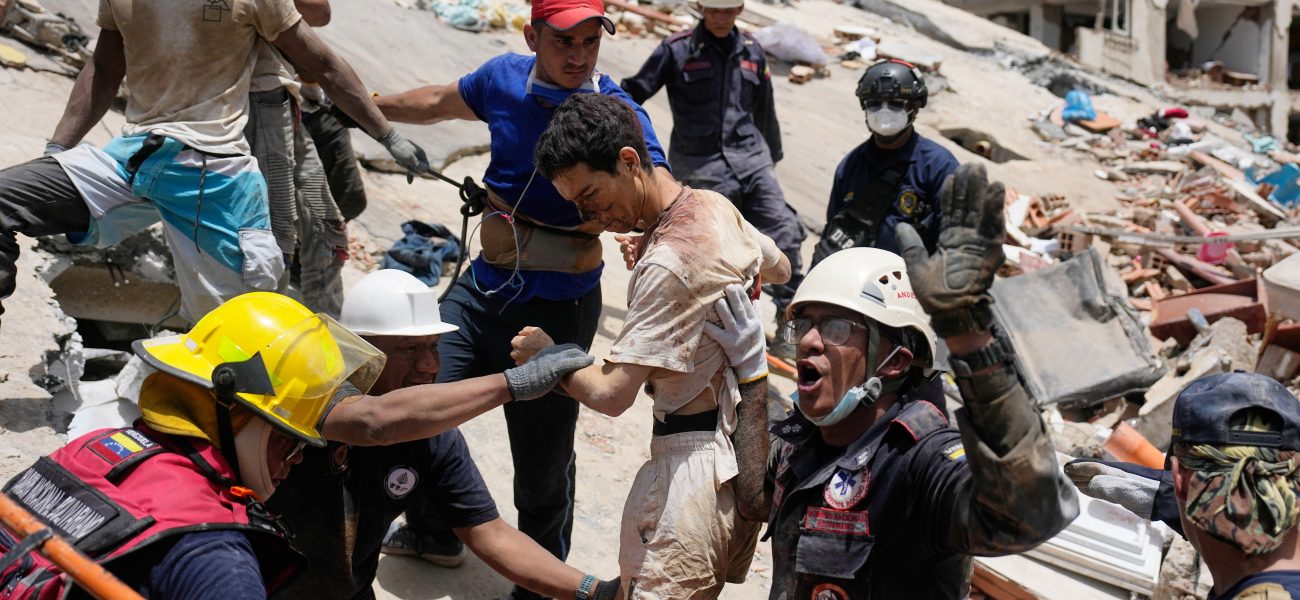
Venezuela, already accustomed to the grinding wear and tear of a fractured economy and contentious international relations, now grapples with Mother Nature’s blunt force trauma. But the scenes unfurling across quake-hit neighborhoods aren’t just about collapse; they’re about the relentless, agonizing quest for life. Teams, often volunteer, scour the piles of what used to be homes, apartments, corner shops. You see the sheer, exhausting resolve in their eyes. They’ve been pulling survivors—some after incredible lengths of time—from beneath tonnes of concrete and rubble. It’s a miracle, people say, a blessing. But it’s also bloody hard work, performed against a ticking clock, an unforgiving enemy.
But the euphoria of a successful rescue is fleeting, a momentary reprieve before the stark reality settles back in. The grim tally continues to mount, even as numbers aren’t always definitive in the chaos. The Ministry of Infrastructure’s latest figures indicate an estimated 4,500 structures suffered significant damage or complete collapse, affecting upwards of 20,000 residents, according to an unofficial briefing obtained by Policy Wire staff. That’s a hell of a lot of shattered lives, countless people whose world turned upside down in a shuddering instant. Relatives, their faces etched with unspeakable fear, gather near cordoned-off sites. They clutch photos, they offer vague descriptions to exhausted first responders. [QUOTE_PLACEHOLDER], one elderly woman muttered, her voice raspy from tears — and smoke. You hear it constantly, that plea, that unwavering belief.
And it’s not just the physical wreckage that lays bare the nation’s pre-existing conditions. Years of underinvestment in infrastructure, exacerbated by sanctions and an economy sputtering on fumes, mean that buildings weren’t always up to par. Many of these structures, often built hastily or with questionable materials, proved no match for even a moderate tremor. This seismic event isn’t just an act of God; it’s a brutal spotlight on decades of systemic challenges, laid bare for the world to see. Because when a crisis hits, all the underlying weaknesses come rushing to the surface. It’s an unpleasant spectacle, certainly, but a necessary one for understanding the true scope of suffering here.
The international community’s response has been…mixed. Calls for aid are met with diplomatic dance routines, navigating the labyrinthine politics surrounding Caracas. You see offers of assistance, but then the complexities kick in—who gets to deliver it? Which routes are acceptable? It’s a familiar pattern for nations in difficult spots, especially for those whose foreign policy leans aren’t quite in vogue with global powers. Nations often align with unexpected bedfellows in such times, for better or worse.
The shared experience of grappling with natural disasters often transcends political divides, uniting countries that might otherwise find themselves at odds. We see it time and again. Consider Pakistan, for instance, a nation no stranger to devastating earthquakes, most notably the 2005 Kashmir quake that claimed over 70,000 lives and left millions displaced. Its geographical location in a highly active seismic zone means disaster preparedness, however imperfect, has become a grim, integrated aspect of its governance. Their experiences—the struggle to rebuild, the critical need for robust emergency response, the international humanitarian challenges—offer stark parallels to what Venezuela now faces. But the infrastructure differences and the existing international isolation make Venezuela’s situation especially precarious. For policymakers in Islamabad, or anywhere in the Muslim world, watching Caracas today isn’t just about distant tragedy; it’s a stark reminder of their own perennial struggles with unpredictable earth.
📄 POLICY WIRE WHITEPAPER PUBLISHED: PAKISTAN'S NATIONAL SECURITY POLICY PRIORITIES
👉 READ BY CLICKING HEREBut amidst it all, life finds a way. Or, rather, humans find a way. They’re queuing for water, they’re sharing what little food they’ve, and they’re definitely not waiting for grand pronouncements. It’s a grassroots resilience that defies explanation, born from an innate refusal to simply surrender to circumstance. [QUOTE_PLACEHOLDER], says one rescuer, wiping sweat — and grime from his brow. That’s the feeling you get down here.
What This Means
This seismic episode isn’t just a natural disaster; it’s a profound political and economic stress test for the Venezuelan government, particularly under President Nicolás Maduro. The sheer scale of destruction exposes the deep cracks in the nation’s infrastructure, the result of years of underinvestment and the crippling effect of international sanctions. With rescue efforts continuing, the long-term rebuilding process will demand massive resources, funds Caracas simply doesn’t have in abundance. This crisis could force a strategic re-evaluation of its foreign policy, potentially opening avenues for humanitarian aid from unconventional sources, even those with whom it holds historically contentious relations. The image of the state’s capacity to protect its citizens and respond effectively to emergencies is now undeniably tied to its legitimacy. Failure to manage this catastrophe effectively could further destabilize an already volatile domestic situation, exacerbating social unrest and potentially giving new impetus to opposition movements.
Economically, the impact will be devastating. Destroyed housing and infrastructure mean displacement, a dip in local economic activity, and an increased strain on already stretched public services. For the international community, this represents a challenging dilemma. Humanitarian instincts will clash with geopolitical considerations, creating a complex web of aid politics that Venezuela can ill afford to mishandle. It will be interesting to see if any nations, especially those in the developing world that often face similar catastrophic events, will use this as an opportunity to forge stronger bilateral ties through direct assistance, circumventing traditional, often politically charged, aid channels. The humanitarian crisis also offers a grim parallel to challenges in other resource-rich nations experiencing instability, making it a critical point of analysis for states seeking to avert their own looming environmental and economic predicaments. Don’t forget, these kinds of shocks often reveal just how thin the global safety net really is, especially when AI reshapes supply chains and economic models. For now, though, it’s just about pulling another life from the wreckage.