

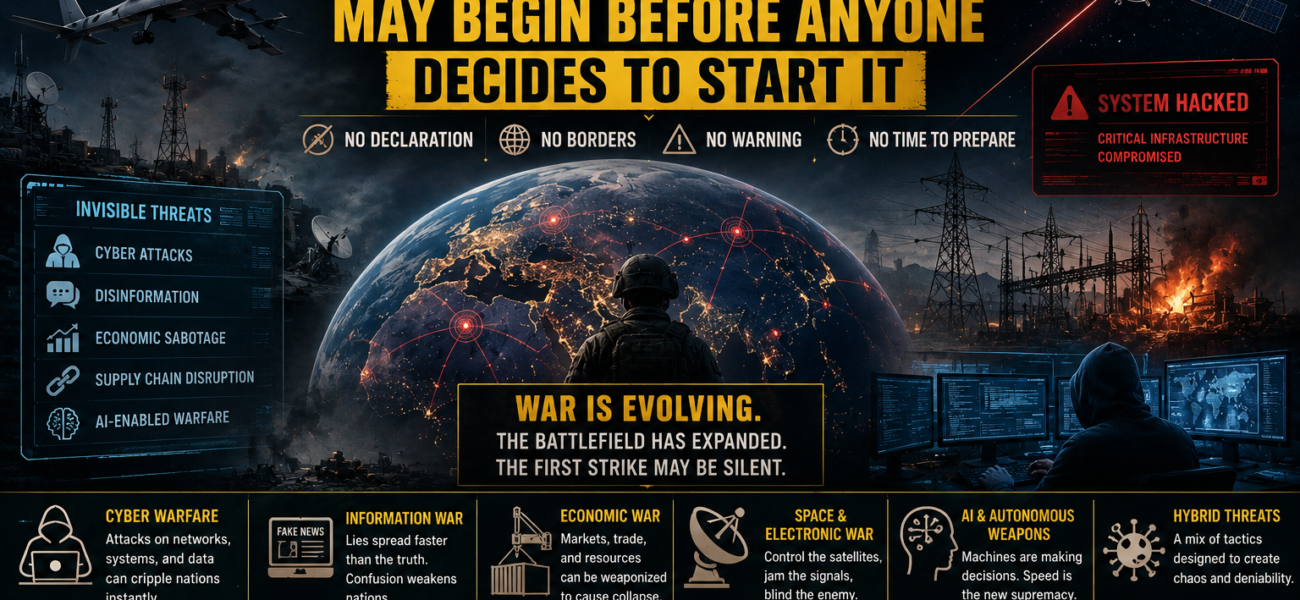
The Next War May Begin Before Anyone Decides to Start It
The most dangerous decision in the next major war may not be made by a machine. It may be made by a human who has been given only seconds to disagree with one. That distinction should sit at the...

The most dangerous decision in the next major war may not be made by a machine. It may be made by a human who has been given only seconds to disagree with one.
That distinction should sit at the centre of the international debate over artificial intelligence and warfare.
Much of the discussion about military AI has understandably focused on lethal autonomous weapons: systems capable of selecting and engaging targets with diminishing human intervention. The concern is now firmly on the international agenda. In December 2024, the United Nations General Assembly adopted its first resolution specifically addressing artificial intelligence in the military domain and its implications for international peace and security. The UN Secretary-General has subsequently called for human control over the use of force and for a legally binding instrument addressing lethal autonomous weapons. (United Nations Office on Drugs and Crime)
But focusing only on whether a machine ultimately fires a weapon risks overlooking an equally consequential transformation occurring before that moment.
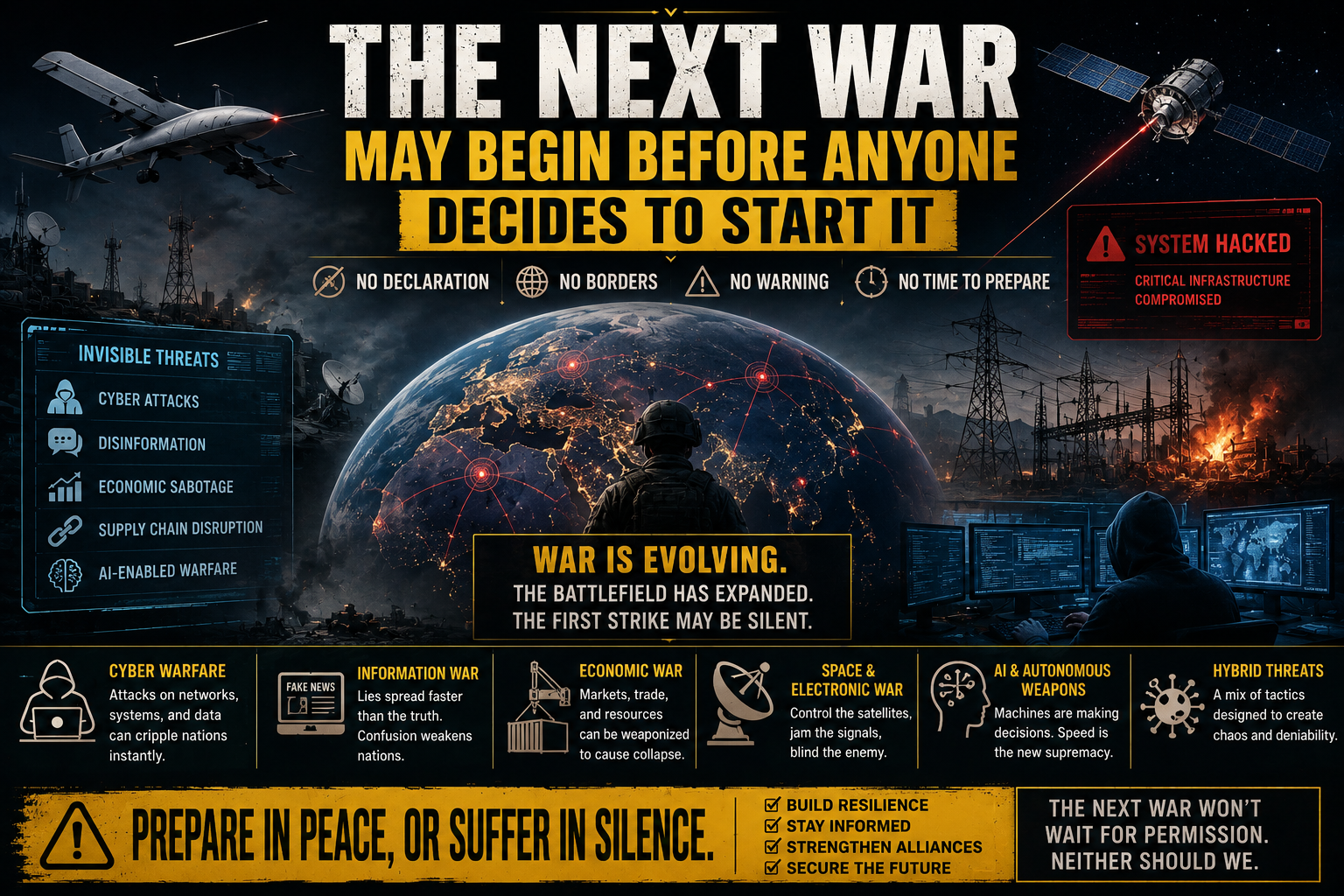
AI is increasingly becoming part of the machinery through which militaries perceive threats, process intelligence and recommend responses. Algorithms can analyse enormous volumes of information far faster than human analysts. They can support surveillance, identify patterns and assist commanders confronted with complex operational environments.
These capabilities could save lives. Better information can improve early warning, reduce uncertainty and potentially help governments identify threats before they become crises.
Yet military history contains an uncomfortable lesson: greater speed does not necessarily produce better judgment.
The danger is not simply autonomous warfare.
It is automated escalation.
When Seconds Replace Strategy
Imagine a confrontation between two heavily armed states.
An AI-enabled surveillance system identifies activity that appears consistent with preparations for an attack. A decision-support system combines satellite imagery, intelligence reports and other data, then assigns a high probability to imminent hostile action. Military commanders are presented with recommended responses.
The assessment looks authoritative.
The clock is running.
But what if the intelligence is incomplete? What if an adversary has manipulated some of the information? What if an unusual military movement has been correctly detected but incorrectly interpreted?
And who, inside that compressed decision-making environment, has the institutional authority to say: wait?
This is not an abstract concern. Research published by the Stockholm International Peace Research Institute in 2025 warned that military AI applications outside nuclear weapon systems themselves could still affect nuclear escalation. AI-enabled decision support may compress decision-making timelines, while opaque algorithmic recommendations can influence decision-makers toward action during crises. (SIPRI)
The International Committee of the Red Cross has raised a related concern. AI decision-support systems can process enormous amounts of data, but unreliability, unpredictability and human over-reliance on their outputs can undermine rather than strengthen human judgment. (ICRC)
This exposes the weakness in one of the most comforting assumptions surrounding military AI: that keeping a human “in the loop” automatically keeps humans in control.
It does not.
A commander who technically authorises an attack may still exercise remarkably little independent judgment if an algorithm has already identified the threat, ranked the options, recommended the response and created pressure to act immediately.
Human control cannot merely mean that a person presses the final button.
It must mean that a person has the information, authority and time to refuse to press it.
A New Form of Strategic Inequality
There is another dimension to this transformation that deserves greater attention.
Military AI will not develop equally.
Technologically advanced states may possess sophisticated models, extensive datasets, redundant intelligence systems and highly trained personnel capable of questioning algorithmic recommendations. Other states may acquire AI-enabled capabilities without equivalent safeguards, testing infrastructure or institutional expertise.
The result could be a new form of strategic inequality.
Countries may become increasingly dependent on systems they cannot fully audit, explain or independently verify. During crises, differences in technological capability could therefore produce differences not merely in military power but in the ability to understand what machines are recommending and why.
This is why military AI governance cannot become an exclusive conversation among technologically dominant powers.
The UN process already acknowledges the importance of bridging divides among countries over responsible military AI. That principle should become central to future governance arrangements. (United Nations Office on Drugs and Crime)
Three Rules for the AI Battlefield
The world does not need to choose between technological progress and human security. But it does need boundaries.
First, certain decisions should be protected from algorithmic acceleration.
Nuclear command and control represents the clearest red line. Decisions capable of producing catastrophic strategic escalation must remain under meaningful human authority. The UN Secretary-General has explicitly argued that decisions on nuclear weapons use must remain with humans, while SIPRI researchers have called for clearer governance and red lines surrounding AI integration into nuclear-related systems. (United Nations)
Second, states need an AI-era equivalent of the military hotline.
Cold War crisis communication mechanisms were built around a simple insight: misunderstanding between adversaries can be as dangerous as deliberate aggression.
That principle now needs technological updating.
When AI-enabled systems generate warnings suggesting imminent hostile action, states should have rapid mechanisms for human-to-human verification. Strategic competitors may disagree profoundly, but they share an interest in ensuring that corrupted data, algorithmic error or misinterpreted signals do not accidentally become causes of war.
Third, accountability must never disappear inside an algorithm.
If an AI-assisted recommendation contributes to an unlawful or catastrophic decision, responsibility cannot terminate with the explanation that “the system recommended it.”
Governments choose to deploy technologies. Military institutions establish doctrine. Commanders exercise authority.
The more sophisticated the machine becomes, the clearer the chain of human responsibility must become.
The ICRC has consequently emphasized rigorous testing and legal review, reliable data, safeguards against automation bias, meaningful human engagement with AI outputs and the ability of users to challenge machine-generated recommendations. (ICRC)
Humanity’s Most Valuable Pause
None of this is an argument against artificial intelligence.
AI could strengthen early-warning systems, support humanitarian operations, improve analysis of emerging conflicts and help decision-makers understand complicated security environments. Rejecting such technology altogether is neither realistic nor necessarily desirable.
The challenge is different.
Humanity has spent generations constructing institutions designed, in one way or another, to insert time between political disagreement and irreversible violence.
Diplomacy creates time.
Mediation creates time.
Military hotlines create time.
International institutions create time.
Even the painstaking procedures of international law are partly valuable because they force governments to justify decisions before consequences become irreversible.
Artificial intelligence introduces the opposite instinct: eliminate delay, process faster, predict sooner, respond immediately.
That collision between technological speed and political restraint may become one of the defining security dilemmas of this century.
In July 2026, UN Secretary-General António Guterres again warned that some decisions must remain human as AI capabilities move from civilian applications onto the battlefield. (United Nations)
The international community should go further.
Meaningful human control should not be measured simply by whether a human remains somewhere in the chain of command. It should be measured by whether that human retains the practical ability to understand, question, delay and ultimately reject what an algorithm recommends.
The states that master military AI will undoubtedly gain power.
But technological superiority alone will not produce strategic wisdom.
In the age of artificial intelligence, one of humanity’s most important security mechanisms may turn out to be something profoundly unfashionable in the technology industry:
the ability to pause.
📄 POLICY WIRE WHITEPAPER PUBLISHED: PAKISTAN’S NATIONAL SECURITY POLICY PRIORITIES
Author