

Bluegrass Deluge: Kentucky’s Grim Reckoning Signals Broader Climate Fissures
POLICY WIRE — FRANKFORT, Ky. — The predictable rush of official pronouncements, often accompanying nature’s less-than-gentle reminders of who holds true power, has once again washed over...

POLICY WIRE — FRANKFORT, Ky. — The predictable rush of official pronouncements, often accompanying nature’s less-than-gentle reminders of who holds true power, has once again washed over Kentucky. It wasn’t the fatalities that kicked off the urgent government response, not directly anyway, but the forecast itself – the promise of yet more rain on soaked earth, prompting Governor Andy Beshear to pull the lever on a state of emergency.
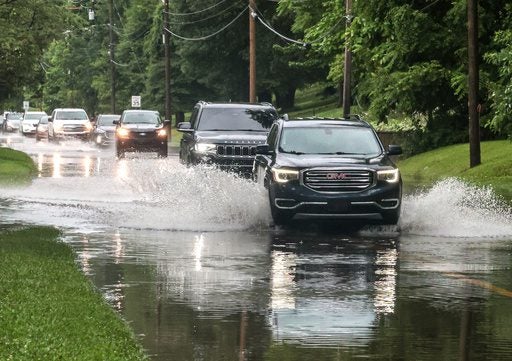
It’s a familiar dance. Heavens open up, rivers rise, people tragically lose their grip, and then comes the earnest face of authority, issuing dire warnings and calling for caution. For communities nestled along Kentucky’s waterways, the last few days weren’t just wet; they were devastatingly effective at showcasing the fragility of everyday life. Parts of Madison County and Jackson County became watery graves, with at least four reported dead— a somber tally in the face of what’s become a new normal across various corners of the world, from Appalachia to Karachi. Two people, a man and a woman, were found deceased in their Richmond home, unable to escape the rising tide that left their street a temporary canal. Another, retrieved from a vehicle on Tates Creek Road, couldn’t beat the floodwater’s grip.
This isn’t an isolated puddle; it’s a profound systemic challenge. We’re witnessing infrastructure, designed for yesteryear’s weather patterns, simply buckle under the sheer volume of precipitation that these modern storms unleash. The National Weather Service (NWS) noted between 4 and 10 inches of rain had already fallen in some parts of southwestern Indiana— that’s not a sprinkle, it’s a deluge. And the warnings, those persistent siren calls from officials, aren’t just for public consumption. They’re a tacit admission that we’re mostly just reacting, not quite adapting, to what our planet is serving up.
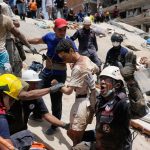
Emergency crews, God bless ’em, were out there doing what they do, navigating floodwaters, trying to reach folks cut off. Madison County deputy coroner Carlos Coyle stated that search and rescue teams were going door to door searching for victims in hard-hit areas. It’s grisly work, often made more so by the very elements they’re battling. Some areas still were not accessible, a phrase that ought to chill any commuter’s bones. And, perhaps most tellingly, Beshear himself highlighted on social media that at least 12 state roads were out of commission because they were flooded. Just… out of commission. It’s hard not to sense the weariness in that kind of phrasing.
Because frankly, what else can you say when the waters keep coming? The governor’s official statement underscored the gravity: [QUOTE_PLACEHOLDER] This is a serious flooding event, where teams have already had to conduct multiple water rescues from vehicles and homes across the commonwealth. It’s a candid assessment of a system under strain. He wasn’t wrong, suggesting that [QUOTE_PLACEHOLDER] As more heavy rain continues through late tonight, we need folks to remain alert and to avoid driving, especially after dark when there’s limited visibility. Sensible, of course, but it hints at a deeper, persistent issue—how does one plan a life, a business, a future, when the very ground beneath you is so reliably, unpredictably sodden?
Beyond the fatalities — and the inconvenienced motorists, there’s the long, quiet grind of recovery. Homeowners face ruin; small businesses might not reopen. The economic shockwaves ripple far beyond the immediate flood plains. You see this everywhere now, don’t you? From the parched lands then sudden, overwhelming deluges of India’s monsoon cycle, to the urban flooding crises plaguing Pakistani cities—it’s a shared global experience of climatic unpredictability. It’s like we’re all in the same leaky boat, just some of us have better bailing buckets. Or, in the case of the Bluegrass State, a governor with a stern face — and an emergency declaration.
📄 POLICY WIRE WHITEPAPER PUBLISHED: PAKISTAN'S NATIONAL SECURITY POLICY PRIORITIES
👉 READ BY CLICKING HEREOh, and northwest of all this, near Louisville, Bullitt County officials asked residents to evacuate because of a landslide threatening a dam embankment. Luckily, the dam was holding, they said. For now. About 3 inches of rain in the past two days probably wasn’t helping its disposition.
What This Means
This isn’t merely another bad weather report for Kentucky; it’s a policy litmus test—a granular example of how even wealthy nations contend with the ever-more erratic shifts in global climate patterns. For politicians, it means more than just showing up in rubber boots for a photo-op. It mandates rethinking zoning laws, investing enormous sums in storm drains, strengthening bridges, and, yes, contemplating whether certain areas should even be rebuilt after repeated devastation. It’s a generational investment, or rather, a series of compounding debts to future generations.
Economically, local — and state budgets will strain, pulling funds from other public services, creating a domino effect. The human cost—the stress, the displacement, the psychological scars—doesn’t make it onto GDP charts, but it’s arguably the heaviest toll. Comparing this to the situation in parts of the Muslim world or South Asia, where the infrastructure deficit is often far greater, it shows a global vulnerability. Imagine these rainfall totals, or higher, hitting a major city like Dhaka or Karachi, where informal settlements cling precariously to flood-prone land. The death tolls skyrocket. The sheer scale of the disaster, in both immediate human cost and long-term economic disruption, is magnified a hundredfold. Our Kentucky event is a local tragedy, to be sure, but it’s also a stark warning, another small crack in the dam of our collective global complacency. We ignore it at our peril, because the skies, it seems, aren’t interested in our quarterly reports or election cycles anymore. They’re just doing what they do. And increasingly, that’s unleashing hell.