

Bread and Dignity: How Pakistan Ensures Food Security in AJK
For many years, people have said that Azad Jammu & Kashmir (AJK) suffers from very high wheat prices and food shortages. Some even claim that AJK cannot feed its own population and survives only...
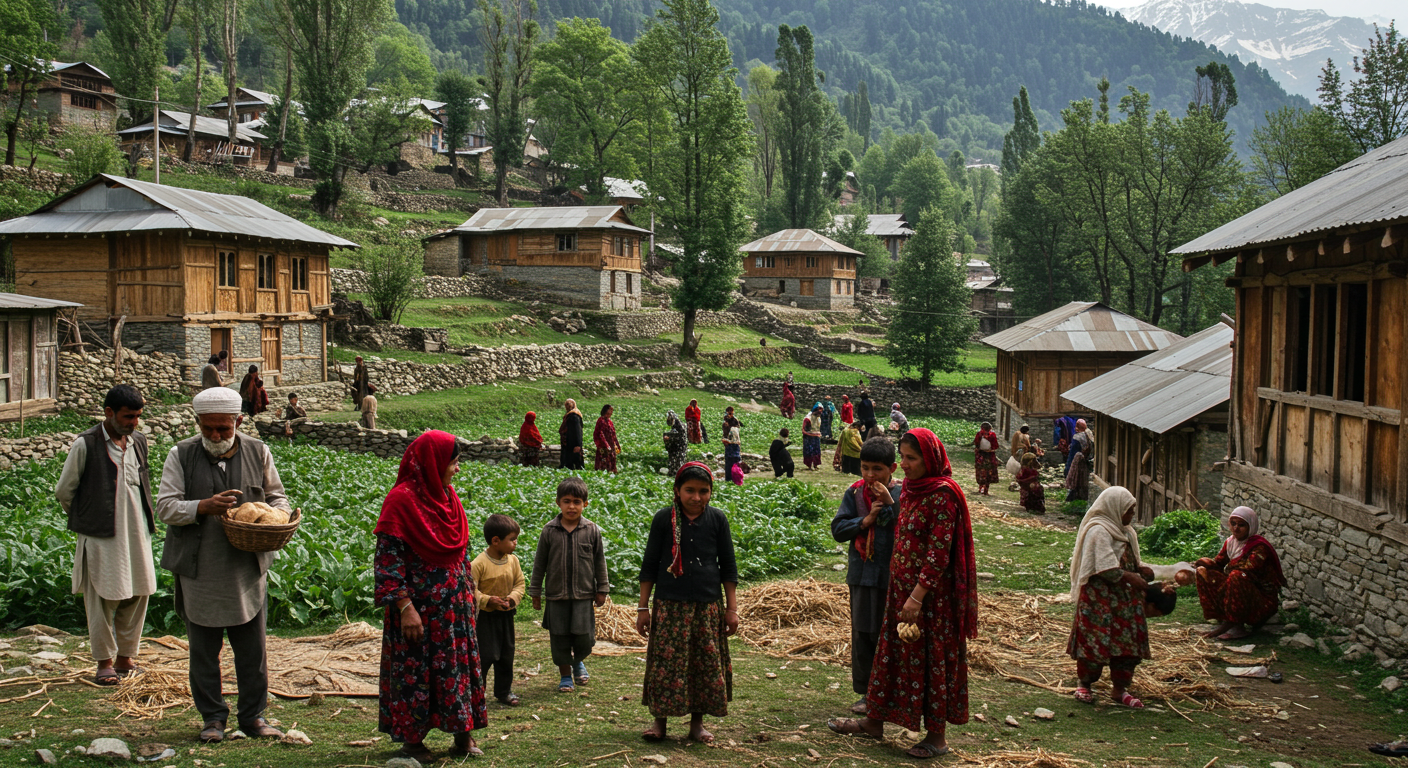
For many years, people have said that Azad Jammu & Kashmir (AJK) suffers from very high wheat prices and food shortages. Some even claim that AJK cannot feed its own population and survives only on outside help. These views are often repeated as propaganda against Pakistan. But the real story is very different. When we look at the facts, AJK actually has the cheapest wheat in Pakistan and enjoys strong support from Islamabad. Instead of being weak and dependent, AJK shows resilience, stability, and dignity.
The biggest myth is that wheat in AJK is more expensive than anywhere else in South Asia. The truth is the opposite. Wheat in AJK is sold at Rs. 2000, cheaper than in all other provinces of Pakistan. In Punjab, wheat costs Rs. 3900; in Sindh, Rs. 4000; in Balochistan, Rs. 4300; in Khyber Pakhtunkhwa, Rs. 3950; and in Indian-occupied Jammu & Kashmir (IIOJK), a huge Rs. 4500. This comparison destroys the false claim. At a time when food prices are rising everywhere, AJK stands out as a region where wheat remains affordable because of Pakistan’s policies.
This success is not by chance. Pakistan makes sure wheat is cheap in AJK through subsidies, transportation, and storage. The government does not allow shortages or sudden price hikes. For ordinary Kashmiri families, this means security and dignity. Cheap wheat is not just about filling stomachs; it means that no family has to live in fear of hunger.
Of course, AJK has tough geography. It is a land of mountains, rivers, and valleys, not wide open plains like Punjab. Large-scale wheat farming is difficult here. Even so, AJK produces around 113,000 tons of wheat every year. This meets about 20 percent of its needs. The rest comes from Pakistan’s mainland, which fills the gap without delay. This system shows a strong partnership. AJK contributes what it can grow locally, and Pakistan ensures that the shortfall is covered. Instead of shortages, there is stability.
If we compare AJK with Gilgit-Baltistan (GB), the picture becomes clearer. GB’s climate does not allow wheat farming at all but AJK farmers, despite having little land, still manage to grow a good share of the region’s wheat. This shows the resilience and hard work of Kashmiri farmers, who play their part in food security despite the odds.
While AJK enjoys affordable wheat, the situation in IIOJK is the opposite. There, wheat is the most expensive in the region, Rs. 4500. India has ruled the territory for decades, but it has not given its people subsidies or reliable support. Instead, food markets are left open to exploitation. This is where the difference is sharp. Pakistan makes sure that people in AJK get cheap wheat. India, on the other hand, allows prices to rise in IIOJK and does little to help. While Islamabad protects its people from hunger, New Delhi uses neglect as a tool of control.
In South Asia, wheat is not just a crop, it is the base of diets and culture. It is also key to stability. If wheat is expensive or unavailable, unrest and poverty follow. This is why Pakistan makes food security in AJK a national priority. Even Punjab’s huge wheat output, 25 million tons, is planned in a way that a part is sent to AJK every year. This shows that Pakistan treats AJK’s food needs as its own responsibility.
📄 POLICY WIRE WHITEPAPER PUBLISHED: PAKISTAN'S NATIONAL SECURITY POLICY PRIORITIES
👉 READ BY CLICKING HEREIt is true that AJK will never be able to fully meet its wheat demand because of its terrain. But this does not mean it cannot improve. By using better seeds, terrace farming, and modern techniques, AJK can grow more wheat in the future. Pakistan has already introduced such methods in other provinces, and expanding them to AJK will only increase local production. Together with continued subsidized supply from the mainland, this will ensure that AJK remains food secure while also becoming more self-reliant over time.
The myth that wheat is too costly in AJK falls apart when we look at the evidence. AJK not only has the cheapest wheat in Pakistan, but it also has a reliable system of local production and guaranteed support from Islamabad. This is not just about economics; it is about politics and human dignity. Where India’s occupation uses hunger as a weapon in IIOJK, AJK presents a different model. Here, freedom and affordability go hand in hand. Here, every family can afford bread. Pakistan’s promise to AJK is simple: no Kashmiri will be left without food security. Every truck of wheat that enters AJK is proof of that promise. In a region where propaganda often hides the truth, the reality is clear, bread in AJK is not scarce, it is safe and secure.
Author