


Borderlines Blur: Israel’s ‘Combat Zone’ Call Rattles Lebanon, Threatening Wider Spillage
POLICY WIRE — Beirut, Lebanon — The kids down by the coast still skip rocks. But their parents? They’re packing. Always packing, it seems. Another turn of the screw, another phase in a...

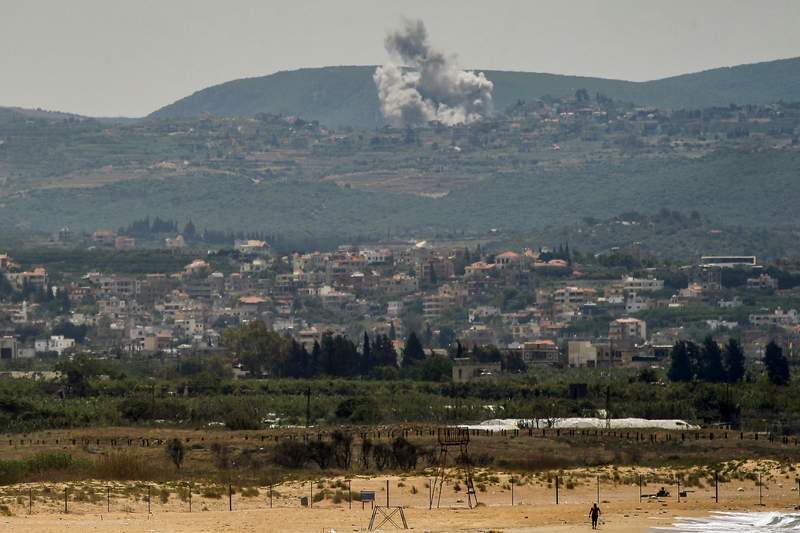
POLICY WIRE — Beirut, Lebanon — The kids down by the coast still skip rocks. But their parents? They’re packing. Always packing, it seems. Another turn of the screw, another phase in a decades-long deadlock where the terms change, but the grim reality — the one lived by those stuck between entrenched ideologies and heavily armed forces — doesn’t. And that’s precisely what Israel’s blunt declaration of southern Lebanon as a ‘combat zone’ signifies. It’s not just semantics; it’s a redefinition of risk, a stark acknowledgment that the thinly veiled ceasefire everyone pretended was holding, well, it isn’t.
Call it a formal announcement of the obvious. For residents along the blue line, every siren, every distant thud, has already whispered this uncomfortable truth. But now, it’s out there, amplified, stripped bare of diplomatic niceties. The Israeli military isn’t just reacting anymore; it’s asserting a unilateral operational shift, essentially giving itself free rein—or so they believe—to conduct what it deems necessary actions across the frontier. This isn’t peace building; it’s war planning. A real messy business, given who lives there.
It’s no accident this comes as regional tensions fester, particularly in a year that’s already seen more than its share of geopolitical earthquakes. Remember that brief, almost comical, interlude of quiet? Didn’t last, did it? The fragile truce, a sort of whispered agreement more honored in the breach than the observance, finally ruptured. And because there’s always an underlying objective beyond the immediate, analysts are dissecting whether this is merely defensive posturing or a precursor to something much larger, a calculated escalation designed to reshape the security calculus entirely.
“We can’t simply stand by and allow Hezbollah to dictate the terms of engagement along our northern border,” declared Rear Admiral Daniel Hagari, spokesperson for the Israel Defense Forces, in a recent briefing, his tone reflecting a familiar steely resolve. “This designation protects our soldiers and our citizens by enabling us to strike with greater agility and decisiveness when threats emerge. We’ve got a sovereign right to secure our borders.” And you can hear the unspoken threat in that statement: more will follow.
But the ramifications—oh, they don’t stop at the immediate flashpoints. They ripple. In Islamabad, diplomatic circles are watching, deeply uneasy. For a country like Pakistan, deeply engaged with its own security challenges and acutely aware of Muslim solidarity, regional conflagrations carry significant weight. Senior diplomat Ayesha Farooq, speaking privately to Policy Wire, expressed a sentiment shared across the Muslim world: “Every escalation here, every life lost, it resonates with profound grief across our ummah. We’re imploring all parties for restraint, for a return to sense before this tragedy consumes the wider region. The human cost, economically and socially, it’s something many in South Asia understand intimately.” They’ve got their own borders to worry about, and the contagion of instability is real.
The numbers don’t lie, either. According to the United Nations Interim Force in Lebanon (UNIFIL), civilian casualties in the border region surged by nearly 300% in the last quarter compared to the preceding one, a stark indicator of how precarious life has become. That’s a grim reality for Lebanese citizens who’ve already endured economic meltdown, governmental paralysis, and a general sense of being caught in the crosshairs. But this isn’t news to them, not really.
📄 POLICY WIRE WHITEPAPER PUBLISHED: PAKISTAN'S NATIONAL SECURITY POLICY PRIORITIES
👉 READ BY CLICKING HEREIsrael’s move forces an uncomfortable reassessment for international observers who’d hoped a de-escalation path could still be cobbled together. The rules of engagement? They’ve changed. Hezbollah, with its significant arsenal — and deep political roots in Lebanon, won’t likely back down. They’ve their own constituencies to answer to, their own narratives of resistance to uphold. And that’s the dangerous rub: two heavily armed entities, both convinced of their rectitude, operating in close quarters where every misstep can ignite a larger blaze.
This situation also raises difficult questions for those nations caught in the orbit of Middle Eastern dynamics. Consider how these ongoing conflicts can reshape alliances — and priorities. For an emergent power like China, actively investing in Pakistan through the China-Pakistan Economic Corridor, regional stability isn’t just desirable; it’s essential. Constant friction jeopardizes long-term strategic plans — and investment opportunities. They’re looking for a smooth road for trade, not a minefield.
What This Means
This declaration isn’t just about tactical shifts; it’s a strategic gamble, a public flexing of muscles that alters the risk assessment for every actor in the region. Politically, it grants the Israeli government (already under domestic pressure, you know, for its conscription conundrums and other woes) greater leeway to operate. Economically, it’s a disaster in the making for southern Lebanon, exacerbating an already catastrophic humanitarian situation and ensuring flight capital continues its exodus. No one invests where artillery rounds regularly land. For Lebanon, already teetering, it deepens the security dilemma: how do you control a non-state actor like Hezbollah when the stakes are so catastrophically high?
It’s also a stark warning to international mediators: their old playbooks aren’t going to cut it anymore. The diplomatic window—if one ever truly existed—is slamming shut. What we’re seeing is a shift from localized skirmishes to an expanded operational doctrine. And that makes everybody a little bit jumpy. The implications stretch far beyond the immediate border, creating a vortex of instability that regional and global powers can’t afford to ignore. Don’t kid yourself, the impact of such decisions bounces around the globe faster than you think.