


Beyond the Pitch: Xavi Simons’ ACL Rupture Decimates Tottenham’s Survival Bid, Rattles Dutch World Cup Ambitions
POLICY WIRE — London, UK — A single, wrenching moment on a Wolverhampton pitch—the kind that reverberates far beyond the stadium—has just redefined the precarious futures of a struggling Premier...

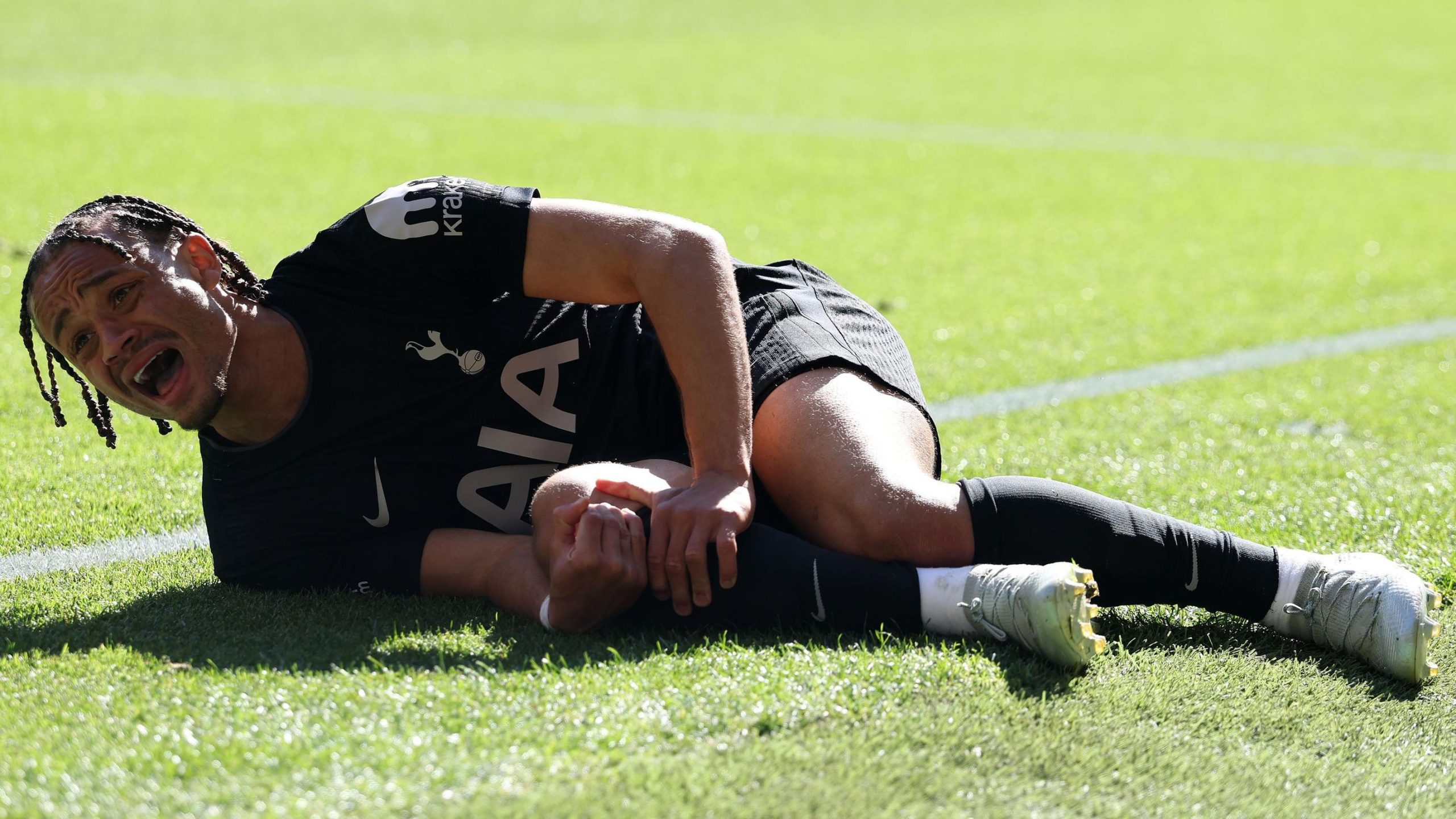
POLICY WIRE — London, UK — A single, wrenching moment on a Wolverhampton pitch—the kind that reverberates far beyond the stadium—has just redefined the precarious futures of a struggling Premier League club, a national team, and a young man whose athletic destiny now hangs by a tendon. Xavi Simons, Tottenham’s £52 million summer acquisition, finds his season, and indeed his World Cup aspirations, cruelly amputated by a ruptured anterior cruciate ligament. And so, the brutal calculus of elite football asserts itself once more.
The 23-year-old Dutch attacking midfielder, a player whose dazzling footwork often provides the lone spark in Tottenham’s otherwise dim campaign, crumpled to the turf during Saturday’s narrow 1-0 victory over Wolves. Initially rising, he soon fell again, clutching his knee—a tableau painfully familiar to anyone who’s ever witnessed the abrupt termination of a promising season. “Life can be cruel, — and today it feels that way,” Simons lamented in a raw social media dispatch. “Honestly, I’m heartbroken. None of it makes sense.” His words echo the silent despair of countless athletes whose careers are dictated by the capricious fragility of the human body, particularly in a sport where explosive movements are paramount.
But Simons’ personal tragedy is Tottenham’s deepening crisis. This isn’t merely a setback; it’s a catastrophic blow to a club already teetering on the brink of relegation. Despite the Wolves win, Spurs lurk two points from safety with just four fixtures remaining—a gauntlet that includes encounters with Champions League hopefuls Aston Villa and Chelsea, alongside fellow strugglers Leeds and Everton. The club, which has already churned through two managers this term (Thomas Frank and Igor Tudor, before Roberto de Zerbi took the helm), now faces its ultimate test devoid of its most incisive attacking force.
Tottenham Hotspur Chairman Daniel Levy, known for his astute, sometimes ruthless, business acumen, didn’t mince words behind closed doors, sources close to the club indicate. “This isn’t just about a player; it’s about the financial underpinning of our strategic vision, now severely compromised,” he reportedly declared, underscoring the millions invested and the potential financial vortex of Championship football. The statistics bear out Simons’ irreplaceable value: Spurs average 1.5 goals per game when he starts, a stark contrast to just one goal when he’s absent from the starting XI, according to Opta data. He’s a creative fulcrum, consistently leading the team in chances created — and shots in recent pivotal matches. Without him, who fills that void?
The repercussions don’t stop at White Hart Lane. Across the North Sea, the Netherlands national team is left to recalibrate its World Cup aspirations. The global spectacle, slated for the United States, Canada, and Mexico, commences June 11, with the Oranje kicking off their Group F campaign against Japan on June 14. For Ronald Koeman, the Dutch national team manager, the news lands like a tactical bomb. “Xavi’s absence is a profound tactical blow; his flair, his vision, they’re not easily replaced,” Koeman later conveyed to the Dutch FA, “But the greater tragedy is for the young man himself, carrying the hopes of a nation, now grounded by circumstance.” It’s a sobering reminder that for all the billions swirling in European football, individual careers remain heartbreakingly vulnerable to the caprice of fate.
For legions of fans across Lahore or Jakarta, glued to Premier League action, Simons’ plight isn’t merely a European club’s woe; it’s a stark reminder of the brutal fragility inherent in the global game, a spectacle followed with fervent devotion across the Muslim world. The investment in young talent, whether from the Dutch academies or burgeoning football scenes in South Asia, faces the same high-stakes physiological risks, underlining the universal human narrative woven into the fabric of sport. (And, really, isn’t that what draws us in?)
What This Means
The immediate political — and economic implications are manifold. For Tottenham, relegation isn’t just a sporting indignity; it’s a financial catastrophe potentially costing hundreds of millions in broadcast revenue, sponsorship deals, and player valuations. Simons, a £52 million investment, now becomes a depreciating asset for at least six to nine months, impacting future transfer market flexibility. The club’s recruitment strategy, already criticized for its revolving door of managers, will face intensified scrutiny. the Netherlands’ World Cup squad selection—and their tactical approach—will require significant adjustment, potentially altering their prospects on the world stage. It’s a microcosm of how the health of one elite athlete can ripple through multi-billion-dollar industries, affecting everything from national pride to corporate balance sheets. This incident also re-ignites perennial debates concerning player welfare, intense fixture congestion, and the ever-escalating physical demands placed on modern footballers. It’s a geopolitical ripple, if you will, emanating from a single, agonizing moment.
So, as Simons begins the long, arduous journey of rehabilitation, his teammates must summon an almost mythical resilience. Tottenham’s fight for Premier League survival has just become a desperate, bare-knuckle brawl—one they’ll have to wage without their brightest light, and without the certainty of what his eventual return will even look like. It’s a testament to the unforgiving nature of top-tier sport, where triumph — and tragedy often share the same breath.