
The Brown-White’s Relegation Fallout: A Leadership Unraveling on the Reeperbahn
POLICY WIRE — Hamburg, Germany — The faint echo of celebratory chants still lingers around the Millerntor, a haunting soundtrack to FC St. Pauli’s recent demotion. But for all the passion in the...

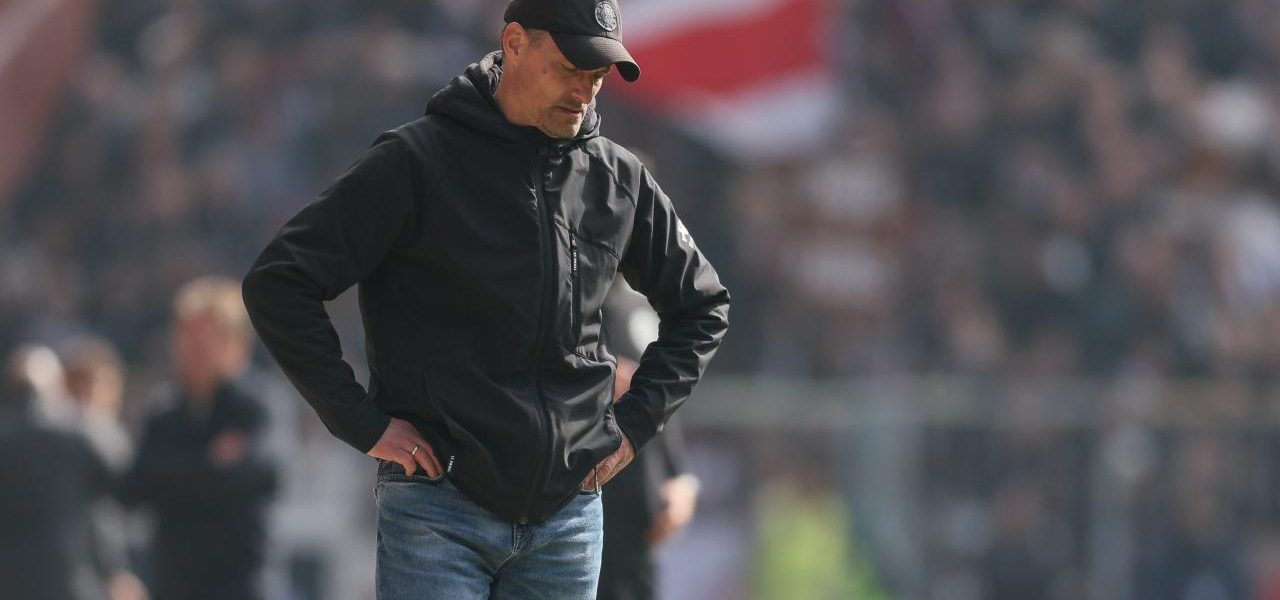
POLICY WIRE — Hamburg, Germany — The faint echo of celebratory chants still lingers around the Millerntor, a haunting soundtrack to FC St. Pauli’s recent demotion. But for all the passion in the stands, the boardrooms tell a different, decidedly more prosaic, story: one of managerial divorce. Alexander Blessin, the man tasked with guiding the Kiezklub, isn’t just seeing out his contract; he’s being shown the door a year ahead of schedule, not by a single cataclysmic defeat, but by an incompatibility of purpose that seems almost philosophical in its depth. It’s never just about the wins — and losses, is it?
It’s a familiar script in modern football – the coach becomes the sacrificial lamb, the first head to roll when the chips are down. Yet, this split between Blessin, 53, — and the iconic Hamburg outfit feels particularly stark. His arrival was hailed with guarded optimism two years back, filling the sizeable shoes left by Fabian Hürzeler, who’d hopped across the Channel to Brighton & Hove Albion, trading St. Pauli’s distinct subculture for Premier League glitz. Blessin, then, was meant to be the steady hand, the pragmatic choice. But pragmatism, it turns out, couldn’t bridge the widening chasm between his strategic blueprint and the club’s often-idiosyncratic long-term vision.
Sources close to the club indicate the departure, first reported by the often-prescient Bild, wasn’t about performance in isolation—St. Pauli did get relegated, after all—but about irreconcilable differences concerning player development, transfer strategy, and the very identity of the squad going forward. “We didn’t just need a tactician; we needed someone who understood the soul of St. Pauli,” a high-ranking club official, speaking on background, confessed to Policy Wire. “And when that alignment isn’t there, no amount of goodwill can sustain the partnership, especially with so much on the line economically.”
Relegation, you see, isn’t just about sporting disappointment; it’s an immediate, significant fiscal hit. Clubs dropping from Germany’s top flight can face a revenue decline of up to 40% in broadcasting and sponsorship income, according to Deloitte’s football finance reports. That’s real money, translating to job cuts, scaled-back ambitions, and intense pressure on management to stabilize the ship. Because in football, as in politics, solvency is survival. But it also affects how they attract global talent, including those from emerging markets.
“Sometimes a fresh start is necessary for all parties, and we accept the club’s decision with respect for their vision,” Blessin stated in a prepared message released by his agent. “I wish the team and the loyal supporters nothing but the very best as they rebuild.” That’s a polite parting shot, if you’re reading between the lines, acknowledging the diverging “visions” without pointing fingers. But it’s clear the power dynamics shifted irrevocably once the mathematical certainty of second-tier football settled in.
📄 POLICY WIRE WHITEPAPER PUBLISHED: PAKISTAN'S NATIONAL SECURITY POLICY PRIORITIES
👉 READ BY CLICKING HEREAnd for a club like St. Pauli, whose fan base extends far beyond Hamburg’s city limits, known for its fierce anti-racist and left-wing politics, leadership shifts carry weight. Its ethos resonates in unexpected corners, even influencing fan culture and solidarity movements in places like Pakistan, where youth football and social activism often intertwine against conservative backdrops. For these global supporters, a leadership change isn’t just about football results; it’s about the integrity of the club’s identity, its moral compass in a commercialized sport. They’ve long appreciated a team that speaks truth to power, often literally, with their strong stands on social justice issues. Relegation, then, represents not just a slip down a division, but a potential erosion of their platform.
What This Means
This leadership upheaval at St. Pauli signals more than just a search for a new head coach; it’s a profound recalibration. Politically, the club now enters a period of intense scrutiny, with a demanding and vocal fan base watching every move the board makes. They’ve gotta prove they’re not just prioritizing profit over principles, even while staring down financial realities. Economically, the new management team faces a double whammy: stabilizing finances after relegation and investing wisely to secure a swift return to the Bundesliga. It’s a delicate balance of cost-cutting and strategic spending, where one wrong move could plunge them deeper into the footballing wilderness. The impact stretches beyond Germany, too; instability at an ideologically driven club like St. Pauli could marginally impact its global appeal and its potential to attract certain demographics of players and partners who value its unique stance, including those from the broader Muslim world who might see St. Pauli as a principled, progressive beacon in the often-muddled world of professional sports. Expect an appointment to be made quickly, as the clock for preseason training, and thus the arduous path back to the top tier, has already started ticking. And you can bet the faithful, both locally and internationally, will be watching, assessing, and perhaps, subtly, judging.