


Minnesota’s Unsung Heroes Seize Playoff Bragging Rights, Disrupting Established Order
POLICY WIRE — Minneapolis, USA — It wasn’t the points, nor even the rebounds, that truly clinched it. It was the audacity. A collective, defiant snarl hurled squarely at the...

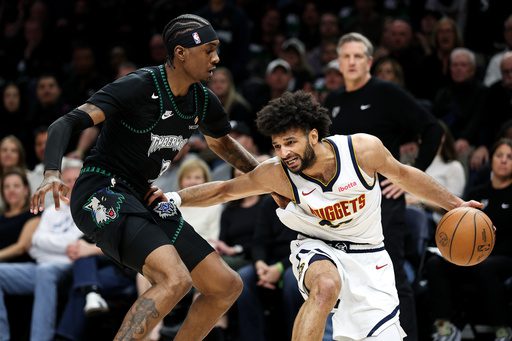
POLICY WIRE — Minneapolis, USA — It wasn’t the points, nor even the rebounds, that truly clinched it. It was the audacity. A collective, defiant snarl hurled squarely at the reigning champions, a challenge that landed with the thud of an unexpected knockout. The Minnesota Timberwolves, hobbled and written off by most prognosticators, didn’t just beat the Denver Nuggets 110-98 in Game 6; they exorcised a persistent demon, reclaiming a narrative many thought was irrevocably lost to superior star power and recent history.
Jaden McDaniels, the very embodiment of this fresh, unapologetic Minnesota ethos, wasn’t merely a leading scorer with his 32 points and 10 rebounds. No, he was the architect of chaos, the antagonist who relished the role. He and an improbable starting five—cobbled together from injury reserves and sheer desperation—orchestrated a masterclass in controlled aggression. Their unexpected triumph wasn’t just a win; it was a profound declaration that sometimes, sheer will trumps even the most polished of pedigrees.
The landscape of the Western Conference has, overnight, shifted underfoot. Depleted squads aren’t supposed to dispatch champions. But they did. With their top three guards – Anthony Edwards, Donte DiVincenzo, and Ayo Dosunmu – sidelined by ailments (a fact that should’ve rendered them toothless), the Timberwolves veered into an unconventional ‘big ball’ strategy. Rudy Gobert, Julius Randle, and Naz Reid formed a formidable interior triumvirate, dominating the painted area and the glass. A commanding 64-40 advantage in points in the paint, as reported by the Associated Press, underscored their physical dominance, utterly neutralizing Denver’s typically potent offensive flow.
And what a show it was. Terrence Shannon Jr., thrust into an unfamiliar starting role, exploded for 24 points, injecting a jolt of pure, unadulterated speed that the Nuggets couldn’t quite contain. It’s a testament to depth, certainly, but more fundamentally, it’s about belief. They just wouldn’t yield.
“This is what you don’t really teach. This is about will. It’s about heart, and that’s how we were able to overcome this great challenge,” declared a visibly charged Rudy Gobert, whose own 10 points, 13 rebounds, and eight assists anchored the defense. His long arms and prescient anticipation were a perpetual thorn in the side of Nikola Jokic, who, despite his 28 points, 10 assists, and nine rebounds, seemed to wrestle with an unseen force throughout the contest. Jamal Murray, Denver’s customary offensive catalyst, simply couldn’t escape McDaniels’ tenacious coverage, managing a paltry 12 points on a frigid 4-for-17 shooting night.
McDaniels, who’d ignited the rivalry earlier in the series with a biting jab at the Nuggets’ “bad defenders,” savored the moment. “I’m just happy it’s over, happy we were able to come out on top,” he muttered, a hint of vindication in his tone. “Stuff was said. I’m just happy we were all able to prove our point, get the win, and move on to the next round.” It’s rare to see such frankness, such an open acknowledgment of the psychological warfare at play.
📄 POLICY WIRE WHITEPAPER PUBLISHED: PAKISTAN'S NATIONAL SECURITY POLICY PRIORITIES
👉 READ BY CLICKING HEREThe Timberwolves’ motivation, already high, had surged further when DiVincenzo went down in Game 4, followed by Edwards. You just knew they’d play with an edge. Shannon’s three-point play late in the fourth quarter provided a crucial cushion, but it was McDaniels’ signature mid-range pull-up – a swish from 19 feet – that delivered the dagger, cementing a seven-point lead with just over a minute remaining. He wasn’t done, though. He then intercepted a harried pass from Jokic, cementing the victory and unleashing a torrent of jubilant noise from the home crowd. It was, frankly, poetic justice.
This kind of underdog narrative, incidentally, holds particular resonance far beyond American shores. In nascent sporting cultures, particularly across South Asia and the broader Muslim world, stories of resilience and unexpected triumphs against established giants are not just celebrated; they’re deeply woven into the cultural fabric. Just as global talent flows are reshaping sports, so too do universal tales of grit capture imaginations, inspiring millions who watch on screens from Lahore to Jakarta. They don’t just see basketball; they see a mirror to their own struggles — and aspirations.
What This Means
The Timberwolves’ victory isn’t merely a bracket advancement; it’s a profound statement about resourcefulness under duress and the unpredictable nature of leadership. Politically, it mirrors the emergence of unlikely figures who, when institutions falter, rise from the ranks to galvanize a movement. Economically, it showcases the immense value of adaptable strategy and the surprising returns on investment in less-heralded talent when core assets are compromised. This isn’t just about athletic prowess; it’s about the systemic ability to pivot, to innovate, and to find strength in perceived weakness. For a league increasingly driven by star power and predictable narratives, Minnesota’s improbable surge injects a potent dose of strategic complexity, proving that even in a highly monetized, data-driven environment, the human element—sheer, bloody-minded determination—can still confound the algorithms and redefine success. It also subtly underscores a broader truth: collective spirit, when ignited, can indeed prove more consequential than individual brilliance, forcing a reconsideration of what truly constitutes a winning formula in any high-stakes arena.
The repercussions will ripple through the league for weeks. The Western Conference now faces a far less predictable path, and every general manager will be scrutinizing their bench, their tactical flexibility, and their team’s intangible ‘heart.’ This isn’t just a playoff win; it’s a blueprint for defying convention, a compelling argument for the underdog in an increasingly stratified sporting world. It’s a moment that could, frankly, reshape future strategic thinking.