


Tuscany’s Enduring Legacy Under Siege: Inferno Forces Mass Evacuation Amidst Climate’s Relentless March
POLICY WIRE — Florence, Italy — The scent of burnt timber, acrid and pervasive, now hangs heavy over one of Europe’s most storied landscapes. It isn’t just rural homes succumbing to the...

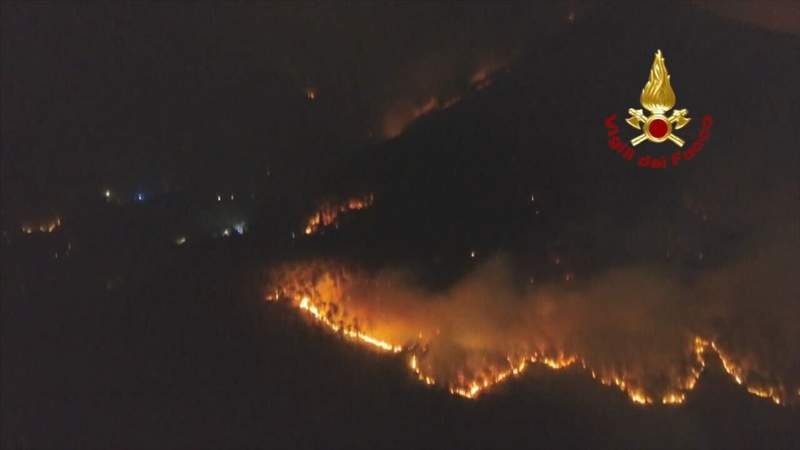
POLICY WIRE — Florence, Italy — The scent of burnt timber, acrid and pervasive, now hangs heavy over one of Europe’s most storied landscapes. It isn’t just rural homes succumbing to the conflagration; it’s a tangible piece of human patrimony, the ancient hills and cypress-lined vistas of Tuscany, that faces relentless assault. Thousands have been dislodged from their lives, their routines shattered, as an aggressive wildfire tears through swathes of the region, yet the most profound casualty might just be the fading illusion of climate stability.
Behind the immediate headlines of mass evacuations — and beleaguered firefighters, a deeper narrative unravels. The blaze, centered near the towns of San Casciano — and Tavarnelle Val di Pesa, isn’t an isolated incident. It’s a recurring, grim tableau playing out across the Mediterranean rim, year after year, with increasing ferocity. Emergency services, stretched thin, have worked around the clock, battling an enemy that feeds voraciously on dry brush and an unforgiving wind. They’ve deployed air tankers, helicopters, and hundreds of personnel, but the sheer scale of the inferno often outpaces even the most coordinated responses.
Still, for the residents forced from their properties, the statistics offer little solace. Imagine, for a moment, the jarring jolt of an overnight order to abandon everything — pets, photographs, the accumulated minutiae of a lifetime — to the capricious whims of advancing flames. Officials confirmed that over 1,500 people have been evacuated from homes and tourist accommodations, with several communities now resembling ghost towns, their inhabitants watching helplessly from temporary shelters.
Tuscan Regional Governor Eugenio Giani didn’t mince words, shot back at suggestions of negligence during a press briefing. “We won’t let this inferno claim our spirit or our future. The resilience of the Tuscan people is as enduring as our hills, but the scale of this challenge demands a commensurate response from both regional and national authorities,” Giani declared, his voice firm despite the visible strain. And he’s not wrong; the economic and social fabric of these areas depends heavily on agriculture and tourism, both now gravely jeopardized.
Meanwhile, the head of Italy’s Civil Protection Department, Fabrizio Curcio, offered a more somber prognosis. “Year after year, the script writes itself with hotter type. This isn’t an anomaly; it’s the stark, undeniable reality of a changing climate, demanding more than just firefighting – it demands foresight, and a profound re-evaluation of how we interact with our environment,” Curcio observed, his statement a tacit admission of a battle against forces larger than any single nation. It’s a battle many countries are grappling with (one might consider how Germany’s societal fault lines are similarly tested by novel stresses).
At its core, this Tuscan tragedy, much like the devastating floods that routinely plague Pakistan or the unyielding heatwaves that turn swathes of South Asia into death traps, is a visceral manifestation of a global climate in disarray. The world’s arid — and semi-arid regions are experiencing longer, hotter dry spells, rendering them tinderboxes. According to a recent report by the European Forest Fire Information System (EFFIS), the Mediterranean region has seen an average increase of over 50% in the annual burnt area from wildfires in the last decade compared to the 1980-2000 period. It’s a stark, unambiguous trajectory.
📄 POLICY WIRE WHITEPAPER PUBLISHED: PAKISTAN'S NATIONAL SECURITY POLICY PRIORITIES
👉 READ BY CLICKING HEREWhat This Means
The immediate political implication is heightened pressure on Italian authorities, both regional and national, to improve disaster preparedness and allocate greater resources to preventative measures. There’s an inevitable economic fallout too. Tuscany’s reputation as a pristine, idyllic destination is subtly eroded with each wildfire, impacting the vital tourism sector. Think of the long-term capital flight and rehabilitation costs — it’s a drain on state coffers that could otherwise fund public services or economic growth. the agricultural sector, particularly the renowned wine and olive oil industries, faces immense losses, pushing local communities to the brink. It’s not simply about extinguishing flames; it’s about shoring up an entire way of life against an increasingly hostile environment. The resilience needed is akin to urban centers finding novel ways to rejuvenate after unforeseen events, a blueprint for civic revitalization that Italy might increasingly need to adapt.
And so, as the smoke plumes from Tuscany drift across the Italian sky, they carry with them not just ash, but a potent, unsettling message. This isn’t merely a localized emergency; it’s an urgent, globally resonant alarm bell, signaling that the planet’s patience is wearing thin, and its response, for now, is fiery and uncompromising.