

Berlin’s Awkward Awakening: Can Conscription 2.0 Repackage German Power?
POLICY WIRE — Berlin, Germany — For a nation that spent eighty years studiously forgetting how to march in lockstep, Germany’s recent pivot feels less like a confident stride and more like a...

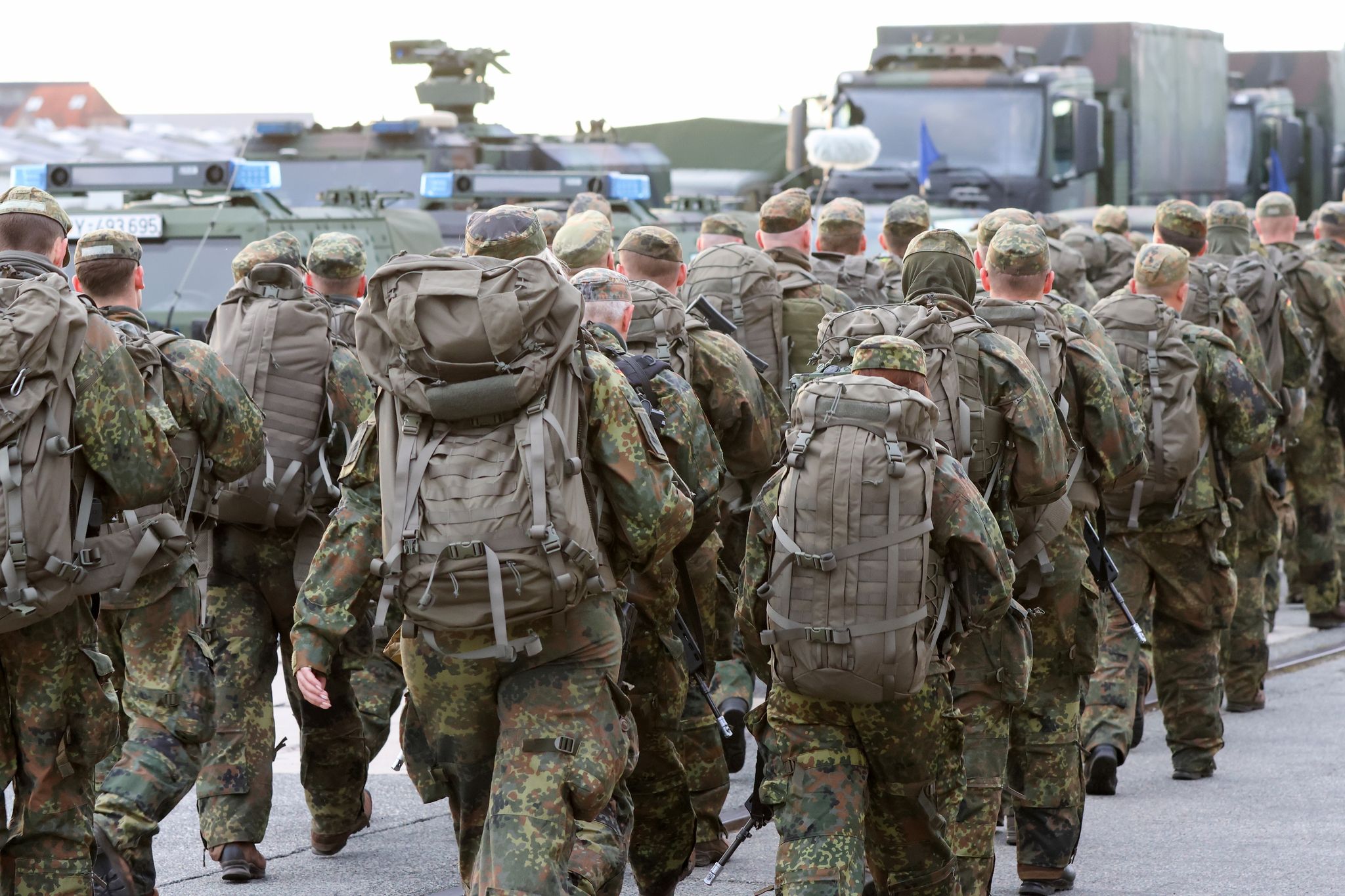
POLICY WIRE — Berlin, Germany — For a nation that spent eighty years studiously forgetting how to march in lockstep, Germany’s recent pivot feels less like a confident stride and more like a reluctant shuffle into combat boots. Europe’s quiet economic giant, long content to outsource its hardest security questions to Washington and Brussels, finds itself in an unexpected uniform these days. It’s got young people, for crying out loud, actually signing up.
Chancellor Olaf Scholz’s government, responding to a continent-wide chill from the east, quietly resurrected a variation of military service – a voluntary one, for now, designed to entice rather than command. And, wouldn’t you know it, the numbers are, if not astounding, certainly more than a trickle. We’re talking real enthusiasm, relatively speaking. Berlin, once the poster child for demilitarization, is now trying to make soldiering palatable, perhaps even chic, to a generation more concerned with climate change than combat doctrine. But don’t misunderstand; this isn’t exactly the Prussian goose-step reborn. It’s softer. Millennial-friendly, almost.
Defense Minister Boris Pistorius, ever the pragmatic voice in Scholz’s cabinet, didn’t mince words when pressed on the program’s initial traction. “Look, we’re not just recruiting soldiers; we’re rebuilding a critical pillar of our national resilience, piece by agonizing piece,” he stated, his jaw set. “These aren’t easy times. The luxury of strategic apathy? It’s gone. Finished. We need a strong Bundeswehr, — and that requires investment not just in hardware, but in human potential.”
The numbers themselves, though nascent, tell an interesting tale. Applications for this new ‘selective’ service model have reportedly seen a 30% jump since the preliminary framework was floated last year, according to Bundeswehr internal data shared with Policy Wire. It’s not quite a tidal wave, but it’s a solid ripple – enough to make recruitment officers actually crack a smile. What precisely does that say about modern German youth? Is it a sudden burst of patriotism, or simply a stable job market — and benefits package in uncertain times?
And because the world rarely affords Germany the comfort of an internal, monochromatic defense policy, this shift plays out on a far wider stage. Pakistan, for instance, a nation with its own deeply embedded military ethos and a significant diaspora throughout Europe, watches such developments with interest. The German approach, focused on integration and an all-voluntary (for now) framework, presents a contrast to traditional, often mandatory, service models found in parts of South Asia. Can Germany successfully attract diverse populations—including those of Pakistani heritage within its own borders—into a system historically seen as ethno-nationally Germanic? It’s a quiet social experiment playing out amidst the roar of global politics. Chancellor Scholz himself offered a broader European context: “A secure Europe cannot be built on the historical fictions of perpetual peace. It needs a robust Germany, not merely for its own defense, but for the collective security we all depend on. This new service is about more than battalions; it’s about a new collective self-awareness.” His tone was notably sober.
It’s an awkward fit, this new German militarism. A voluntary program with selective elements, it stops short of a full return to the conscription Germany abandoned in 2011. Young adults receive a six-month basic training, with an option to extend for up to 17 months in specialist roles. Think of it as a starter kit for national service. A trial membership, if you will. Because in this complex geopolitical landscape, Berlin’s trying to find a new beat—one that sounds like ‘resolve’ but doesn’t quite echo ‘reich.’
What This Means
Economically, a more robust Bundeswehr, even a partially voluntary one, means increased defense spending diverting funds from other sectors, yes, but also stimulating certain domestic industries—a sort of military-industrial complex, German-style. Politically, it signals a significant ideological shift within the Social Democratic Party (SPD), Scholz’s own, which historically eyed military buildup with extreme caution. This re-engagement could strengthen Germany’s voice within NATO and the EU, giving Berlin more leverage in defense strategies and shared security burdens. But it’s a tightrope walk: balance European aspirations against ingrained national pacifism, all while navigating the ghost of militarism past. The program also acts as a subtle nod to demographic realities; fewer young Germans mean a more inclusive approach is necessary to fill ranks. It isn’t just about deterring adversaries; it’s about rebranding national service as an attractive career path for a diverse, modern German citizenry, and potentially even providing some interesting employment trends in critical sectors of infrastructure or cyber-defense. Whether that rebranding effort translates into long-term commitment and capabilities, well, that’s the multi-billion-euro question, isn’t it?
The subtle irony here isn’t lost on anyone who remembers Cold War Germany, where compulsory service was a given, and military deferments a noble pursuit for many intellectuals. Now, with genuine threats looming, the German state must market military service like a trendy startup — complete with slick recruitment campaigns and the promise of ‘purpose.’ It’s a very modern problem for a very old nation, wrestling with its past to forge a future nobody truly wanted. This isn’t just about new soldiers; it’s about a nation coming to terms with its global role, whether it likes it or not.