


The Brutal Economics of Celebrity Ailments: Plum’s Injury Sparks Wider Debate
POLICY WIRE — Los Angeles, United States — It’s a truth rarely acknowledged, a quiet drumbeat beneath the roar of cheering crowds: professional sports, for all its glitz and drama, operates on...

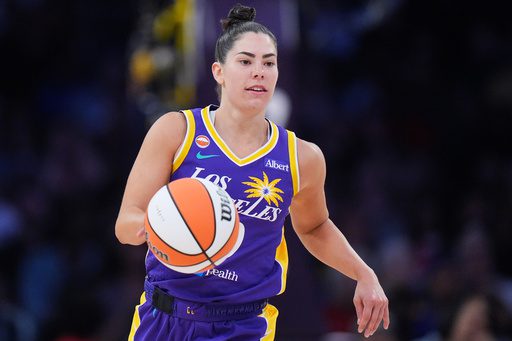
POLICY WIRE — Los Angeles, United States — It’s a truth rarely acknowledged, a quiet drumbeat beneath the roar of cheering crowds: professional sports, for all its glitz and drama, operates on an exceedingly delicate financial chassis. And sometimes, it takes one abrupt jolt—a sudden misstep on the court, a twist of a knee, a tear in a ligament—to remind everyone just how thin the margin is. Such is the current, uncomfortable reality in the Women’s National Basketball Association, where the Los Angeles Sparks face a critical period without their cornerstone talent, Kelsey Plum. This isn’t just about winning games; it’s about broadcast rights, merchandising, future endorsements, and a thousand other calculations made in glass-towered boardrooms.
A competitive landscape like the WNBA is fiercely contested for eyeballs, a perpetual battle against rival leagues and a crowded entertainment ecosystem. Plum’s absence, according to reports, isn’t just a bump in the road; it’s an unforeseen seismic event. The team has confirmed that Kelsey Plum is out indefinitely with a lower left leg injury. And that’s not exactly good news for anyone banking on a championship run, let alone consistent viewership spikes. Team officials stated Wednesday that she’ll be reevaluated in four weeks, in which she’ll miss at least the next 10 games. [QUOTE_PLACEHOLDER]
Think about the sheer force of individual star power in sports—it’s immense, isn’t it? Players like Plum don’t just score points; they move markets. They drive jersey sales. They pull in sponsorship dollars, all part of a larger global sports economy that’s relentlessly expanding its footprint. The loss of such a figure is akin to a sudden, unexpected flaw appearing in a meticulously designed luxury product. And when you’re building a brand—especially one trying to expand internationally, capture new fan bases in burgeoning markets like those across South Asia and the Muslim world—you need your stars shining brightly. Consistency matters, both on the court — and in the marketing narratives.
This particular setback comes after Plum missed three games with a right ankle sprain she sustained in practice earlier this season. But a different leg, a longer timeline. You’ve got to wonder about the resilience required for these athletes—they’re not just playing a game; they’re upholding multi-million-dollar enterprises, all while their own physical forms are subject to incredible stresses. That’s a lot of pressure, isn’t it?
For global media houses, particularly those eyeing nascent markets from Jakarta to Lahore, the allure of American sports is often directly tied to its marquee names. There’s a certain intangible value in broadcasting a game featuring a player who’s second in the WNBA in scoring with 23.9 points per game and sixth in the league in assists with 6.4 per game. Her statistical dominance is a readily consumable narrative, an easy sell to new audiences who might not yet understand the intricacies of team play but recognize undeniable individual brilliance. Without that star, the hook isn’t quite as sharp. Pakistan, for instance, has a burgeoning middle class, many of whom are tech-savvy and increasingly engaged with global cultural trends. The appeal of Western sports, including women’s basketball, holds significant untapped potential there, contingent partly on relatable, high-performing athletes. It’s a soft power play, too.
But this kind of situation spotlights a larger conversation: athlete welfare and the financial models that support professional leagues. Are these organizations doing enough to protect their most valuable assets—the players? Or is the relentless grind of professional sports, with its travel and constant physical demands, inherently too taxing? It’s not a rhetorical question when millions hang in the balance, both for the players — and for the teams.
But the numbers don’t lie about impact. The Sparks (8-8) are 1-3 without Plum in the lineup, according to official team statements. That’s a stark illustration of just how much a single individual can swing fortunes. Her ability to elevate teammates, to take over games, demonstrably affects the win-loss column. It’s an almost perfect one-to-one correlation between her presence — and the team’s ability to compete. And frankly, this matters to everything from playoff seeding to ticket sales — and merchandise moving off shelves.
This isn’t a uniquely American phenomenon. From the English Premier League’s top scorers sidelined with hamstrings to star cricketers in the Indian subcontinent suffering injuries just before a critical series (affecting national sentiment and, let’s be honest, betting markets), the physical integrity of a key athlete is an outsized factor in both on-field results and financial returns. Consider the long-term impact on global branding strategies; how do leagues ensure continuous engagement in, say, Southeast Asia if the players who capture imaginations are intermittently absent? It’s a challenge of perception, a logistical headache, — and a stark economic reality. They’ve got to figure this out.
What This Means
Kelsey Plum’s extended absence underscores the precarity inherent in sports as both entertainment — and big business. Economically, fewer prime-time appearances from a recognized talent translates to potential dips in viewership, particularly from new or expanding markets like those Policy Wire has extensively tracked in South Asia. For leagues aiming for global reach—the NBA has pushed this model for decades, and the WNBA is following suit—star power is currency. Her injury, while tragic for her, becomes a minor headwind for the league’s global marketing efforts. You can’t cultivate loyalty in nascent fan bases without showcasing your top-tier talent consistently.
Politically, the narrative shifts slightly toward athlete welfare. There’s an ongoing debate across all major professional sports regarding player protection, collective bargaining, and injury management. This incident adds another data point to the argument that organizations might need to invest more robustly in injury prevention, recovery science, and insurance schemes. After all, if the stars are the primary economic drivers, protecting them isn’t just humanitarian; it’s sound economic policy for the entire ecosystem. Because the bottom line always, eventually, circles back to who’s on the field—or court—and whether they’re healthy enough to perform. These athletes aren’t just employees; they’re public assets whose physical condition directly affects shareholder value and geopolitical soft power alike. And their resilience isn’t infinite. This situation forces uncomfortable, but necessary, introspection into a sports-industrial complex that rarely pauses to consider its own foundational frailties.