
The ‘Pillow Man’ Enters Minnesota Fray, Redefining Political Pedigree
POLICY WIRE — Washington, D.C. — Just when you think you have a handle on American electoral politics—the usual candidates, the expected endorsements, the meticulously crafted stump...

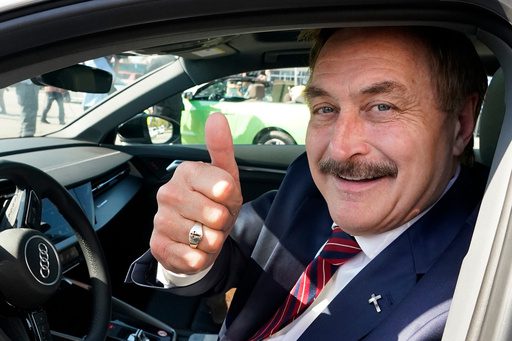
POLICY WIRE — Washington, D.C. — Just when you think you have a handle on American electoral politics—the usual candidates, the expected endorsements, the meticulously crafted stump speeches—something comes along to yank the rug right out from under you. This time, it’s not a seasoned legislator or a military hero; it’s the famed infomercial pitchman for a bedding company, Mike Lindell, now formally anointed by former President Donald Trump as his chosen champion for Minnesota’s governorship. Call him the ‘Pillow Man’ if you like; his rise signals an entirely new chapter in celebrity-turned-politics.
Trump’s backing comes just a day before he’s set to deliver a national address focused on election security—a topic Lindell, like his endorser, has never been shy about offering his own unsubstantiated thoughts on. Trump’s enthusiastic digital decree praised Lindell as “one of America’s greatest and most hard working Patriots,” laying bare the ex-president’s continued penchant for elevating figures whose primary qualification seems to be unbending loyalty and a shared narrative about the 2020 election’s perceived irregularities. What we’re witnessing, really, is a further blurring of lines between reality television and the arduous grind of governance. Trump, you see, posted on Truth Social, declaring, “Mike will be SPECTACULAR!!! He truly loves Minnesota, as do I, and wants to bring it back from oblivion and embarrassment. He can do it!” It’s a sentiment short on policy specifics but long on boosterism, just how the Trump base likes it, honestly.
Lindell, currently navigating a crowded Republican primary field scheduled for August 11, naturally splashed the endorsement all over social media. He then responded to his benefactor with, “I truly appreciate your confidence in me,” quickly adding the familiar rallying cry, “Let’s Make Minnesota Great Again!” For traditional Republicans—those still concerned with actual legislative experience, maybe a modicum of policy depth—it’s got to feel like a gut punch. And for the state’s minority communities, specifically Minnesota’s sizable Somali immigrant population, there’s an undercurrent of genuine alarm. Trump has, with unsettling regularity, employed racist rhetoric to target this group as driving alleged fraud in federally funded childcare programs. This isn’t just a domestic issue, you know; it resonates globally, mirroring political discourse in countries like Pakistan, where similar accusations against marginalized groups are often leveraged for electoral gain, creating palpable unease and threatening social cohesion.
Current Governor Tim Walz, whom Trump has aggressively maligned as incompetent and accused of allowing [QUOTE_PLACEHOLDER] has since ended his bid for a third term. Walz disputes the Trump administration’s characterizations, of course, though investigations into the state’s federally supported childcare programs are ongoing. But the damage from the accusations, particularly those directed at specific ethnic groups, lingers. Such inflammatory rhetoric tends to empower fringe elements, regardless of judicial outcomes—a playbook disturbingly familiar across diverse political landscapes.
Lindell’s Republican primary rivals aren’t exactly leaping to criticize Trump’s selection. It’s a dicey play; taking on the ex-president means alienating a chunk of the base they’ll desperately need later. State House Speaker Lisa Demuth, for instance, has been targeted by Lindell himself for supposedly being [QUOTE_PLACEHOLDER] Her counter is to blame [QUOTE_PLACEHOLDER] Later, she’d post a social media clip of a radio caller who, despite supporting Trump as president, said, “We’ve got to worry about the state of Minnesota. … And I think of all the candidates, Lisa’s got the most knowledge of what’s going on and how to get things done.” Kendall Qualls, another GOP businessman in the race, backed by the Minnesota state GOP itself, put it plainly: [QUOTE_PLACEHOLDER] He then added, “I’ll continue to support him and his America First policies when I am governor.” But even Qualls, a former friend, concedes, “This race won’t be won by national endorsements. It will be decided by Minnesota conservatives.” He’s not wrong about that, though history suggests Trump’s endorsements often carry more weight than some might like to admit.
Senator Amy Klobuchar heads up the Democratic field. In her initial announcement, she zeroed in on Trump administration actions like its [QUOTE_PLACEHOLDER] Klobuchar has proposed plans to tackle fraud and inefficiencies in public spending, leaning on her prosecutor background, stating, [QUOTE_PLACEHOLDER] That audit, she’s promised, “will look at state agencies to identify waste, fraud, and abuse.” She’s also shrewdly distancing herself from Governor Walz, saying, [QUOTE_PLACEHOLDER] And so the stage is set. For Minnesota, it’s not just another governor’s race. It’s a barometer for where the GOP’s loyalty truly lies, — and how far a celebrity endorsement can really take you.
Trump’s track record with endorsements this year is, let’s say, inconsistent. He lost a couple in Georgia and Iowa, forcing him to hedge his bets in South Carolina, ultimately backing both Republican candidates after initially supporting just one. There are 36 gubernatorial elections this November. With currently 26 Republican governors and 24 Democratic governors across the nation, according to the National Conference of State Legislatures, Republicans see Minnesota as a prime target to flip, despite some concerns about Trump’s waning popularity and voters’ grumbling over the economy. What a mess, right?
What This Means
This whole ‘Pillow Man’ endorsement thing isn’t just some bizarre political sideshow; it’s actually a really clear signal about the direction of the modern Republican Party. First, it underscores that the personality cult around Donald Trump still dominates—actual policy knowledge or governmental experience seem less important than unwavering loyalty and the willingness to repeat the Big Lie. This trend threatens to further erode trust in institutions and elevate figures whose primary appeal is their capacity for spectacle, not their grasp of complex state issues.
Economically, if Lindell somehow wins, you’ve got to wonder what kind of fiscal stewardship a businessman whose main product is a foam pillow and whose main policy contribution has been ‘Stop the Steal’ will offer a diverse, economically significant state like Minnesota. His focus on alleged fraud in social programs, often linked to immigrant communities, also suggests a trajectory towards divisive social policy, potentially harming vital segments of the state’s workforce and alienating key voter blocs. This isn’t just about Minnesota either. This narrative of weaponized cultural anxieties, playing on immigrant groups for political points, is an echo we hear from the Philippines to India, eroding civic trust and national unity wherever it goes. The ripple effect of such divisive campaigns on local economies, particularly those reliant on diverse labor and innovation, cannot be overstated.