


Beijing’s Iron Embrace: A Defiant Pact Emerges from Asia’s Shadows
POLICY WIRE — Washington, D.C. — It’s a bit like watching a classic vinyl record spin amidst a streaming revolution, isn’t it? While the global diplomatic dance shifts to a digital, often fractious...

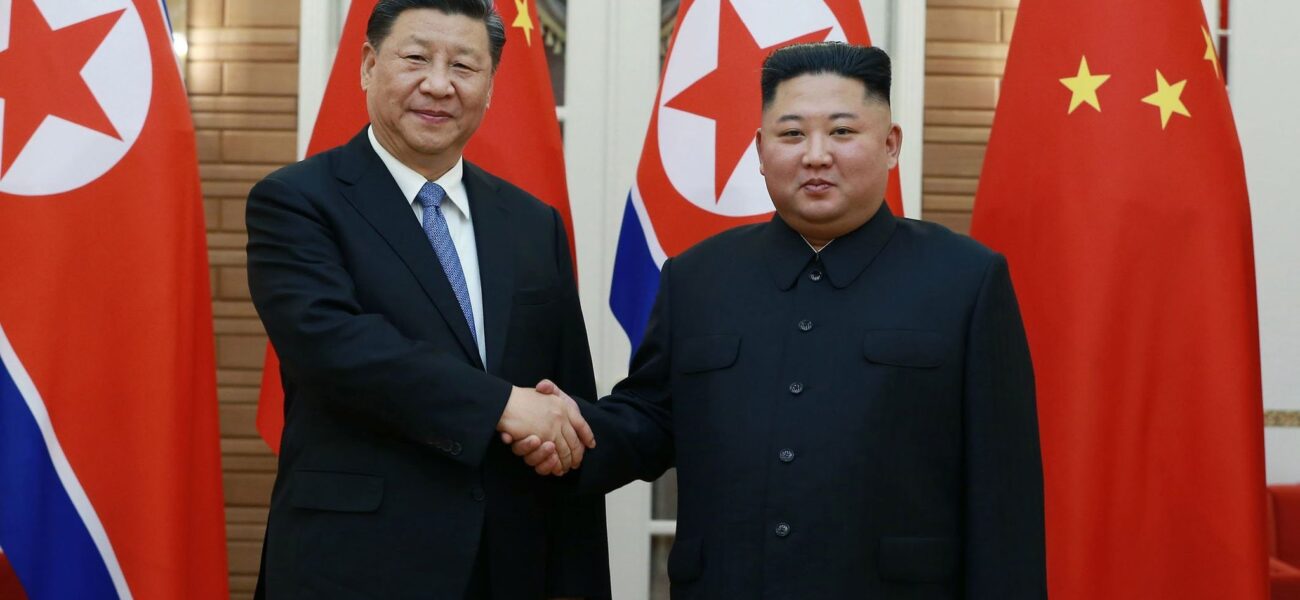
POLICY WIRE — Washington, D.C. — It’s a bit like watching a classic vinyl record spin amidst a streaming revolution, isn’t it? While the global diplomatic dance shifts to a digital, often fractious rhythm, two nations—China and North Korea—just dusted off their old playbook. They’ve opted for a bold, public reaffirmation of their ties. It wasn’t some quiet, backdoor confab; no, this was an official declaration, almost a taunt, flung into an already swirling tempest of international relations.
Monday’s big announcement out of Beijing wasn’t just diplomatic fluff. It was, rather bluntly, a gauntlet thrown down for any watching Western power. Beijing — and Pyongyang aren’t just buddies; they’re declaring themselves thicker than thieves, come what may. A joint statement, rolled out after what’s being called a high-level summit, wasn’t coy. It blared commitments: to juice up their economic development (whatever that means for a pariah state), expand cultural exchanges (more propaganda posters?), and, crucially, reinforce regional security.
And let’s be real, the timing? Immaculate, in that special way geopolitics has of twisting the knife. Both these players feel the world’s icy stare – Pyongyang over its nukes, Beijing over, well, just about everything from Taiwan to the South China Sea. You get the picture. Chinese Foreign Minister Wang Yi laid it on thick, speaking of an everlasting connection: [QUOTE_PLACEHOLDER]. One of Kim Jong Un’s top envoys, Choe Son Hui, reportedly carried a message, reinforcing those [QUOTE_PLACEHOLDER]. They’re practically Siamese twins in this geopolitical context. It’s hard not to notice, the renewed emphasis arrives just as both countries feel the screws tighten, facing increasing pressure from the West on numerous fronts.
It’s an alignment that’s less about shared ideology these days — and more about shared adversaries. You can see Beijing’s calculation a mile off. Having North Korea, even with its nuclear baggage, as a steadfast buffer—or perhaps, an irritating diversion—from US regional strategy? It’s a calculated chess move. A spokesman for the US State Department, predictably, weighed in, urging all nations to strictly abide by UN resolutions on North Korea. They didn’t point fingers directly, but everyone knows who they meant. The messaging here is clear: we’ve got each other’s backs against outside pressures. Period. The developing dynamic between these two states is definitely one to watch as the geopolitical landscape continues to shift dramatically.
But how about other regions, like say, the Muslim world? Take Pakistan. Pakistan, a nuclear power itself, walks a perpetual tightrope, balancing relationships with Western donors and its regional strategic imperatives. They’ve long dealt with the thorny issues of nuclear proliferation and regional security; you can bet they’re eyeing this Beijing-Pyongyang re-embrace with a shrewd, discerning gaze. They know a thing or two about navigating alliances that chafe, and how the stability of one alliance can trigger jitters across another. This isn’t just some distant squabble to them; it’s a masterclass in how alliances, even seemingly mismatched ones, can redefine power blocks and ripple far beyond East Asia. When major powers cozy up, countries like Pakistan inevitably have to recalibrate their own strategic equations, whether it’s regarding defense cooperation, trade routes, or diplomatic allegiances.
📄 POLICY WIRE WHITEPAPER PUBLISHED: PAKISTAN'S NATIONAL SECURITY POLICY PRIORITIES
👉 READ BY CLICKING HEREBecause let’s face it, Beijing’s economic assistance? It’s basically been the IV drip for Pyongyang under an ever-growing pile of international sanctions. Without China, frankly, who knows if Kim’s regime even stays afloat. You look at the numbers, — and they don’t lie. The World Bank estimates North Korea’s official trade with China accounts for over 90 percent of its total external commerce. Ninety percent! That isn’t just an alliance; it’s a lifeline. This deeper pairing isn’t just charity from China’s end either; it squarely serves China’s grander game of curbing Washington’s expansive influence across Asia. It’s a pragmatic, if sometimes awkward, arrangement.
And consider how this plays with Beijing’s narrative on global leadership. While the West often paints China as a disruptor, Beijing likes to project an image of a responsible, if fiercely independent, global power, a natural successor to American hegemony. But that image? It gets a bit smudged when your closest ally is a pariah state rattling sabers with nuclear ambitions. It doesn’t scream stability to a lot of capitals, does it? Public perception of global powers shifts subtly, and optics like this don’t help those who see Beijing as the calmer alternative.
What This Means
This reassertion of ties isn’t merely symbolic; it’s an operational statement. For North Korea, it solidifies an indispensable economic and diplomatic shield against relentless international pressure. They’ve effectively reiterated their allegiance to a formidable backer, perhaps giving them renewed confidence to pursue their provocative nuclear and missile programs without fear of complete isolation. It tells the UN Security Council that consensus on North Korea will remain fractured, paralyzed by Beijing’s veto power. For China, it’s a power move. They’re signalling defiance against what they perceive as Western encirclement, leveraging a complex, high-stakes alliance to assert their regional influence and present a united front against common geopolitical adversaries. It says, ‘we have allies too, thank you very much.’ Economically, this pledge, however vague, promises to solidify illicit trade routes and sustain North Korea’s survival infrastructure. But politically? It entrenches an axis that’s inherently destabilizing for Northeast Asia, forcing countries like South Korea and Japan to lean harder on the US, creating a spiral of deepening regional militarization. Expect louder rhetorical exchanges, intensified proxy posturing, and maybe—just maybe—a greater likelihood of miscalculation. The world just got a little less predictable. You can be sure many folks from Islamabad to Kuala Lumpur will be watching closely for what these deepening ties portend for South Asia’s own precarious balance.