

The Quiet Revolution: Oklahoma City’s Ascendance Signals a Shifting NBA Order
POLICY WIRE — Oklahoma City, USA — It wasn’t the roar of a conquering army; it was more like the efficient hum of a well-oiled, newly calibrated machine. The Oklahoma City Thunder, fresh off a...

POLICY WIRE — Oklahoma City, USA — It wasn’t the roar of a conquering army; it was more like the efficient hum of a well-oiled, newly calibrated machine. The Oklahoma City Thunder, fresh off a surprisingly swift four-game dispatch of the Phoenix Suns, scarcely paused for breath. That clinical sweep — their third consecutive first-round shutout, mind you — felt less like a triumph and more like a mere waypoint, a bureaucratic formality preceding the real work. What transpired wasn’t just a series victory; it’s a subtle, almost eerie harbinger of a profound power shift within the NBA’s often predictable firmament.
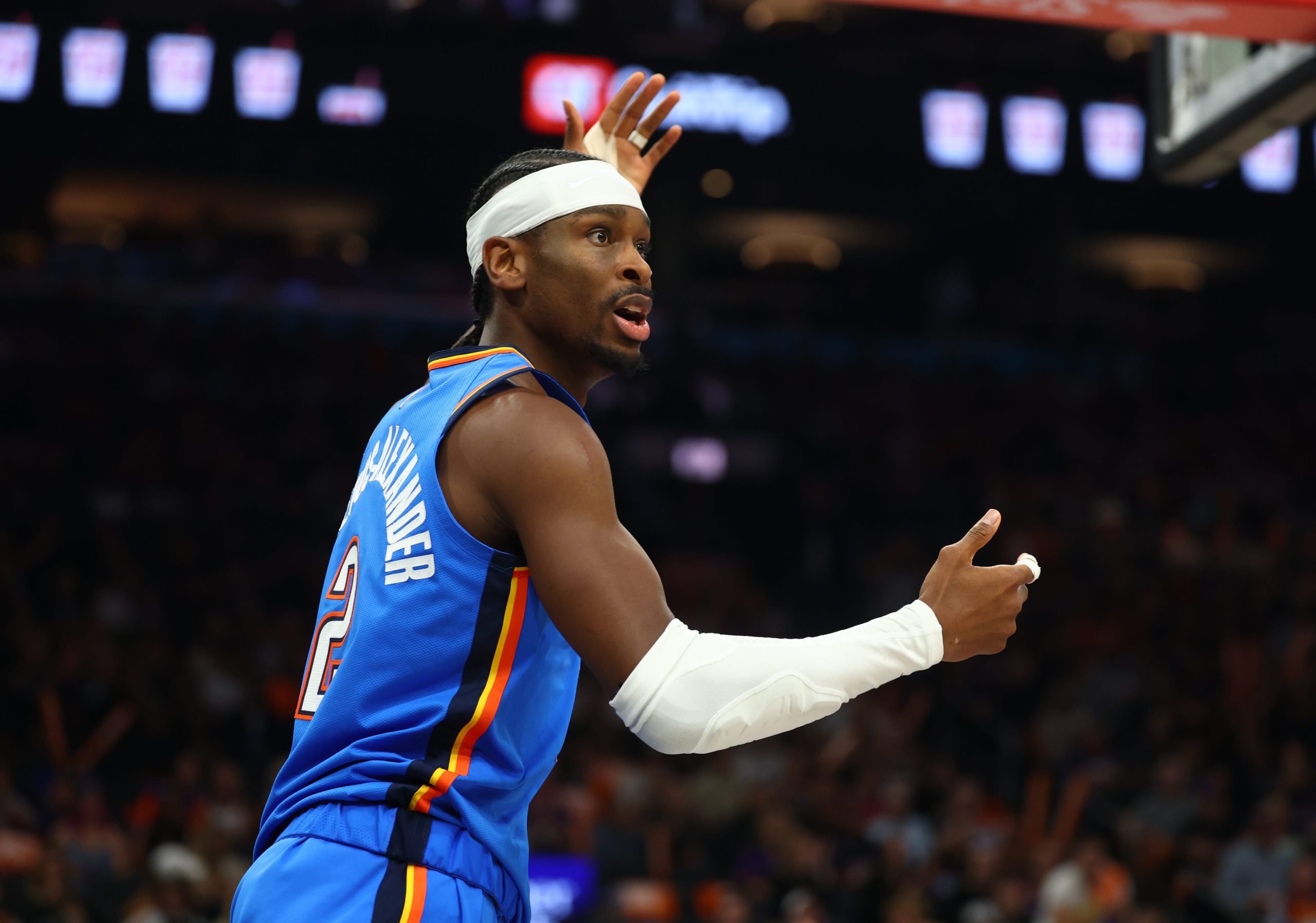
Behind the headlines of dominant individual performances, a tectonic plate is shifting. The league, long accustomed to the gravitational pull of established superpowers, now confronts a burgeoning force embodied by the Thunder’s youthful, relentless energy. Shai Gilgeous-Alexander, the Canadian guard whose smooth ferocity defined OKC’s Arizona sojourn, didn’t just accrue statistics — 31 points and eight assists in the decisive Game 4, for instance — he projected an aura of unshakeable inevitability. It’s an unnerving calm, particularly for veteran contenders contemplating their own twilight. And that’s the rub, isn’t it? The postseason isn’t just about winning games; it’s about navigating the psychological labyrinth of expectation and consequence.
So, who’s next for this nascent juggernaut? The prognosticators squint, hedging bets between the storied, if aging, Los Angeles Lakers and the upstart Houston Rockets. But let’s be blunt: either opponent presents a distinctly different flavor of challenge for a team that, despite its collective youth, plays with an old soul’s wisdom. Gilgeous-Alexander himself, ever the pragmatist, acknowledged the divergent paths. "It’ll either be Lakers or Houston. They each impose their challenges. Houston is more defensive. The Lakers a little more offensive. But they’re both really good teams," he opined, his voice measured. "To make it out of that series, you have to do a lot of things right. So we won’t take them lightly." He’s right, of course. Nobody should.
Still, the Thunder’s rapid ascent — from lottery-bound rebuilding project to Western Conference powerhouse in what feels like a blink — has observers scrambling to recalibrate their conventional wisdom. "This Thunder squad isn’t just young; it’s a testament to surgical team-building. They’ve bypassed the conventional ‘superteam’ blueprint, proving that organic growth can still dethrone entrenched royalty," offered Sarah Chen, a long-time basketball analyst for ESPN, on a recent podcast. It’s a compelling argument, especially as the league witnesses the gradual wane of its long-standing titans.
One shadow, however, hovers: the persistent hamstring woes of Jalen Williams, a crucial piece of OKC’s intricate offensive tapestry. His third strain in four months underscores the brutal physical demands of this campaign, a narrative all too familiar in modern sports where the human body is pushed to its absolute limits. "Don’t mistake youth for naivete. These guys, Shai especially, they’ve got a killer instinct rarely seen in such a nascent group. But the postseason is a different beast; the mental grind, the physical toll — it can chew you up and spit you out," remarked a veteran scout, who preferred to remain anonymous given his current employer, during a recent pre-game discussion. Indeed, resilience isn’t just about bouncing back from a bad shot; it’s about enduring the ceaseless attrition.
And it’s not just a domestic fascination. The Thunder’s narrative, a vibrant underdog story fueled by diverse talent like Gilgeous-Alexander (a Canadian star with Nigerian roots), resonates far beyond North America. Across the globe, particularly in rapidly growing markets like Pakistan and other South Asian nations, the NBA’s popularity is on an inexorable upward trajectory. According to a 2023 report by the sports analytics firm Global Sports Insight, NBA viewership in South Asia has expanded by 15% year-over-year for the past three seasons, demonstrating a burgeoning appetite for compelling sports drama. These audiences, often disenfranchised by local sports politics (you know, the sort that occasionally plagues cricket), find a clean, aspirational narrative in the NBA.
So, as the Thunder steel themselves for their next opponent, perhaps the ultimate showdown looms in the Western Conference Finals: a collision with the San Antonio Spurs, another team that eschewed the flash for fundamental excellence. It’s a matchup many predict, one that would pit two distinct philosophies against each other — both young, both terrifyingly effective. Gilgeous-Alexander, it seems, has already begun his homework, conceding he’s "already been watching all of the Lakers and Houston series." Such diligence belies his years, solidifying the impression that this quiet revolution isn’t just happening; it’s being meticulously orchestrated.
What This Means
The swiftness of Oklahoma City’s sweep isn’t just a statistical anomaly; it’s a geopolitical bellwether for the NBA. Economically, a fresh, dominant dynasty like the Thunder, spearheaded by a globally charismatic figure like Shai Gilgeous-Alexander, offers the league renewed marketing vigor and an expanded global footprint. It’s a reprieve from the aging narratives of LeBron James’ Lakers or the perennial contention of a Golden State, injecting novel storylines into international broadcasts. Politically, within the league’s ecosystem, it signals a shift in player power dynamics — and team-building philosophy. No longer is the ‘superteam’ the singular path to glory; patient drafting, shrewd development, and unwavering organizational belief are proving equally, if not more, potent. This could compel other franchises to rethink their high-risk, high-reward free agency gambits, potentially fostering more balanced, sustainable league-wide competitiveness. The implication is clear: the old guard’s reign is fading, and a new, perhaps more globally palatable, era of basketball dominance is dawning.