


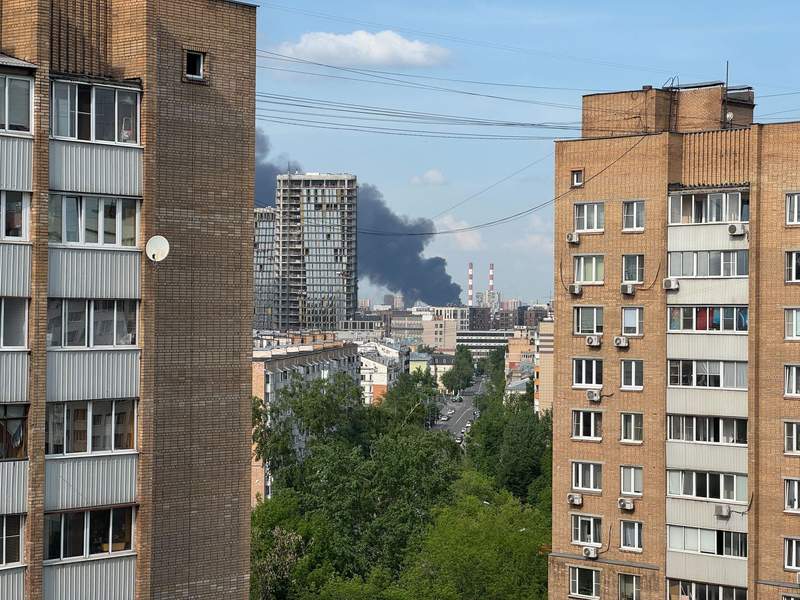
Russia’s Oil Lifeline Under Siege: Ukraine’s Shadow War Shifts Industrial Frontlines
POLICY WIRE — Moscow, Russia — The smoke plumes, no longer isolated incidents but rather persistent heralds, hover over what were once unassailable Russian industrial facilities. It’s not just the...

POLICY WIRE — Moscow, Russia — The smoke plumes, no longer isolated incidents but rather persistent heralds, hover over what were once unassailable Russian industrial facilities. It’s not just the bang-and-blaze of direct impact; it’s the quiet erosion of certainty, the insidious whisper of vulnerability reaching into the very core of Russia’s economic might. These weren’t fleeting tactical hits. They’re systematic, targeting the energy infrastructure that underpins Moscow’s war machine—and, arguably, its social stability. A cold calculation of where it hurts most. That’s the game now.
Consider the recent, brazen aerial forays. Reports trickle in—deliberately sparse, often from the Kremlin, occasionally corroborated by independent analysis—confirming what visually looks like sophisticated attacks. You’re seeing the conflict extending far beyond the traditional battlefields, poking at industrial soft spots. And this isn’t just a localized problem; its tremors could well rattle economies far from Europe’s borders. We’re talking about global supply chains, energy markets already in flux, and the sheer geopolitical anxiety that something always simmering, like the situation in the Middle East or South Asia, could get a fresh spark.
Ukrainian unmanned aerial vehicles, increasingly advanced and capable of traveling vast distances, have been [QUOTE_PLACEHOLDER] for these facilities. It’s a testament to the shifting character of modern warfare, where a relatively low-cost asymmetrical tool can inflict disproportionate economic pain. Think about it: massive investments in air defense systems become practically useless if the threat just flies underneath—or overwhelms—traditional radar. That’s a rough spot to be in, operationally speaking.
Analysts at the independent energy research firm Kpler recently indicated Russia’s primary crude refining capacity has been cut by roughly 10-15% in recent weeks due to these sorts of disruptions. And those figures, naturally, come with a margin of error that leans toward understatement. Shutting down refineries, even temporarily, is no small thing. It’s an expensive, logistically complex process, and restarting them takes time—time during which crucial exports are curtailed, and Moscow’s coffers feel the pinch. You don’t just flick a switch back on.
The geopolitical domino effect is quite something. Countries like Pakistan, for instance, a major importer of oil and gas, are exceptionally sensitive to even slight tremors in global energy markets. A reliable and stable flow of Russian crude—at a discounted price, mind you—is critical to maintaining some semblance of economic equilibrium for developing nations, already navigating a labyrinth of inflation and debt. But this drone campaign? It introduces a dangerous variable into that equation. Suddenly, even an otherwise steady supply isn’t quite so steady anymore. It’s a calculated squeeze on Russia’s ability to finance its military objectives, but it certainly complicates life for Moscow’s international energy partners too.
But there’s an almost macabre symmetry to it all, isn’t there? Ukraine, often outgunned in conventional artillery, finds a way to hit back where Russia is exposed. This isn’t about battlefield heroics; it’s about strategic paralysis. They’re saying, You want to strike our cities? Fine. But we can mess with your ability to wage this war financially. And that’s a dangerous game to play—because every attack carries with it the escalating risk of miscalculation, of unintended consequences that spiral far beyond anyone’s control. It’s the kind of high-stakes gamble the Kremlin knows a thing or two about. Especially when domestic unease starts bubbling up.
The fires at Russian industrial sites? They aren’t merely fires. They’re a burning question about the Kremlin’s operational resilience, about the long-term sustainability of this conflict, and about how far Ukraine—and its Western backers, make no mistake—is willing to go to cripple its adversary. It’s a message, loud — and clear, echoing across a landscape that stretches far beyond the Dnieper River. You can almost feel the strategic chessboard tilting.
What This Means
This escalating drone campaign against Russian industrial and energy infrastructure signals a significant, perhaps irreversible, shift in the conflict. For Moscow, it forces an ugly choice: divert scarce and expensive air defense assets from the front lines to protect vital economic targets deep within Russia, or continue to face crippling blows to its revenue streams. Both options weaken the war effort, albeit in different ways. Economically, repeated disruptions to refineries and export facilities will depress Russia’s oil and gas revenues, curtailing its ability to fund its military. Politically, the attacks chip away at the narrative of stability and security that President Vladimir Putin has carefully cultivated. It suggests a vulnerability he’d rather not admit.
For Ukraine, it’s a strategy of attrition, aiming to make the cost of continuing the war prohibitive for Russia. It’s also a powerful message to its Western allies: Ukraine can still fight effectively, even without vast quantities of advanced ground equipment, if given the tools to strike at the enemy’s soft underbelly. But this strategy carries risks. Such strikes, particularly those that impact global energy prices, could strain international relationships. They could also provoke unpredictable escalatory responses from the Kremlin, further destabilizing an already volatile global order. The current trajectory suggests an uncomfortable, and frankly quite volatile, new phase of conflict, one where economic impact becomes as—or even more—decisive than territorial gains.