


Ancient Footprints in Kenya Reveal Insights on Paranthropus boisei
Newly discovered footprints in Kenya's Lake Turkana region offer unprecedented insights into the size and behavior of Paranthropus boisei, a prehistoric human cousin.

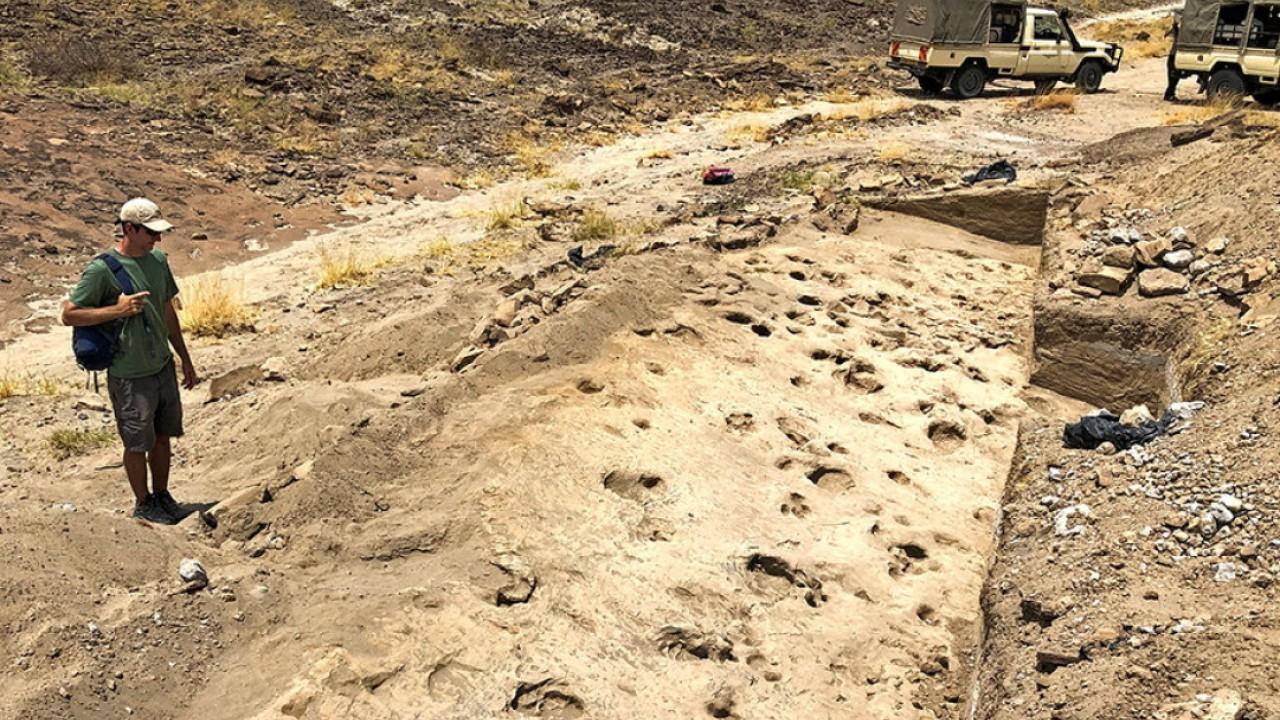
POLICY WIRE — City, Country — Footprints discovered on a muddy lakeshore in northern Kenya, dating back approximately 1.43 million years, are shedding new light on the size and behavior of Paranthropus boisei, a species in the human evolutionary lineage.
Paranthropus boisei, known for its extensive anatomical adaptations for consuming tough vegetation, has been primarily identified through skull and tooth fossils. Researchers working along the eastern side of Kenya’s Lake Turkana have now identified 21 footprints made by eight individuals of this species.
The footprints offer crucial data on the locomotion — and social behavior of Paranthropus boisei. According to the research team, the tracks suggest that these individuals walked upright, similar to modern humans, but with a distinct gait.
Dr. John Maina, lead researcher on the project, stated, “These footprints provide a rare glimpse into the daily lives of Paranthropus boisei. The size — and distribution of the prints indicate that they were social creatures, moving in groups.”
The discovery was made in an area rich with fossil evidence, reinforcing the significance of Lake Turkana as a critical site for understanding human evolution. The footprints were preserved in volcanic ash, which hardened over time, allowing them to remain intact for millions of years.
This find adds to the growing body of evidence that Paranthropus boisei was well-adapted to its environment, with specialized teeth and jaws for processing hard plant materials. The species is believed to have gone extinct around 1.2 million years ago, making it one of the last of its kind in the human evolutionary tree.
The research team plans to conduct further analyses to determine more precise details about the individuals who left these footprints, including their exact size, weight, and possible age. This information will contribute to a more comprehensive understanding of Paranthropus boisei and its role in human evolution.
Reporting by Policy-Wire (PW)