


Iowa’s Quiet Unraveling: A Community Grapples with Unseen Brutality and Lingering Shadows
POLICY WIRE — Mount Pleasant, Iowa — The scent of lilacs still hangs heavy in the humid Midwestern air, but it’s doing a poor job of masking the acrid smell of tragedy that now clings to Mount...

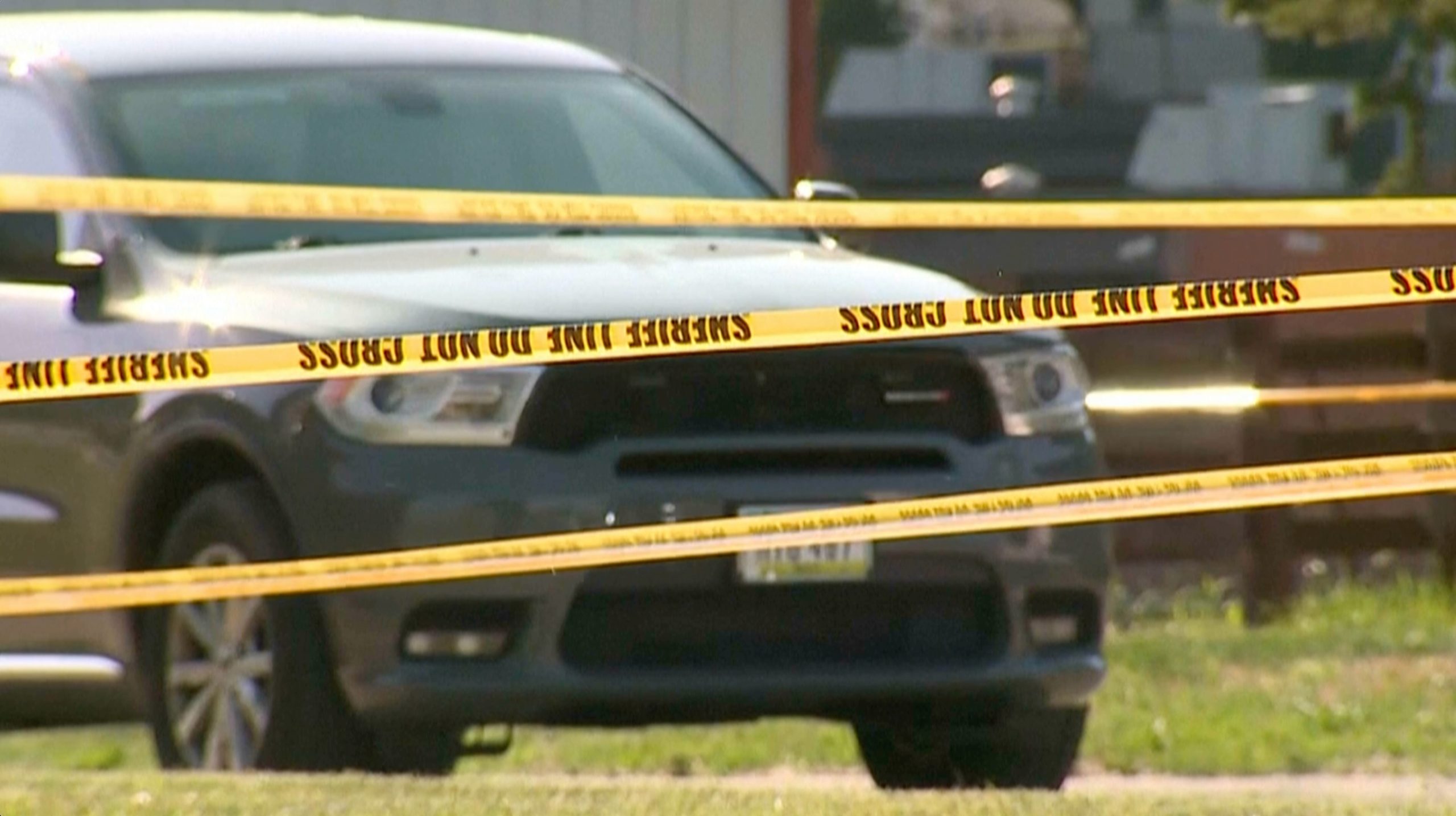
POLICY WIRE — Mount Pleasant, Iowa — The scent of lilacs still hangs heavy in the humid Midwestern air, but it’s doing a poor job of masking the acrid smell of tragedy that now clings to Mount Pleasant. A family—six souls, spanning generations—snuffed out, not by some random act from the wide world outside their quiet street, but from within their own walls. It’s an American horror story, played out in the heartland, and the surviving son’s brave, heartbroken address at a community vigil serves less as closure, and more as a brutal public accounting.
It wasn’t a car crash, not a freak accident, nor even a natural disaster. No, it was something far uglier: domestic violence, quiet until it wasn’t. This isn’t the story of a shattered window or a loud argument; it’s the abrupt, absolute termination of lives, revealing a gnawing truth many communities, including this one, would rather keep buried. It forces a hard look at the very notion of ‘sanctuary’ that a home is supposed to represent. Because for so many, it isn’t.
“The echoes of that night will reverberate through Mount Pleasant for generations,” remarked Mayor Evelyn Hayes, her voice hoarse at a press briefing that followed the initial police reports. “We thought we knew our neighbors. We thought our town was immune to this kind of absolute devastation. We were wrong. And it’s time we—all of us—start asking what we missed, and what we can still do.” Her words didn’t exactly soothe; they carried the blunt edge of communal self-reproach. They’re trying to cope, but grief’s a messy thing, isn’t it?
This isn’t an isolated incident. Don’t think for a second it’s. Statistics lay bare the pervasive threat: nearly 1 in 4 women and 1 in 10 men experience physical violence, sexual violence, or stalking by an intimate partner during their lifetime, according to the Centers for Disease Control and Prevention (CDC). That’s not a niche problem; it’s practically institutional, lurking behind closed doors, often invisible until it erupts into headlines.
The survivor, raw with unimaginable loss, spoke not just of his family, but of a wider failure. He called for introspection, for vigilance, for a re-evaluation of how communities detect and intervene in the silent struggles that precede such cataclysms. It’s a burden no young man should have to shoulder—to speak for the dead, to demand better from the living, all while his own world has disintegrated. He’s effectively put the town—maybe the country—on notice.
In many societies, particularly those with deeply ingrained patriarchal norms, issues of family conflict and spousal abuse are often shielded by a formidable wall of ‘honor’ and ‘reputation.’ Take Pakistan, for instance, where ‘honor killings’ persist, though thankfully declining due to increased awareness and legal reforms, but also where domestic disputes often go unreported, buried under cultural pressures to maintain family dignity. While the circumstances differ starkly, the silence surrounding domestic violence, and the societal reluctance to intervene before it’s too late, isn’t so unfamiliar. It’s a universal problem, played out in vastly different socio-economic theaters.
“We need to look beyond the immediate grief, devastating as it’s, — and understand the systemic factors,” explained Dr. Lena Sharma, a sociology professor specializing in family dynamics, reached for comment. “It’s about economic stress, mental health breakdowns, addiction—and crucially, the societal constructs that enable coercive control to escalate unchecked. It’s about dismantling the barriers to reporting — and offering genuine, immediate safety nets. Because what good is empathy after the fact?” A grim prognosis, sure, but a necessary one.
And these discussions, these agonizing public reckonings, are hardly unique. From quiet Iowa towns to bustling metropolises, communities are left to piece together the fragments of what went wrong, hoping to find a pattern, a warning sign, anything that might prevent the next catastrophe. Sometimes, there isn’t one—just an explosive endpoint. But more often than not, the signs were there, whispering in the wind, unheard by ears that simply weren’t tuned to the frequency of distress. The costs of this neglect? Well, you can’t put a price on six lives, can you?
What This Means
This horrific event isn’t just local news; it’s a policy nightmare for local — and state officials. The sheer scale of loss within a single family unit will undoubtedly ignite fresh calls for enhanced domestic violence prevention programs, better access to mental health services, and perhaps even more stringent intervention protocols for law enforcement. Expect state legislative sessions to hear renewed pleas for funding in these areas. Economically, while not a direct financial shock, the long-term impact on a small community’s psyche can translate into subtle socio-economic shifts—a lingering unease, a decrease in perceived safety, potentially affecting things like small business growth or new family relocation interest. It’s a gut-check on the social contract, reminding everyone that even in places steeped in idyllic Americana, profound vulnerabilities can unravel a community from within. The public trust—the notion that you’re safe where you live—it’s taken a hammering. It really has. And rebuilding that? That’s going to be the hardest part, a grim calculus for years to come.