


Amid Barrage: Ben-Gurion’s Persistent Hum Challenges War’s Normalcy
POLICY WIRE — Tel Aviv, Israel — The roar of jet engines cutting through the early morning sky over Tel Aviv wasn’t the sound of victory or defeat; it was just Tuesday. For countless...

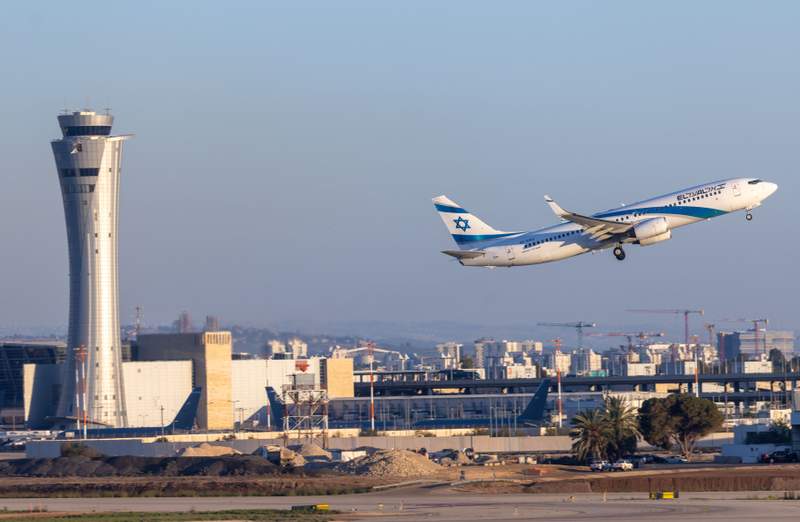
POLICY WIRE — Tel Aviv, Israel — The roar of jet engines cutting through the early morning sky over Tel Aviv wasn’t the sound of victory or defeat; it was just Tuesday. For countless passengers—business folks, family visitors, tourists caught in limbo—the drone from Ben-Gurion International Airport represented something unsettlingly familiar, even as reports of missile attacks filled the airwaves. Life, in its strange, often inconvenient way, simply kept going. It’s a jarring picture, this juxtaposition of civilian aviation schedules against a backdrop of regional hostilities, yet here we’re.
Weeks of heightened tensions, punctuated by actual missile barrages originating from Iranian soil, have frayed nerves across the Levant. But you wouldn’t necessarily know it from the departure boards. Ben-Gurion, the primary gateway to Israel, hasn’t shut its gates. Not really. That doesn’t mean it’s business as usual. It’s an illusion of normalcy, thinly veiled, as authorities quietly try to steer a ship through a storm without panicking the passengers.
Officials, acutely aware of the global ramifications of airspace closures, have been dancing a fine line. Their stated aim is to keep connections open. And they’ve. But behind the scenes, there’s been an aggressive, systematic push to scale back operations. An inside source familiar with civil aviation strategy, speaking on condition of anonymity, described the situation as an unannounced throttling of capacity. Because who wants to admit you’re trying to prevent people from flying when you also need to project an image of stability?
This subtle strangulation of air traffic isn’t just about immediate safety, it’s about perception and national strategy. It’s an economic maneuver too. One doesn’t want the world to believe the country is unreachable, or so dangerous that flights halt entirely. Yet, every incoming flight represents a new set of civilians possibly at risk, and every outgoing flight requires an active air traffic control system running in parallel with defensive missile networks. It’s a hell of a coordination headache.
The Israeli Airports Authority, in their characteristic fashion, issued statements carefully devoid of alarm. [QUOTE_PLACEHOLDER] they confirmed. Sounds reassuring, doesn’t it? But you’ve got to read between the lines. While there haven’t been blanket cancellations, a deeper dive into flight manifestoes from independent travel analytics firm, AirFlight Trends, shows a 28% reduction in scheduled departures and arrivals at Ben-Gurion since the initial major Iranian strikes compared to the previous month’s averages. This isn’t random. It’s managed de-escalation of exposure, packaged as business as usual. That’s sharp; that’s clever.
And then there’s the broader regional view, stretching eastward across the Arabian Peninsula into South Asia. Nations like Pakistan, geographically distant yet intimately tied by geopolitical currents, watch developments in the Middle East with a specific anxiety. Escalations here ripple outwards, impacting everything from oil prices—which hit 11-month highs following the missile attacks, straining developing economies—to broader perceptions of stability for foreign investment. Islamabad’s own diplomatic posture, balancing its relations with Tehran — and Arab capitals, becomes incredibly complex. They’re seeing a live demonstration of what a modern, protracted regional conflict looks like—not just tanks and trenches, but disrupted commerce, choked supply lines, and the quiet fear of a miscalculation. You don’t have to be directly in the crosshairs to feel the heat, not anymore.
The persistent humming of Ben-Gurion’s runways, then, isn’t just a story about aviation. It’s a parable of the contemporary conflict. A paradox. It’s the steadfast determination to present an unbroken front even as the pieces shift underfoot. Beneath the surface, Israel’s new normal is constantly being recalibrated, navigating global commerce alongside regional antagonism. It’s a tightrope walk performed thousands of feet in the air.
What This Means
The decision to keep Ben-Gurion open, while subtly curtailing traffic, represents a sophisticated, if cynical, political calculus. Economically, it avoids the catastrophic imagery and financial implications of a full-scale aviation shutdown, which could trigger a flight of capital and significantly disrupt the flow of essential goods and personnel. Militarily and politically, it maintains a façade of resilience, signaling to adversaries and allies alike that life continues despite provocation—a form of psychological warfare waged with commercial flights.
For the region, particularly states like Pakistan and other parts of the Muslim world, this managed instability underscores a dangerous precedent. The normalization of significant military exchanges alongside routine economic activity blurs the lines of conventional conflict. It means heightened vigilance for regional actors who rely on global trade — and stability. An open airport during missile attacks isn’t a sign of peace; it’s a testament to the new, convoluted reality where conflicts are fought not just on battlefields, but in financial markets and flight schedules, with devastating consequences for Asia’s quivering economic edge and beyond. It forces states to consider their own contingency plans for scenarios once deemed unthinkable. It’s an economy of resilience, but also an economy of peril.