


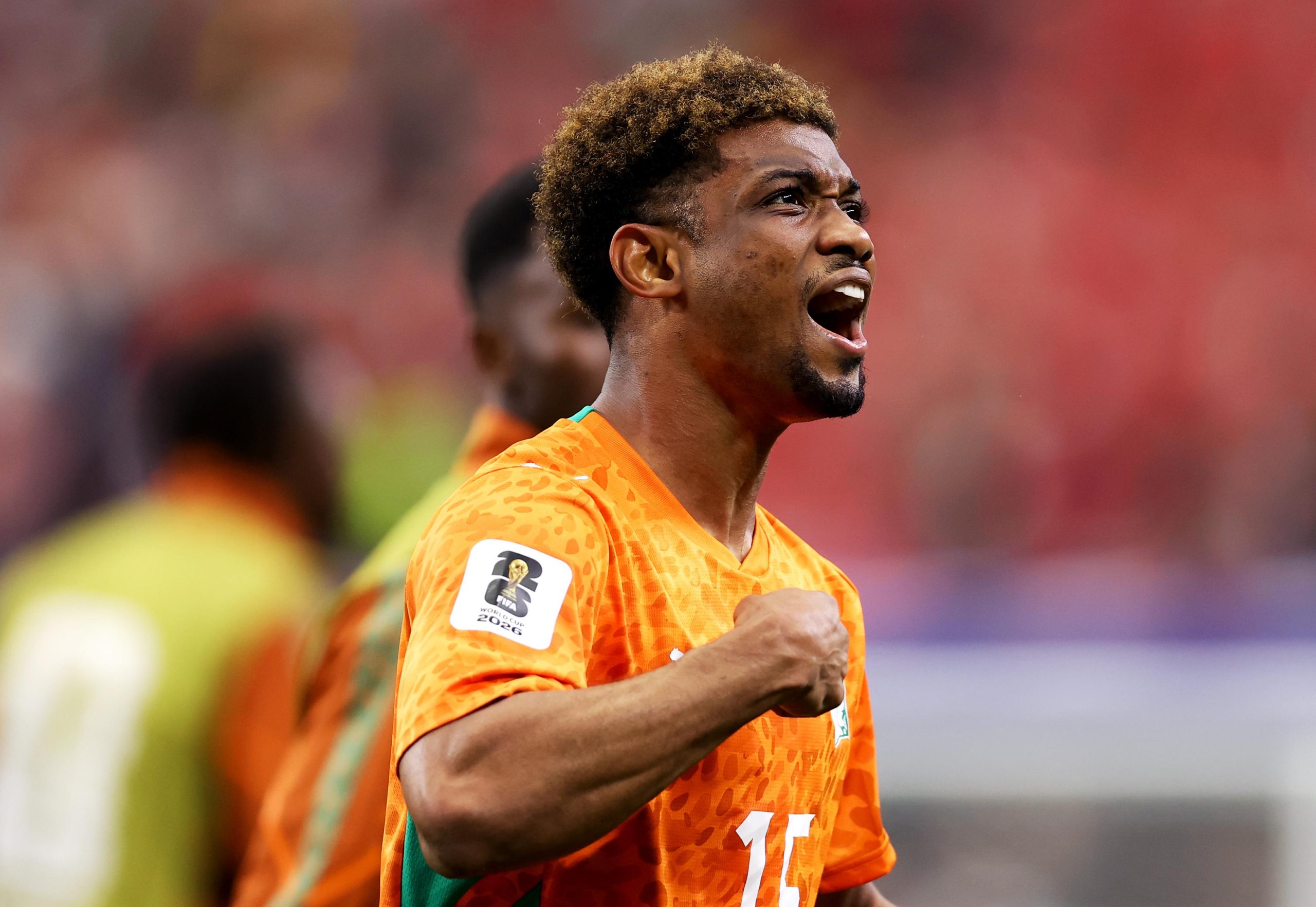
Amad’s Gambit: When Individual Brilliance Meets Geopolitical Reality on the Pitch
POLICY WIRE — Dallas, Texas — The floodlights at Dallas Stadium sliced through the humid Texan night, illuminating a scene far more profound than mere football: the collision of nations, aspirations,...

POLICY WIRE — Dallas, Texas — The floodlights at Dallas Stadium sliced through the humid Texan night, illuminating a scene far more profound than mere football: the collision of nations, aspirations, and stark economic realities. It wasn’t the scoreline that truly mattered on Tuesday—a tight 2-1 victory for Norway over Côte d’Ivoire in the FIFA World Cup Round of 32—but the raw, visceral display of one man’s almost superhuman effort to bend fate for his homeland. That, — and the brutal poetry of its failure.
Because, for a fleeting hour, young Amad Diallo—a man forged in the crucible of Ivorian football and refined in England’s top flight—didn’t just play a game. He carried an entire nation’s dreams on his shoulders, his every darting run a symbol against global imbalance. He’d come off the bench in the 59th minute, a belated gamble from manager Jean-Louis Gasset, injecting a furious, almost desperate energy into a flagging Ivorian side. And he didn’t disappoint. His equalizer, a magnificent, weaving effort in the 74th minute, cut through Norway’s well-drilled defense like a hot knife through butter. For those few minutes, before Erling Haaland reminded everyone that collective resource usually trumps individual flair, anything seemed possible.
It’s moments like these that resonate far beyond the turf, seeping into the political discourse, informing the psyche of a developing nation. This isn’t just about athletic prowess; it’s about projecting national identity onto a global stage, proving relevance. Diallo’s late free-kick, palmed away by Norway’s Ørjan Nyland in a save that felt like a geopolitical intervention, was the final, heartbreaking note in a ballad of dashed hopes. But for some, the narrative had already been set.
“Look, they didn’t just lose a game; they nearly seized a narrative,” stated Nafissa Traoré, Côte d’Ivoire’s Deputy Minister for Youth and Sports, in an exclusive chat with Policy Wire. “For every kid in Abidjan, every struggling artist in Bouaké, Amad’s drive, that near-victory, it screams: ‘We exist. We can contend.’ That’s invaluable soft power, more potent than any diplomatic pouch, I tell you.” She’s not wrong. The symbolism of a rising African talent challenging Europe’s gilded elite often outweighs the mere win-loss column, especially for nations constantly battling for recognition. But then, there’s the other side.
“While the thrill of competition is paramount, moments like these also lay bare deeper truths,” countered Lars Andersen, Director of International Sports Development at Norway’s Ministry of Foreign Affairs, speaking from Oslo. “It’s a testament to the raw talent that emerges globally, often despite profound disparities in sporting infrastructure. Norway celebrates its victory, naturally, but also reflects on our shared responsibility in fostering genuine athletic opportunity worldwide.” He makes a valid point. The average GDP per capita in Norway clocked in at nearly $93,000 in 2023, per World Bank data. Côte d’Ivoire, by contrast, languished at just over $2,600. That’s an economic chasm mirrored in sports investment, training facilities, — and global scouting networks.
This palpable desire for success, often channeled through a single heroic figure like Diallo, finds deep resonance far beyond West Africa’s borders. You see it everywhere in the global South: the way fans cling to individual brilliance as a stand-in for collective achievement. That profound longing for representation resonates across the Muslim world, from Côte d’Ivoire’s predominantly Muslim north to the political struggles facing figures like Sheikh Hasina in Bangladesh, or the crushed dreams emanating from Lahore’s teeming alleyways. Amad’s performance wasn’t just a sporting feat; it was a potent, fleeting echo of a universal struggle against stacked odds. His name, a variant of the common Arabic ‘Ahmad,’ carries its own symbolic weight—the ‘most praised one’ in a world often too quick to ignore the narratives from places like Abidjan.
What This Means
The Ivorian defeat, despite its dramatic flourishes, highlights the enduring power dynamics in global sports, mirroring broader geopolitical realities. While football offers a relatively accessible path to international recognition for developing nations, overcoming resource disparities remains an uphill battle. Côte d’Ivoire’s near-upset underscores the potential of focused individual talent, but also the systemic hurdles that prevent consistent, large-scale success. For Norway, it reinforces their status as a European contender, but it also carries the subtle expectation of continued ethical leadership in global development, perhaps through increased investment in youth academies in places like West Africa. It’s a soft power win for them, too, simply by appearing gracious — and reflective in victory. For international sporting bodies like FIFA, such matches serve as both inspiration and a stark reminder of the development gap they claim to address. The economic implications are clear: a deeper run would have brought significant tourism, investment, and sponsorship opportunities for Côte d’Ivoire. The Round of 16 means cash, prestige, — and perhaps more importantly, sustained national pride. The bitter pill for Abidjan is that their best wasn’t quite good enough against a wealthier adversary.
So, the World Cup churns on, a carnival of nations where even brilliant near-victories can still sting. Amad Diallo’s moment of individual genius will be replayed, admired, perhaps even mourned, but ultimately, it’s Norway moving on. Such is the harsh, unsentimental reality of international competition, both on — and off the pitch. The political weight of a sport, it seems, isn’t always fair.