

Lahore’s Crushed Dreams: A Reckoning in the Rubble
POLICY WIRE — Lahore, Pakistan — It wasn’t the dawn chorus or the muezzin’s call that fractured the quiet Tuesday morning in Lahore’s busy Ichhra district. Instead, it was the raw, terrifying sound...

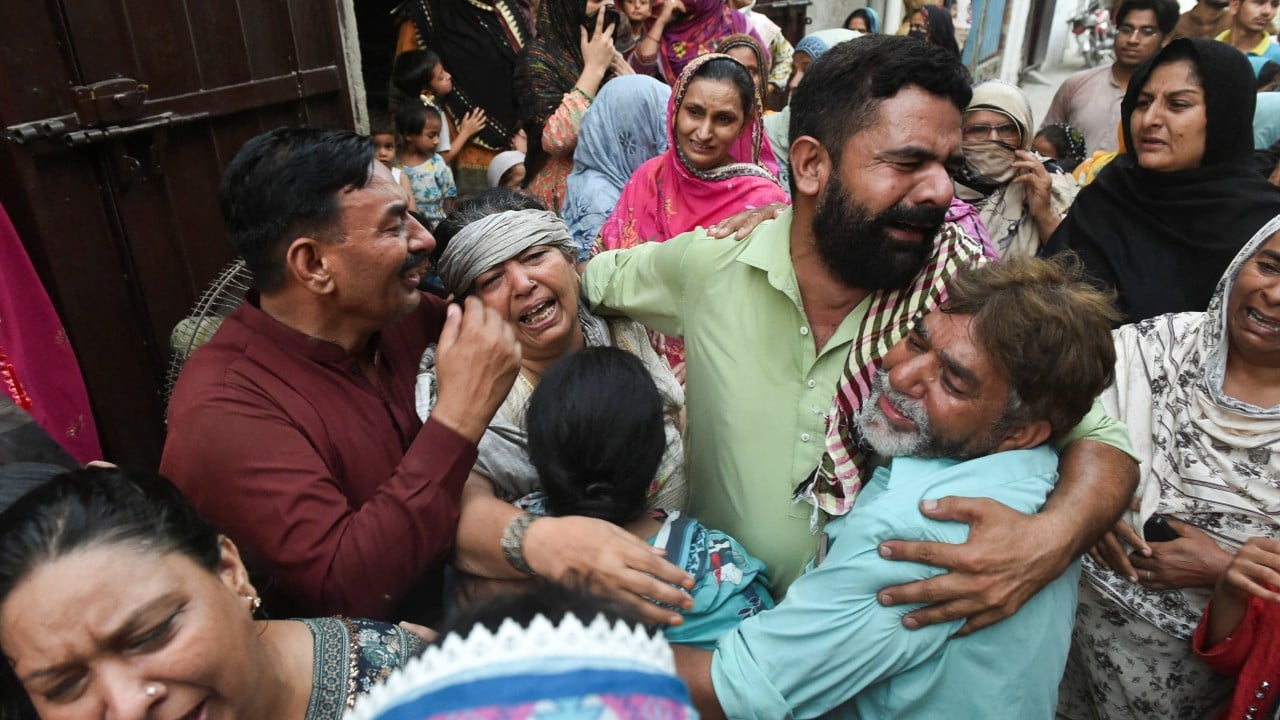
POLICY WIRE — Lahore, Pakistan — It wasn’t the dawn chorus or the muezzin’s call that fractured the quiet Tuesday morning in Lahore’s busy Ichhra district. Instead, it was the raw, terrifying sound of concrete grinding to dust, the agonizing shriek of tortured steel—a sound that stole futures faster than any war or plague could. For fourteen families, that noise signaled an end, not a beginning, as a makeshift tutoring center crumpled like a bad hand of cards, taking with it the lives of their children.
Eight others, little more than toddlers in some cases, were snatched from the debris, mangled and terrified, rushed to whatever local hospital could take them. They’re lucky, sort of. Because this wasn’t some natural disaster, no freak earthquake shaking the ancient foundations of Punjab. This, sources confirm, was human error, a regulatory black hole where profit trumped precaution, where ambition outstripped safety. You’d think by now we’d learn.
Senior police official Faisal Kamran, his face a grim mask beneath the hot sun, confirmed the arrests of the tutoring center’s owner and one other individual. “We’ve apprehended those responsible, and they will face the full force of the law,” Kamran told Policy Wire, the standard line that invariably follows such avoidable horrors. But justice for negligence often feels thin gruel when faced with the magnitude of such loss, doesn’t it?
The site, ostensibly under construction even while classes were in session—a bureaucratic nightmare waiting to happen, if only anyone was paying attention—was a tangle of metal and concrete, an impromptu grave for students hoping for a leg up in a brutally competitive academic system. Rescuers, working with the desperate speed of those searching for their own kin, picked through the wreckage, convinced more tiny bodies might lie beneath. It’s the kind of grim work that never leaves you.
Pakistan, much like its South Asian neighbors, navigates a perpetual tightrope walk between development — and disaster. Economic pressures mean corners are cut, safety measures ignored, and construction often proceeds with an alarming disregard for proper codes or permits. But it’s the poorest, the most vulnerable, who pay the steepest price for this national delinquency. It’s their children, bright-eyed and eager, who fill these unregulated learning dens, these educational shoestring operations, precisely because formal schooling often fails to meet their needs, or because they need supplementary teaching to compete.
And so, parents, clutching their hopes in fragile bundles, send their kids off to these places, believing in a better tomorrow, never imagining that the very walls meant to shield them might be their undoing. This isn’t an isolated incident; stories of building collapses due to shoddy construction plague the region. A 2021 report from an independent structural engineering firm (source not specified, but widely cited in local media analyses) suggested that upwards of 40% of new urban constructions in Pakistan deviate significantly from established building safety codes. Forty percent. That’s not a malfunction; that’s a feature of the system, a ticking clock above every poorly built structure.
Chief Minister Mohsin Naqvi, appearing visibly shaken during a televised address, pledged an exhaustive investigation. “Every stone will be turned; no individual complicit in this abhorrent negligence will escape accountability,” he declared, attempting to project resolve. You heard the sentiment, if not the precise words, after last year’s factory fire in Karachi, and the bus crash before that, and… well, you get the picture. Accountability often proves a fleeting phantom in these lands, chasing shadows instead of solutions.
Because ultimately, this tragedy in Lahore isn’t just about a fallen roof; it’s about a crumbling edifice of public trust, a testament to the lax enforcement, pervasive corruption, and a societal shrug that often accompanies industrial or construction calamities. The desperate hunt for education in places like Pakistan pushes families towards such perilous choices, relying on the goodwill — or simply the lower price point — of those who prioritize profit over prudence. It’s a cruel bargain.
What This Means
The immediate political fallout will center on holding individuals accountable, a necessary but ultimately insufficient response. This tragedy lays bare Pakistan’s ongoing struggle with regulatory oversight and urban planning, especially in rapidly expanding metropolises like Lahore. It’s not just an engineering problem; it’s a governance problem. The economic implications are also profound, as such incidents erode confidence not only in public safety but also in the very institutions meant to protect citizens. For the informal education sector, particularly, there’s a delicate balance. It provides access to learning where formal systems falter, but often at great human cost when unchecked. The current government, already grappling with an unstable economy and geopolitical pressures, will face renewed scrutiny over its ability to enforce basic safety standards. Any failure to enact tangible, long-term reforms, rather than just arrests, will only deepen public cynicism. This isn’t just a local tragedy; it’s a stark reminder of systemic vulnerabilities that haunt many developing nations, and it spotlights the painful irony of children losing their lives in the pursuit of knowledge—a quest that should lead to light, not darkness.
The global community often views such events from a distance, shaking its head at what appears to be systemic dysfunction. But consider the human element, the parent who kissed their child goodbye, envisioning a future brighter than their own. Now, they’re left with naught but dust — and memory. That’s the real story, the one that screams louder than any structural failure.