


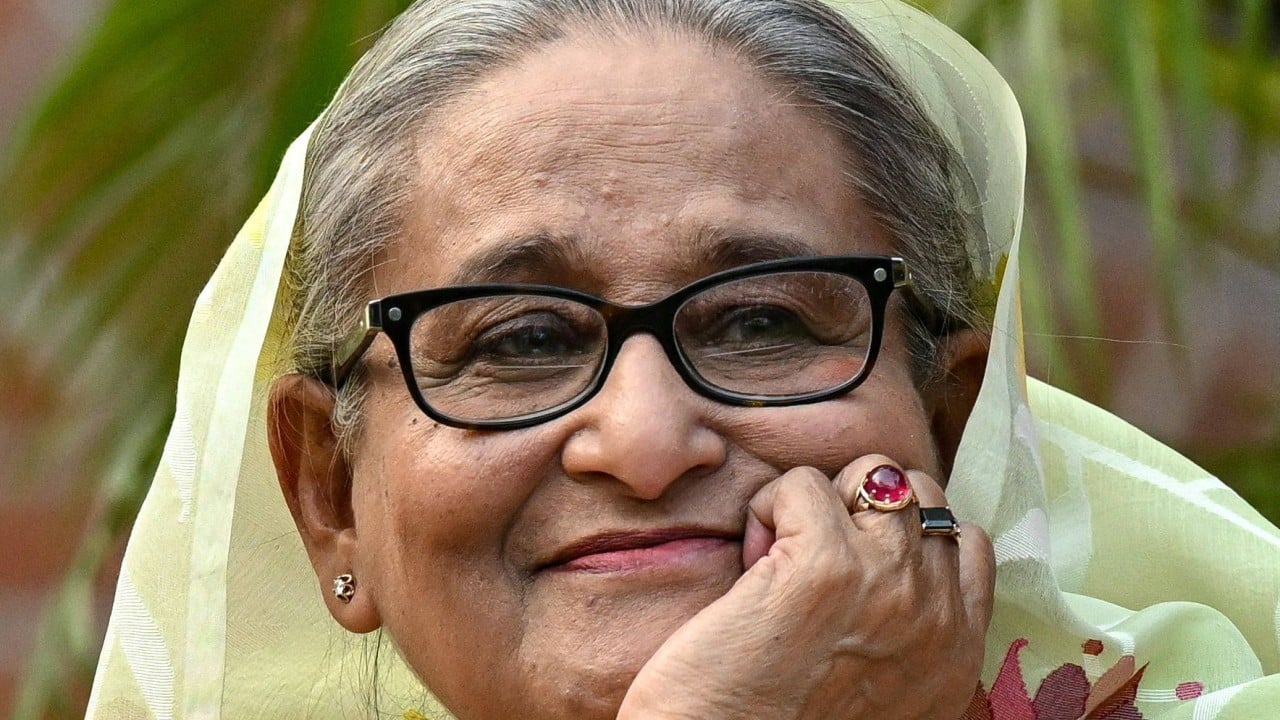
Ousted Sheikh Hasina Vows Return to Bangladesh Despite Death Sentence
POLICY WIRE — In a move set to reverberate through Bangladesh's tumultuous political landscape, former Prime Minister Sheikh Hasina has emphatically stated her ...

POLICY WIRE — In a move set to reverberate through Bangladesh’s tumultuous political landscape, former Prime Minister Sheikh Hasina has emphatically stated her intention to return home this year. The 78-year-old political figure, currently in India, made her declaration while ostensibly shrugging off a death sentence that was pronounced against her in absentia.
Hasina described the ruling as “illegal, unconstitutional and politically motivated,” according to a recent interview with Indian broadcaster NDTV. Her defiance signals a potential new chapter in a political career marked by both significant power and dramatic upheaval.
Her planned return comes after she fled Bangladesh in August 2024, following a widespread student-led uprising that culminated in the overthrow of her government. The sudden and intense protests highlighted deep-seated frustrations within the South Asian nation, leading to a swift and unexpected change in leadership. Hasina now asserts she’s undeterred by the personal risks involved, proclaiming she will overcome “every obstacle and every conspiracy” to re-enter her homeland.
The announcement underscores the deeply polarized nature of Bangladeshi politics, where cycles of arrests, exiles, and legal battles often define the careers of prominent leaders. Sheikh Hasina herself is no stranger to such political contention, having served multiple terms as prime minister. Her latest period in office ended amid significant public unrest, leading to her flight to India.
A death sentence issued in absentia is a serious legal pronouncement, indicating the current authorities in Bangladesh view her actions as severely criminal. Such a decree typically seeks to prevent an individual’s return — and serves as a strong deterrent. However, Hasina’s public vow, delivered through international media, positions her as a determined opposition figure ready to challenge the legitimacy of the charges against her and the government that issued them.
The implications of her potential return are considerable. It could reignite political tensions, provoke further public demonstrations, or lead to a direct confrontation with the interim government currently in power. The decision by NDTV to air her interview suggests a certain degree of confidence on Hasina’s part, leveraging regional media to broadcast her intentions and garner international attention.
For a politician of her stature and age, such a defiant stance against a death sentence speaks to a profound belief in her cause, or perhaps a strategic calculation about the political climate in Bangladesh and her standing amongst supporters. It certainly indicates that despite her ouster, Hasina believes she retains significant political capital and influence.
What This Means
Sheikh Hasina’s declared intent to return to Bangladesh represents a high-stakes gamble in an already volatile political environment. Historically, Bangladesh has witnessed dramatic swings of power, with leaders frequently facing exile, arrest, or death sentences. Her categorization of the sentence as ‘illegal, unconstitutional, and politically motivated’ is a classic rhetorical move by ousted leaders to delegitimize the successor regime and rally support among their base.
The practicalities of her return are fraught with challenges. Assuming the death sentence is upheld by the current authorities, her immediate arrest or even a more severe outcome upon entering Bangladesh would be highly probable. However, her public pronouncement via an Indian broadcaster could also be a strategic effort to gauge domestic and international reactions, potentially testing the resolve of the interim government or cultivating pressure for safe passage.
For Bangladesh, this situation signifies continued political uncertainty. A leader vowing to return under such circumstances could be seen as an attempt to mobilize remaining loyalists, keeping her political faction active even from outside the country. The former Prime Minister’s advanced age, combined with the severity of the charges, also raises questions about succession within her political movement should she be unable to execute her promised return. The events of August 2024, culminating in a student uprising, indicate a public ready to assert its will. Whether this appetite for change would embrace a defiant Hasina, or view her return as a destabilizing factor, remains an open question for Bangladesh’s future trajectory. (Reporting based on wire reports)