

World Stage, Unequal Footing: Saudi Millions Meet Cape Verde’s Cinderella Bid
POLICY WIRE — Lisbon, Portugal — Tonight, another speck of global fascination hits the grand stage. You wouldn’t expect the footballing worlds of Cape Verde—a modest archipelago off West...

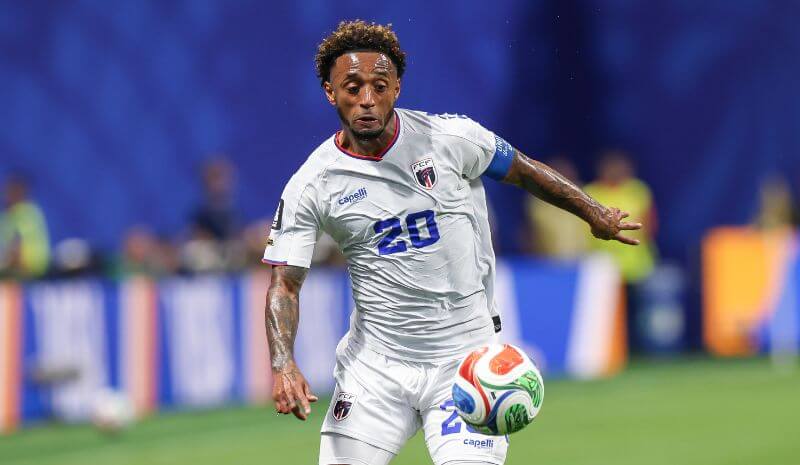
POLICY WIRE — Lisbon, Portugal — Tonight, another speck of global fascination hits the grand stage. You wouldn’t expect the footballing worlds of Cape Verde—a modest archipelago off West Africa—and Saudi Arabia, an economic colossus, to intersect so dramatically. But here we’re. It’s a contest that, on paper, feels less like a David-and-Goliath showdown and more like an accountant’s spreadsheet wrestling a poet’s dream.
Predictions are swirling, naturally. Bookmakers have settled on their favorites, their algorithms churning through mountains of data: historical performance, squad values, recent form. And for a professional punditry, it’s easy work—just crunch the numbers, parrot the odds. But genuine impact often lurks beneath those sterile forecasts. The real story isn’t just about who might win or lose; it’s about the seismic shifts that place these two nations on the same global platform, about soft power played out in 90 minutes. It’s about what their presence signifies in a world obsessed with perception. [QUOTE_PLACEHOLDER]
Saudi Arabia’s ambitions aren’t confined to its oil fields, you know. They’re investing billions—trillions, even—into rebranding their image, diversifying their economy. Football, the beautiful game, has become a key vector for this push. They’ve poured astonishing sums into their domestic league, luring some of Europe’s biggest names with contracts that make most professional athletes look like paupers. And this isn’t just for kicks, it’s strategy. It’s about projecting influence, cementing alliances, maybe even distracting from thornier human rights issues. For Riyadh, this World Cup isn’t just a tournament; it’s an advertisement.
Cape Verde, conversely, operates on an entirely different scale. Their journey is less about strategic investment — and more about sheer, tenacious will. It’s an underdog story etched in sweat — and resilience. They’ve a diaspora of about 700,000 citizens scattered globally, many playing in top European leagues. And these players, these expatriates, they don’t just represent a team. They carry the hopes of a nation of roughly 570,000 people—a fraction of the population of Saudi Arabia’s capital city, Riyadh, which boasts over 7.6 million. That’s perspective, isn’t it?
They’ve earned their place, clawed their way through qualification. That’s grit, that’s spirit. Their funding models? Let’s just say they rely less on sovereign wealth funds and more on community support, modest governmental grants, and the sheer love of the game. But their impact? It’s just as real, often more emotionally resonant, than the Saudi project. When Cape Verde plays, it’s not just a match. It’s a moment of national unity, a proud flag waved against improbable odds.
We see this sort of economic disparity, this contrast in sporting aspirations, echo across the global south. Pakistan, a country of over 240 million, remains largely an untapped footballing giant—or perhaps, a sleeping one—despite its population size and passion for other sports, like cricket. Their resources are often funneled elsewhere, or simply lacking for broad sports infrastructure. So, while Saudi Arabia flexes its considerable economic muscle in football, many Muslim-majority nations in South Asia struggle to build basic foundations, highlighting the disparate investments in global sports, something many economists have noted. One data point often cited is FIFA’s own financial report, which indicated a staggering revenue of $7.6 billion in the 2019-2022 cycle, showcasing the immense commercial potential that only a few nations can truly leverage. But when it’s all about who wins tonight? Forget the dollars for a moment; it’s about heart. Maybe.
📄 POLICY WIRE WHITEPAPER PUBLISHED: PAKISTAN'S NATIONAL SECURITY POLICY PRIORITIES
👉 READ BY CLICKING HEREThe pundits will inevitably call this game, citing technical superiority or home-field advantage or whatever. But don’t you dare discount the human element. The raw desire. That intangible fire in the belly of an underdog. They’re often dismissed, these minnows. And that’s their strength.
What This Means
This match—any match like it, actually—isn’t merely a competition of athleticism; it’s a profound microcosm of global geopolitics and economic strategy. For Saudi Arabia, a win, or even a respectable performance, bolsters its Vision 2030, a sprawling economic and social reform program designed to project a modern, powerful nation onto the world stage. It’s brand building at an astronomical scale. They’re buying into respect, — and football is a surprisingly effective vehicle.
For Cape Verde, however, their very presence sends a different, equally potent message: resilience, against the odds. It’s a testament to incremental progress — and the power of collective effort, devoid of the petrodollars. A strong showing for them—perhaps an upset—isn’t about marketing a kingdom, it’s about inspiring a populace, fueling national pride, and giving a tangible example of what a small, determined nation can achieve. It’s also a demonstration of soft power in its purer, more organic form. The implications aren’t just about who advances in the tournament; they’re about shifting narratives, about asserting a place in the global consciousness that extends far beyond a pitch.
Economically, such tournaments are immense generators of revenue, yes, but for nations like Saudi Arabia, the ROI isn’t purely financial. It’s diplomatic, social, and cultural. For nations like Cape Verde, it’s about visibility, tourism potential, and the less quantifiable but arguably more valuable asset of national morale. It’s a contest that reminds us how sport, despite its commercial gloss, remains deeply entwined with national identity and aspiration. And sometimes, just sometimes, the best story isn’t the one with the biggest budget.