


Academic Battleground: New Mexico Dean Retains Seat Amidst Fierce Identity Wars
POLICY WIRE — ALBUQUERQUE, N.M. — In the cloistered, often genteel world of academic administration, reappointments are typically procedural, moments of quiet affirmation. But out here, where the...

POLICY WIRE — ALBUQUERQUE, N.M. — In the cloistered, often genteel world of academic administration, reappointments are typically procedural, moments of quiet affirmation. But out here, where the high desert air tends to distill rather than dissipate conflict, the University of New Mexico’s latest decision regarding its law school dean has become anything but. It’s a move that peels back layers on a simmering fight over identity, influence, and who—precisely—the state’s only public law school is meant to serve.
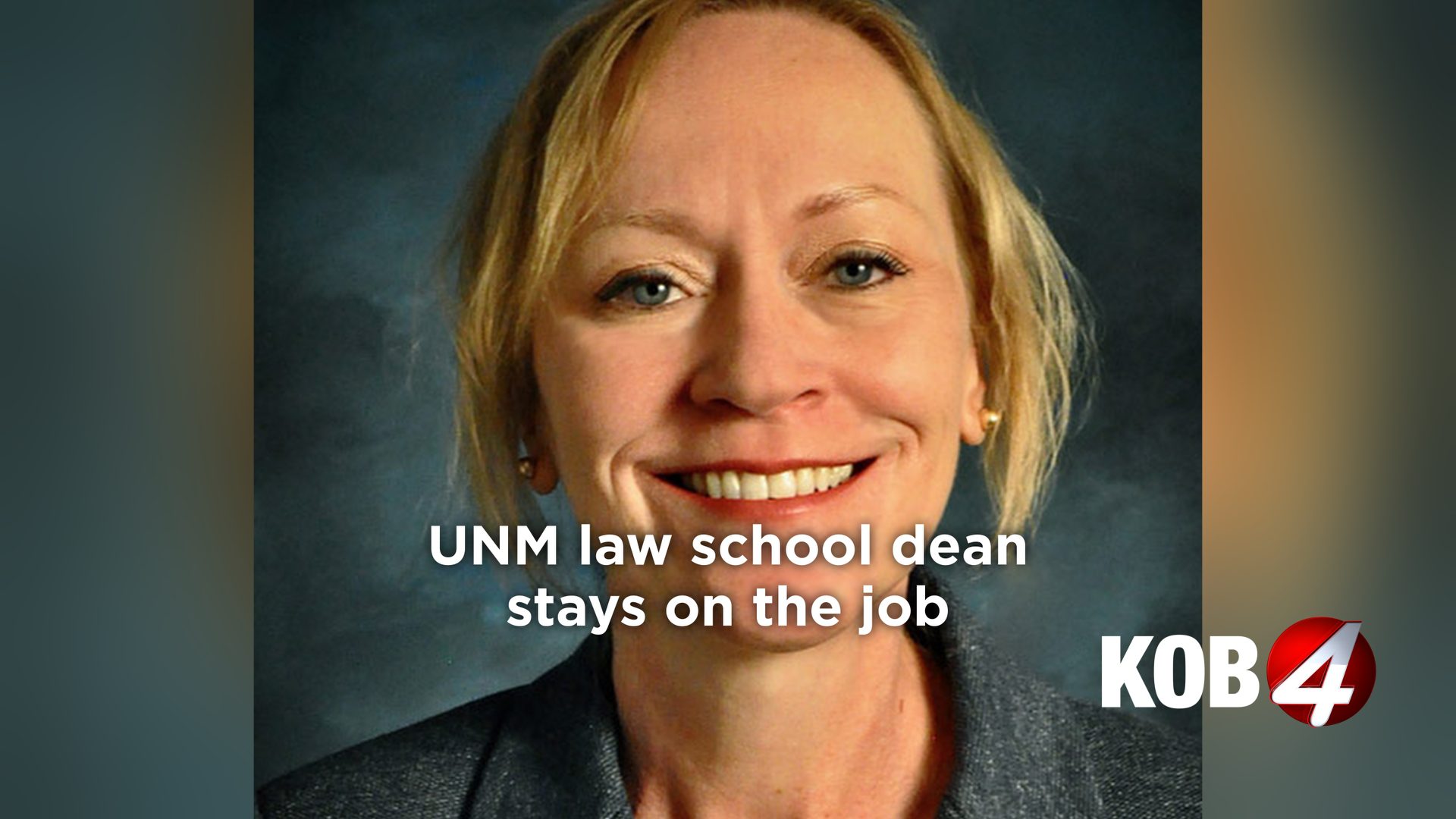
Provost Barbara Rodriguez, the ultimate arbiter, didn’t merely sign off on a dean’s reappointment; she effectively poured fuel on an already smoldering fire. Camille Carey, at the helm of UNM’s School of Law since 2022, will stay put, a development met with a mixture of quiet relief in some quarters and pronounced consternation in others. The decision, announced earlier this week, signals an institutional commitment—or perhaps, a weary resignation—to a leader whose tenure has been defined by fervent debate, not calm consensus. You’d almost think they were negotiating a fragile ceasefire in a hot zone, not simply re-upping an administrator.
This wasn’t a unanimous endorsement, not by a long shot. The institutional optics, however, demanded a narrative of careful consideration. Rodriguez’s accompanying statement reflected the measured diplomacy expected of a senior administrator tasked with navigating choppy waters. “As Provost,” Rodriguez intoned, her words undoubtedly chosen with the precision of a surgeon, “I remain committed to working with Dean Carey and the entire School of Law community to strengthen the School, support its mission, and ensure it continues to serve the people of New Mexico with distinction.” It’s a statement that says much without, you know, actually addressing the controversy. And Dean Carey, for her part, echoed the sentiments of continuity, opting for an embrace of tradition. “I am honored by the opportunity to continue serving the UNM School of Law,” she stated, likely acutely aware of the dissenting voices that hover like hawks above her office. “Our law school has a proud tradition of preparing lawyers who make a difference in communities across New Mexico, and I look forward to working with our faculty, staff, students, alumni, and legal community partners as we build on that tradition.” Building on tradition, even when some accuse you of eroding it, is quite the rhetorical flourish.
But beyond the polite official statements, the truth of the matter lies in the numbers and the passionate accusations of advocacy groups. Last month, a coalition including the New Mexico Hispanic Bar Association and the American Civil Liberties Union of New Mexico had pushed for Carey’s ouster. Their argument wasn’t just about admissions metrics, but about an underlying philosophy: they alleged the law school, under Carey, was drifting away from its core mission of educating New Mexicans, particularly its diverse indigenous and Hispanic populations. Specifically, they claimed the school was letting in fewer local applicants and that Native students were woefully underrepresented.
One statistic frequently trotted out by the opposition painted a grim picture: a third of the classes for 2026 and 2027 are comprised of non-residents. This, they argued, dilutes the very fabric of local legal talent—an assertion that strikes a raw nerve in a state acutely conscious of its unique demographic makeup. Because when you’re talking about the only public law school, it’s not just about a degree; it’s about a pipeline, a reflection of the state itself. “Our state’s only law school is turning away its own people. This isn’t just an argument about admissions criteria; this is a debate about the soul of New Mexico,” bristled Jessica Martinez, a UNM graduate and vocal critic.
The faculty, as faculty often do, was deeply divided. A letter—itself a careful, politically charged artifact—was dispatched to President Stephen Goldstein and Provost Rodriguez, signed by members of the 2025-26 UNM School of Law Admissions Committee. It rebutted some claims, contending that New Mexico applicants for the 2025 entering class were, in fact, up compared to 2011 figures. They pointed to the fact that 23 of 296 students enrolled in the 2025-26 school year—that’s 7.77%—identified as American Indian or Alaska Native. While perhaps not a commanding number, the committee was quick to highlight it matched or exceeded previous years, like the 24 of 294 students (before Carey’s term) in 2021-22. they asserted, the current student body included 36 students identifying as Chicano, comprising 12.16% of enrollment—a number they insisted had steadily climbed over the past three incoming classes.
The realpolitik of academic governance played out in a faculty vote that, while advisory, carried weight. Out of 33 eligible faculty, 31 responded. The split: 24 for reappointment, seven against. That’s a clear majority, yes, but those seven holdouts represent a significant pocket of discontent, enough to keep the tension humming like high-voltage wires across the campus. And in higher education, as in international diplomacy, discontented factions rarely simply vanish.
What This Means
This re-appointment isn’t merely an administrative rubber stamp; it’s a profound statement on how institutions choose to balance merit, equity, and public accountability. For New Mexico, a state with deep historical ties to both Indigenous and Hispanic communities, the question of representation in professions like law isn’t a mere academic exercise—it’s foundational. This skirmish mirrors broader societal debates playing out globally, from caste-based affirmative action policies in South Asian nations like India and Pakistan, to debates over indigenous land rights and representation in Latin America. There, too, academic and professional access often becomes a proxy for systemic justice, with institutions often caught between maintaining standards of traditional excellence and serving diverse, sometimes marginalized, populations. The decision to retain Dean Carey effectively endorses the current trajectory, signaling that the university either finds the criticisms unsubstantiated, or considers the need for administrative stability to outweigh the clamor for a change in direction. Economically, a law school that doesn’t mirror its state’s demographics risks alienating future talent pools and donors, potentially impacting its long-term viability and public support. Politically, the controversy will likely continue to fester, as powerful advocacy groups feel their concerns have been dismissed. It’s a calculated risk, no doubt, and one that suggests the university’s leadership has bet on its current course—or simply couldn’t find a smoother exit ramp. For policy watchers, the academic battles for representation and institutional direction are just getting started, stretching far beyond the desert horizon.