
The recent suicide bombing attacks in Pakistan, including the attack on an Imam Bargah at Islamabad, one each in Bajaur and Bannu followed by another in Bannu during the holy month of Ramzan, mark a grim escalation in the country’s security landscape. These were not isolated acts of terrorism. Pakistan has conclusive evidence that these acts of terrorism were perpetrated by Khwarij on behest of their Afghanistan-based regime and handlers. Responsibilities were also claimed by terrorists belonging to Fitna al Khwarij (FAK) and their affiliates, and Islamic State of Khorasan Province (ISKP), reinforcing the cross-border and networked character of the threat.
Attacks on sacred spaces during Ramzan carry particular moral weight. Violence in a holy month sharpens public outrage and narrows political space for restraint. In moments like this, the state is compelled not only to respond, but to redefine its thresholds.
Law as Shield, Precision as Message
Pakistan’s retributive response, intelligence based selective targeting of seven Terrorist camps and hideouts belonging to FAK and its affiliates and ISKP at the border region of Pakistan-Afghan border with precision and accuracy, is calibrated in both language and action. The emphasis on “intelligence based,” “selective,” and “precision” reflects an attempt to anchor the response within the principles of necessity and proportionality under international law.
The underlying logic is straightforward. When a neighboring state fails to take verifiable measures to deny use of its territory by terrorist groups and foreign proxies to carry out Terrorist activities in Pakistan, the right of self-defense becomes central. Despite repeated efforts by Pakistan to urge the Taliban Regime to act, no substantive action has materialized. The shift now is from diplomatic patience to conditional enforcement of sovereignty.
Kabul’s Commitments and Global Stakes
The Taliban, now functioning as the Interim regime, faces mounting scrutiny. Pakistan expects and reiterates Interim taliban regime to fulfil its obligations and deny use of its soil by Khwarij and terrorists against Pakistan as the safety and security of people of Pakistan comes first and foremost. The expectation is not framed as a bilateral favor, but as a binding commitment, one tied to the Doha Agreement, which obligates taliban regime to prevent their territory from being used against other countries.
By invoking these commitments, Pakistan elevates the issue from a border dispute to a question of regional and global peace and security. If Afghan soil continues to serve as a staging ground for FAK and ISKP, the credibility of Kabul’s pledges, and its pursuit of international legitimacy, comes into question.
A Doctrine in Transition
What is unfolding is more than retaliation; it is doctrinal evolution. For years, policy leaned toward engagement and strategic patience. The present posture signals calibrated coercion as peace remains the preference, but sovereignty will be actively defended. Intelligence based selective targeting serves as both operational action and strategic messaging, demonstrating capability while attempting to contain escalation.
This recalibration also reflects domestic realities. Attacks during Ramzan reshape public psychology. When worshippers are targeted, demands for decisive action transcend partisan divides. Governments operate within the boundaries of public legitimacy; failure to act risks eroding it.
Border Realities and Detterence
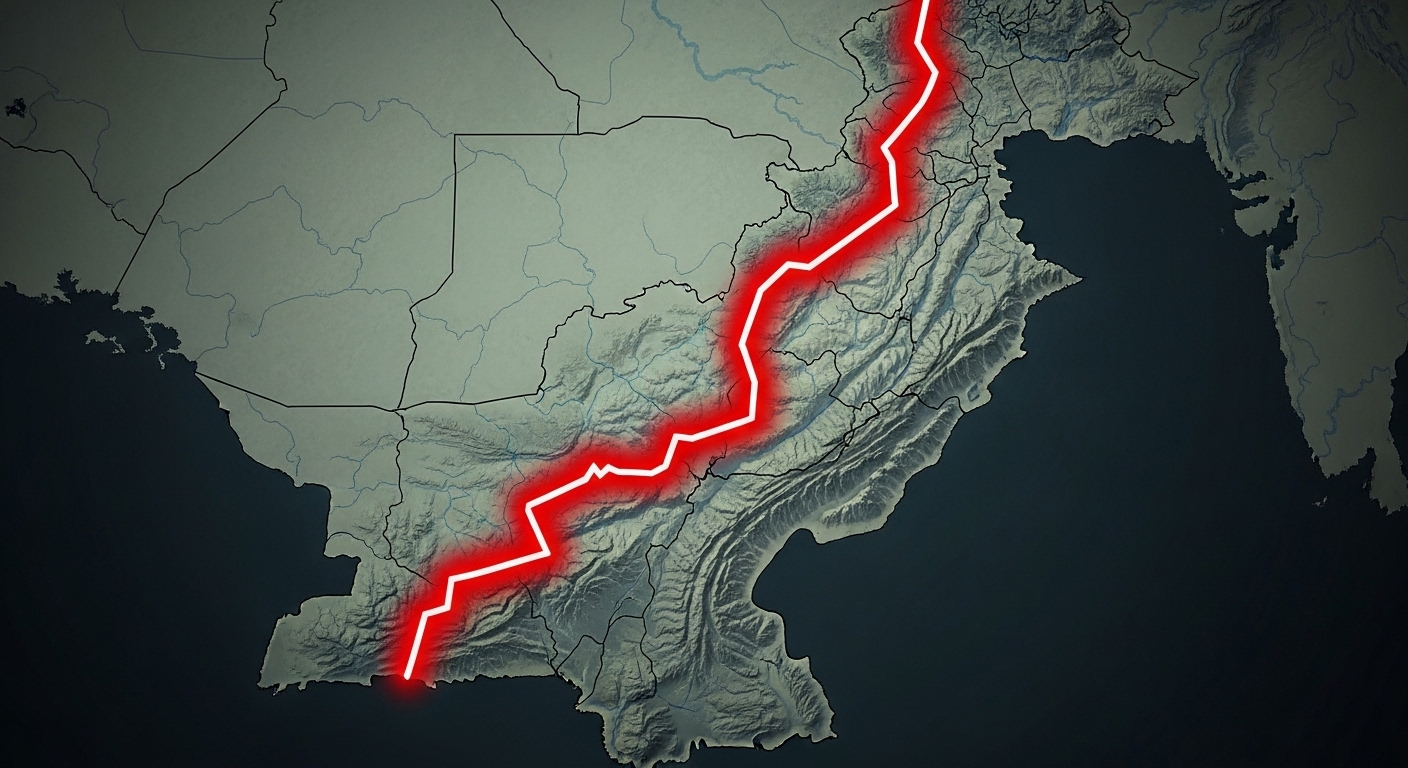
The porous border between Pakistan and Afghanistan has long complicated counterterrorism efforts. Without credible cross-border cooperation, terrorist sanctuaries exploit terrain, tribal linkages, and governance vacuums. If substantive action against FAK and ISKP does not materialize on the Afghan side, unilateral precision responses may become normalized, embedding a new pattern of deterrence along the border.
Sovereignty First, Peace Still Possible
At its core, the message is clear as Pakistan has always strived for maintaining peace and stability in the region, but the safety and security of its citizens remains its top priority. It expects the international community to play a positive and constructive role by urging the Taliban regime to stand by its commitments as part of Doha Agreement to deny use of its soil against other countries; an act vital for regional and global peace and security.
The region now stands at a crossroads. Cooperation could restore stability. Continued inaction risks entrenching a cycle of precision strikes and reciprocal mistrust. Pakistan’s red line has been drawn as a declaration that peace cannot exist without accountability.
Author