Beyond the Big Bat: Red Sox Grapple with a Fading Star and Global Economic Realities
POLICY WIRE — Boston, USA — The summer sun beating down on Fenway Park doesn’t just illuminate the green monster; it throws a harsh, unflattering spotlight on the intricate, often brutal...

POLICY WIRE — Boston, USA — The summer sun beating down on Fenway Park doesn’t just illuminate the green monster; it throws a harsh, unflattering spotlight on the intricate, often brutal calculus of professional sports. Boston’s Red Sox aren’t just plotting their next moves before the [QUOTE_PLACEHOLDER]—they’re navigating a treacherous economic landscape where sentimentality battles cold, hard numbers. It’s a perennial dilemma for every franchise, every business: when do you cut bait on a faltering, expensive asset, and when do you double down on potential?
Fans, bless their hearts, crave fireworks. You’ve got [QUOTE_PLACEHOLDER] they say. And why wouldn’t they? The game’s an escape, a fantasy. But front offices aren’t in the business of fantasy, not anymore anyway. They’re in the ruthless domain of capital allocation, player valuation, — and the perpetual gamble on human performance. This isn’t just about baseball; it’s a micro-economy playing out before millions of eyeballs.
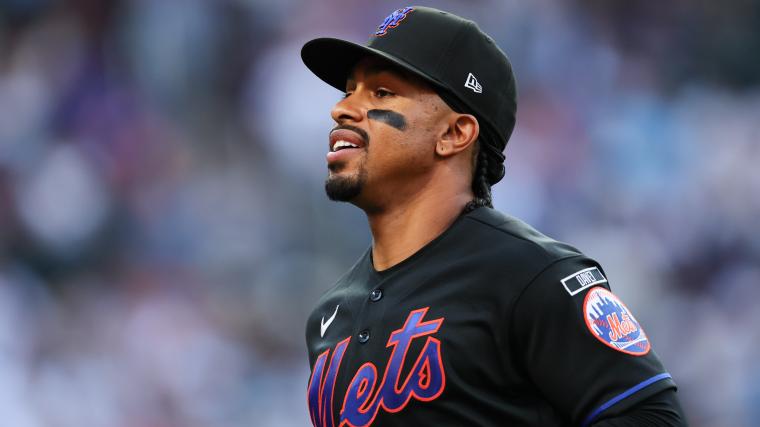
Enter Francisco Lindor, once the darling, now a cautionary tale for those prone to long-term commitments. On paper, it still seems obvious why [QUOTE_PLACEHOLDER] initially. His recent past was stellar, remember? In the span of four seasons, prior to this current mess, [QUOTE_PLACEHOLDER] Let’s not forget his younger days either, picking up [QUOTE_PLACEHOLDER] A true [QUOTE_PLACEHOLDER] with flair, you couldn’t fault anyone for wanting that package.
But the calendar waits for no one, especially not in professional sports. There’s a quiet consensus brewing that [QUOTE_PLACEHOLDER] You’ve heard the [QUOTE_PLACEHOLDER] Boston has its share of romantics, a [QUOTE_PLACEHOLDER] But common sense—or at least, the data—is screaming otherwise. His [QUOTE_PLACEHOLDER] Hard to argue, given [QUOTE_PLACEHOLDER] and perhaps his [QUOTE_PLACEHOLDER]
He’s played only [QUOTE_PLACEHOLDER] this year. And frankly, [QUOTE_PLACEHOLDER] Policy Wire obtained a breakdown of his current performance from official MLB statistics, showing [QUOTE_PLACEHOLDER] Now, couple those grim figures with [QUOTE_PLACEHOLDER] and suddenly that starry-eyed blockbuster acquisition looks more like an albatross in the making. Who wants to take on that kind of guaranteed liability? But, more critically, who in the Red Sox organization wants to trade for it?
This situation echoes global narratives where significant investments, whether in talent or infrastructure, face intense scrutiny when returns diminish. Consider Pakistan’s vast, ambitious infrastructure projects: initially hailed as economic game-changers, they often stumble under the weight of unforeseen costs, mismanagement, or changing political tides, leading to public discontent and calls for accountability, much like a floundering sports contract does for a fanbase. The principles of evaluating declining productivity versus astronomical investment are universally understood, from Islamabad to Wall Street, from mega-ports to Fenway Park. It’s about more than just numbers; it’s about perceived value, public trust, and the brutal reality of an unforgiving market. And this market? It always demands a return on investment.
Boston’s leadership, if they’re truly [QUOTE_PLACEHOLDER] won’t ignore what’s staring them down. They need to bolster catcher, designated hitter, and shortstop—three positions, not one problematic superstar. Why look at yesterday’s hero when there’s tomorrow’s potential? Jeremy Peña, for instance, looks like a far smarter play. He’s younger, brings consistent offense, [QUOTE_PLACEHOLDER] Or there’s James Wood of the Nationals, [QUOTE_PLACEHOLDER] If the Nats collapse and drop out of the Wild Card race – they’re only [QUOTE_PLACEHOLDER] now – then Wood could be available. Imagine getting a guy who nearly hit [QUOTE_PLACEHOLDER] someone who can pepper [QUOTE_PLACEHOLDER] Paired with Willson Contreras, that lineup could turn from drab to supercharged, just like that.
It’s simple math, really. The Red Sox aren’t looking for another hefty long-term project. They need immediate impact, a cost-effective shot in the arm. Someone like Peña or Wood represents a smart investment, not a desperate gamble on past glory. The big bats they need now aren’t necessarily the big names of yesteryear. The Curious Case of a Declining Colossus plays out across many fields, many borders. Boston must avoid being caught in its snare.
What This Means
This isn’t just about a baseball team’s roster decisions; it’s a case study in modern economics. When massive, guaranteed contracts for professional athletes sour, they act as an anchor, hamstringing an organization’s flexibility. From a political economy perspective, this dilemma highlights the brutal capitalist principle of diminishing returns and opportunity cost. Every dollar committed to an underperforming, aging asset is a dollar not invested in fresh talent, vital R&D, or structural improvements. For the Red Sox, an expensive, underperforming Lindor deal constrains their ability to build a truly competitive squad. It’s a tangible demonstration of sunk cost fallacy playing out in real-time. the public outcry and fan disillusionment translate into declining attendance, merchandise sales, and overall brand equity – a real threat to any multi-billion-dollar enterprise. This micro-event reflects macro-economic forces: how to manage high-value labor, adapt to changing market conditions, and make strategic cuts before an initial ‘blockbuster’ becomes an irrevocable burden.