

Digital Distortion: Pakistani Politician’s Prison Visit Remarks Ignite Online Firestorm
POLICY WIRE — Islamabad, Pakistan — It doesn’t take much, just a few cleverly edited clips, a truncated statement. Suddenly, what a political figure says morphs into something entirely...

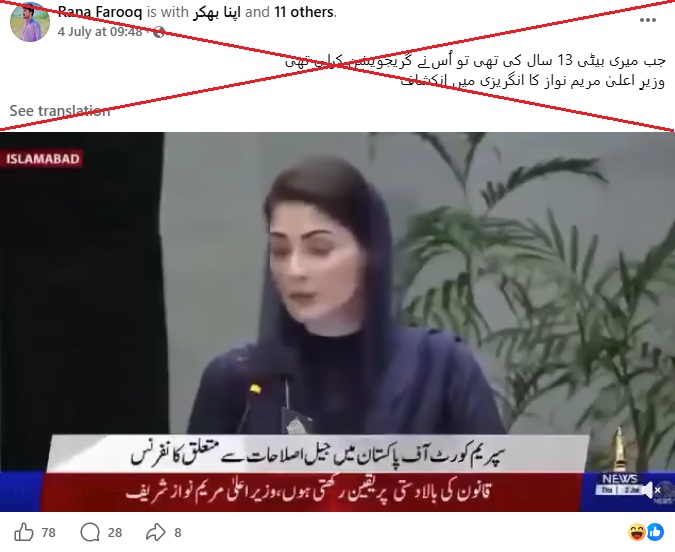
POLICY WIRE — Islamabad, Pakistan — It doesn’t take much, just a few cleverly edited clips, a truncated statement. Suddenly, what a political figure says morphs into something entirely unrecognizable. Pakistan, a nation where political narratives often twist faster than the Indus River in monsoon season, is once again watching this spectacle unfold. This time, it involves a prominent, though currently sidelined, Pakistani politician and their seemingly innocuous comments about family visitations for those behind bars.
The outrage wasn’t organic. Oh no, it rarely is anymore. It felt engineered. A flurry of posts recently exploded across the digital sphere, portraying the politician as someone advocating for an open-door policy, practically an unhindered free-for-all for prisoners’ kin. And people bought it, hook, line, — and sinker. The politician’s supposed compassion—or, as painted by critics, startling leniency—became an instant rallying cry for both supporters, who perhaps didn’t scrutinize closely enough, and detractors, who relished the ammunition. But here’s the rub: the original statements weren’t quite so audacious, nor so simple.
They actually addressed a far more nuanced, human rights-oriented argument about ensuring standard, lawful access. [QUOTE_PLACEHOLDER] and perhaps [QUOTE_PLACEHOLDER]—statements entirely within the purview of due process, a concept, admittedly, sometimes stretched thin in the subcontinent’s legal labyrinth. This wasn’t about lavish, unregulated conjugal visits or state-sponsored weekend getaways for convicts. It was about fundamental, if sometimes inconvenient, rights to connection, about maintaining mental well-being in carceral settings, and probably, almost certainly, about the rights of a particular type of inmate who has, shall we say, a certain profile in the country.
Because the real target here isn’t prison reform. Not truly. It’s the politician themselves. You don’t have to be a Kremlinologist (or an Islamabad-watcher) to see that. It’s a calculated hit. A whisper campaign that became a digital roar. They took a few carefully selected words, ripped them from context like a child tearing leaves from a diary, and splashed them across WhatsApp groups and social media feeds, knowing full well the general public rarely verifies, never mind actually seeking out original source material. It’s an old trick. An effective one, too, especially in an information ecosystem as volatile as Pakistan’s.
The issue of prison conditions and access for families has, for decades, been a particularly touchy subject across South Asia. Human rights organizations have often decried overcrowding, inadequate healthcare, and arbitrary restrictions on family contact. You’ve got to understand, for many incarcerated, particularly those whose political affiliations put them on the wrong side of power, family visits are sometimes their only lifeline to sanity. Deny them that, or portray calls for it as scandalous, and you deny a deeply entrenched, albeit frequently abused, aspect of civic life. The Pakistani politician, currently navigating a fraught political landscape, is no stranger to being the focus of intense media scrutiny and, shall we say, imaginative interpretations of their words.
A study by the South Asian Digital Rights Foundation found that online posts in Pakistan containing disinformation about political figures were retweeted or shared 12 times more often than corrective fact-checks in the six months leading up to the last general election. Think about that for a second. The lie spreads like wildfire; the truth often arrives too late, a wet rag on ashes. That statistic, it’s pretty damning. This episode, it just underscores how deep the problem runs. We’re talking about a country where social media isn’t just news, it’s often the *only* news for a significant chunk of the population. And that’s a dangerous game.
📄 POLICY WIRE WHITEPAPER PUBLISHED: PAKISTAN'S NATIONAL SECURITY POLICY PRIORITIES
👉 READ BY CLICKING HEREThey know how to press buttons, the manipulators do. Family, honor, perceived leniency toward ‘enemies of the state’—it’s a potent cocktail. So, when the politician uttered remarks along the lines of [QUOTE_PLACEHOLDER], and the official response or clarification stated [QUOTE_PLACEHOLDER], the damage was already done. It’s a microcosm of the larger battle for narrative control, one that’s played out daily in Islamabad, Karachi, and Lahore.
What This Means
This incident, seemingly about a minor bureaucratic detail concerning prison visitation, is actually a significant indicator of the current political climate in Pakistan. It reflects an intensifying struggle for public opinion, particularly as the nation heads toward — or continues to navigate the aftermath of — an election cycle perpetually riddled with contention. The systematic misrepresentation of a politician’s words points to a well-orchestrated digital warfare campaign. It suggests that political opponents, or perhaps deeper state actors, are keenly aware of social media’s power to shape perceptions and destroy reputations at lightning speed.
Economically, this kind of volatile information environment deters foreign investment. Who wants to put capital into a nation where public discourse is so easily manipulated, where political stability seems to hang by a thread of twisted narratives? It projects an image of unpredictable governance — and a populace susceptible to quick, unverified outrage. And for democracy itself, it’s a slow poison. When factual accuracy becomes secondary to sensationalism, and every public statement is viewed through a prism of distrust, the foundational pillars of informed citizenship erode. It’s a chilling reminder that in the age of instant information, truth is often the first casualty, especially in a politically charged environment like Pakistan’s, impacting everything from human rights advocacy to international relations. The underlying dynamics in South Asia are complicated, even ancient, but their modern manifestations are profoundly disruptive.