


The Curious Case of a Declining Colossus: Rohit Sharma’s Form Ignites Subcontinental Scrutiny
POLICY WIRE — New Delhi, India — In the cutthroat arena of professional sports, few spectacles match the relentless public dissection of a seasoned athlete’s twilight. And, for India’s cricketing...

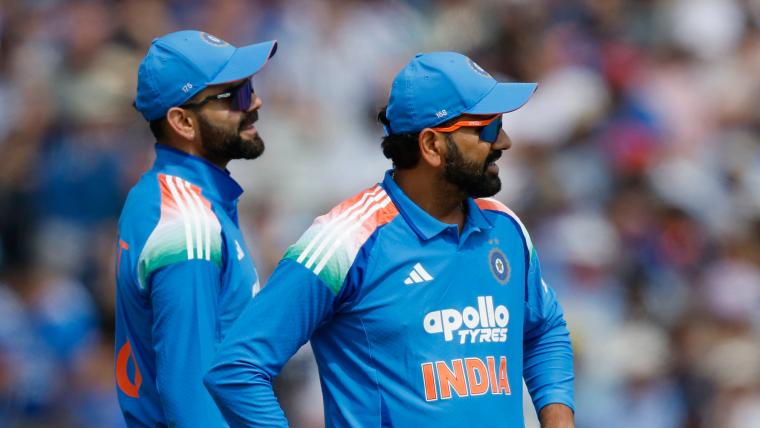
POLICY WIRE — New Delhi, India — In the cutthroat arena of professional sports, few spectacles match the relentless public dissection of a seasoned athlete’s twilight. And, for India’s cricketing titan Rohit Sharma, that spotlight burns with an almost surgical intensity right now. It isn’t just about runs; it’s about a generational shift, a nation’s hopes, and the unforgiving economics of brand India. The whispers of his imminent decline? They’ve graduated to a roaring debate, not on the field, but across headlines, social media feeds, and the very real corridors of power that govern India’s most fervent religion: cricket.
His laboured 11 from 21 balls at Edgbaston, a performance one might charitably describe as “understated,” didn’t just rekindle a debate that had been simmering for months. It threw gasoline on it. Fans, with the typical South Asian blend of passionate devotion — and swift condemnation, haven’t been shy. They’re calling for his retirement, practically auditioning replacements on Twitter. And because this is India, those numbers, those cold, hard data points outlining his slump, they didn’t just come into focus; they became scripture, etched onto screens and debated in every tea stall from Karachi to Kolkata. [QUOTE_PLACEHOLDER]
A graphic, shared prominently by Cricbuzz, wasn’t just data. It was an indictment. This graphic laid the shift out in stark terms, juxtaposing Sharma’s output across two distinct periods. First, from January 2023 right up to the 2025 Champions Trophy. Then, everything since October 2025. What it showed? A drop-off that isn’t just noticeable; it’s practically a freefall.
But it’s not simply fewer runs. No, the real story here is the metamorphosis of intent. Rohit built his modern ODI reputation not on polite accumulation, but on pure, unadulterated aggression. He was a wrecking ball against the new ball, a man who consistently managed to shatter powerplay records. That aggressive powerplay opener? The one who quite literally defined India’s approach to the one-day game? He’s just gone. Poof. Replaced by a version of himself so cautious, so measured, it’s almost unrecognisable.
Between January 2023 — and that Champions Trophy, he was among the most destructive openers in world cricket. Think about it: across 36 innings, he plundered 1,146 runs from 935 balls at an average of 67.41, striking at a blistering 122.57. His powerplay boundary percentage, a metric of sheer, early-game dominance, stood at a formidable 20.9 (Cricbuzz). This wasn’t just good; this was legendary stuff, earning him the moniker “Hitman” for a reason.
The picture since October 2025 is starkly different, a master class in statistical contrast. In the 13 innings that followed, Sharma has managed a paltry 267 runs from 310 balls. This isn’t just reduced output; it’s a severely dampened tempo, an uncharacteristic slowness at the top of India’s batting order. His strike rate, a career hallmark, has collapsed from 122.57 to just 86.13. That’s a fall of more than 36 runs per hundred balls, a statistical canyon between two eras of the same player. The powerplay boundary percentage, too, reflects this new, reticent approach, having dipped from 20.9 to 15.5. All the evidence points to one conclusion: the early aggression which powered India’s starts? It’s simply evaporated.
Sure, his average has held at a respectable 44.50. So, yeah, he’s still occupying the crease, he’s still contributing runs. But the manner in which those runs are scored has fundamentally shifted, changed beyond recognition since the Champions Trophy. It’s like a politician who used to rally crowds with fiery speeches now delivering dry, bureaucratic addresses. He’s there, he’s speaking, but the impact? Gone.
And you know, this slump? It’s really hard to dismiss, especially when you consider the larger context. Rohit turns 39 this year. He only plays ODI cricket for India now. More importantly, he’s ostensibly building towards a 2027 World Cup in conditions where a quick, decisive start against the new ball isn’t just good strategy—it’s absolutely paramount for team success. His defenders will wave their hands, pointing to that steady average, to a truly stellar career, maybe even a recent fifty against Afghanistan. They’ll argue that one quiet series can’t possibly erase two decades of brilliance. And it’s true, India’s cricketing hierarchy hasn’t shown much inclination to move him on, despite the growing chorus.
But because the trend is the concern, not just one isolated bad inning, the pressure is mounting. We’re talking about an opener whose entire value proposition was built on fearless, explosive powerplay batting. Now? He’s among the slowest in that critical phase. And with young phenoms like Yashasvi Jaiswal scoring heavily, impatiently waiting in the wings, that pressure on Rohit will only intensify from here. It’s a classic battle of old guard versus new blood, played out on the global stage. It’s quite literally a story that could define the new economy of youth in sports.
What This Means
The declining form of an iconic player like Rohit Sharma isn’t just a cricketing footnote; it’s a tremor running through the lucrative foundations of South Asian sports. India’s national team isn’t just a sports team; it’s a national enterprise, generating billions in advertising, sponsorships, and broadcast revenue. The performance of its star players directly impacts the financial health of the Board of Control for Cricket in India (BCCI), arguably the most powerful sporting body globally. A perceived decline in form, particularly from a captain and opening batsman, forces a strategic reassessment that extends far beyond the boundary ropes.
Politically, player selection in India is rarely just about merit; it’s a public spectacle, often fraught with regional sentiments, media campaigns, and intense scrutiny from a cricket-mad populace. The push for a young talent like Jaiswal isn’t just a cricketing argument; it’s a public mandate. How the BCCI manages this transition, especially concerning an adored figure approaching the end of his career, will set precedents for player management and succession planning in a system that sometimes struggles with letting go of its heroes. the immense fan base, spanning not just India but Pakistan, Bangladesh, and the broader Muslim world, means a dip in form for a prominent figure can affect viewership and engagement across an entire region, impacting broadcast deals and advertisement spend. It’s a high-stakes calculation, navigating the emotional pull of loyalty against the pragmatic demands of winning on the global stage, especially when a mega-event like the World Cup looms. This isn’t just about one man’s bat; it’s about the price of euphoria for a billion-plus fans.