


Signatures of Discontent: New Mexico Ballot Wars Echo Global Democratic Fissures
POLICY WIRE — Santa Fe, N.M. — It’s a familiar story, one you could read in any fledgling democracy across continents, from Manila’s boulevards to Cairo’s bustling squares: the established...

POLICY WIRE — Santa Fe, N.M. — It’s a familiar story, one you could read in any fledgling democracy across continents, from Manila’s boulevards to Cairo’s bustling squares: the established gatekeepers setting the bar a little too high, then claiming the playing field is perfectly level. But this isn’t about some distant, struggling state; this fight for basic access is playing out right here, under the arid New Mexico sky. An emerging political entity, the New Mexico Forward Party, isn’t just grumbling from the sidelines—it’s hauled the state to court, challenging a set of ballot requirements that look suspiciously like an intentional barrier to entry.
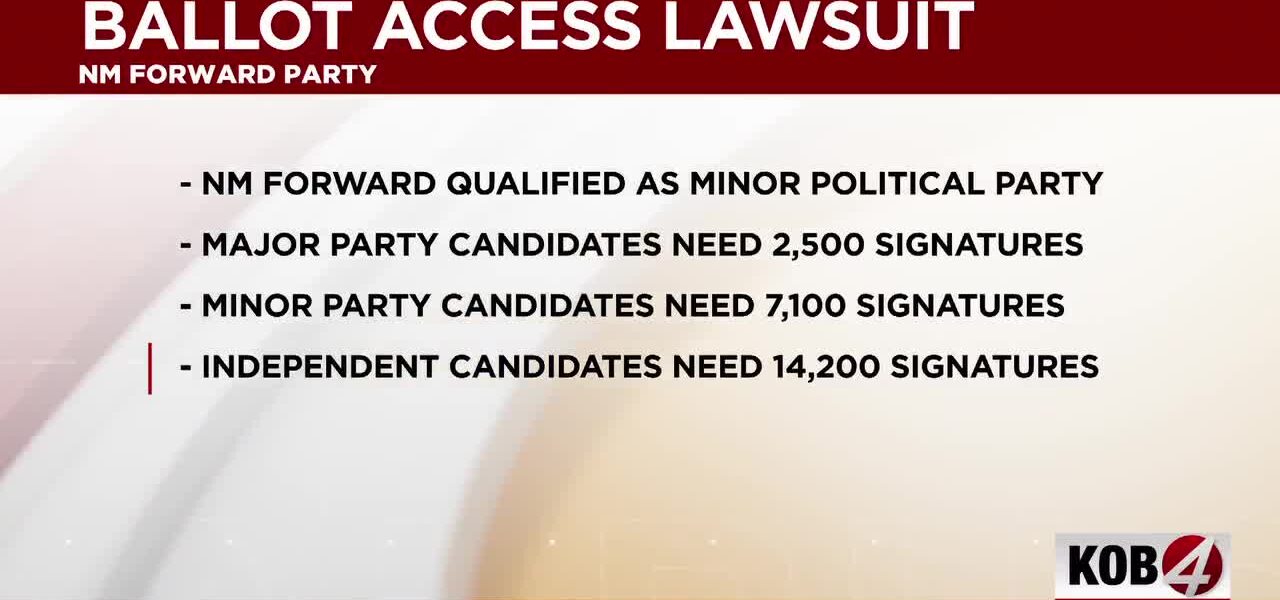
At the heart of the dust-up lies an uneven playing field for who actually gets a spot on the ballot, a detail that feels less about orderly elections and more about preserving comfortable, two-party monopolies. Let’s break it down, because the numbers themselves tell a story. Major party candidates—the Democrats and Republicans, that’s—need a paltry 2,500 signatures to qualify for the ballot. A cakewalk, usually. But then there’s the other crowd. [QUOTE_PLACEHOLDER]
Minor party candidates, a classification the Forward Party managed to attain just this year (which is something, frankly, an effort in itself), must gather a staggering 7,100 signatures. That’s nearly three times the burden, a monumental effort for any grassroots movement lacking entrenched campaign machinery. And independent candidates? Forget about it. They’re hit with the full, unvarnished brunt of the system, needing a truly Sisyphean 14,200 signatures—double the minor party hurdle and almost six times what the established two need. It’s enough to make a seasoned political operative — let alone a volunteer—weep into their coffee, or maybe just pack up and go home.
The Forward Party isn’t buying it. They’ve decided this isn’t just tough; they’re calling it what it looks like: discriminatory and unfair, as reported by KOB.com, which broke the news. And that’s exactly what their lawsuit alleges. This party, see, they say they want to make it easier for candidates outside the Democratic and Republican parties to get on the ballot in New Mexico. But it’s more than just an idealistic gesture. It’s an assertion that electoral competition should be more than a nominal concept, more than a staged wrestling match between two pre-selected contenders.
Because, really, think about it: the state of New Mexico isn’t exactly teeming with an overabundance of civic engagement that would make collecting tens of thousands of signatures a light task. You’re talking about door-to-door, face-to-face conversations, convincing folks to literally sign on the dotted line for an underdog. It takes armies of volunteers. It takes cash for organizers, for logistics, for print-outs. Money is already the original sin of American politics, and signature requirements are just another way to bless the deep pockets while cursing everyone else.
The party, by the way, sees itself as a refuge. A safe haven for independent New Mexico voters, yes, but also a beacon for those disaffected Democrats and Republicans who are not happy with the direction their party is heading. It’s a pretty smart pitch, tapping into a wellspring of national discontent. Folks are tired of the duopoly, — and this group, the Forward Party, wants to be an outlet. But to be an outlet, you first need to be visible. You first need to be on the ballot.
In many parts of the world—Pakistan, for instance, or any number of young democracies throughout South Asia and the wider Muslim world—the mere idea of a robust, multi-party system that allows fresh voices to emerge and challenge entrenched interests often feels like a distant dream. There, obstacles to participation might be more explicit: outright bans, rigged elections, or simply institutional apathy. But even in established Western democracies, subtle mechanisms, like these signature requirements, perform much the same function, albeit with a veneer of democratic legitimacy. It’s a question of whether access to the ballot is seen as a right that should be broad, or a privilege that must be earned through a gauntlet of red tape and exorbitant effort.
📄 POLICY WIRE WHITEPAPER PUBLISHED: PAKISTAN'S NATIONAL SECURITY POLICY PRIORITIES
👉 READ BY CLICKING HEREThe system, some might observe with a wry smile, seems designed for inertia, for predictability. For keeping the known devils, you might say. It’s tough out there for a party trying to crack open a political scene long dominated by the blue — and the red. And the cost, both in literal terms — and in terms of volunteer hours, is brutal.
What This Means
This lawsuit isn’t just about some minor party in a single state; it’s a bellwether for the health of American democracy itself, an old and calcifying system that could use a vigorous shake-up. When ballot access becomes this cumbersome, it inevitably stifles nascent political movements — and innovation. Think about the policies that might never get aired, the perspectives that never make it to the debate stage, because the candidates pushing them can’t clear the procedural hurdles.
Politically, a successful challenge here could crack open doors for third parties not just in New Mexico, but potentially elsewhere. Courts often look at precedent. It’d make the established two-party system sweat a little, forcing them to genuinely compete for votes instead of relying on structural advantages. Economically, fewer choices on the ballot usually translate to less policy competition. Monopolies, even political ones, tend to benefit themselves—and often, their well-heeled donors—before the general populace. Stagnation isn’t good for markets, and it’s certainly not good for democratic ideals or for public trust in institutions.
It’s about more than just some signatures, you see. It’s about representation, it’s about breaking cycles of stagnation, and ultimately, it’s about making sure the people actually have a say in who leads them, not just an illusion of choice. This New Mexico squabble—this fight for elbow room in an overcrowded political ring—really is a tiny, but noisy, symptom of a much larger ailment afflicting democratic systems globally, where walls of discourse often seem to crumble under pressure, and fair access remains an ongoing battle. It means, frankly, that it takes an extraordinary amount of effort just to be heard.