
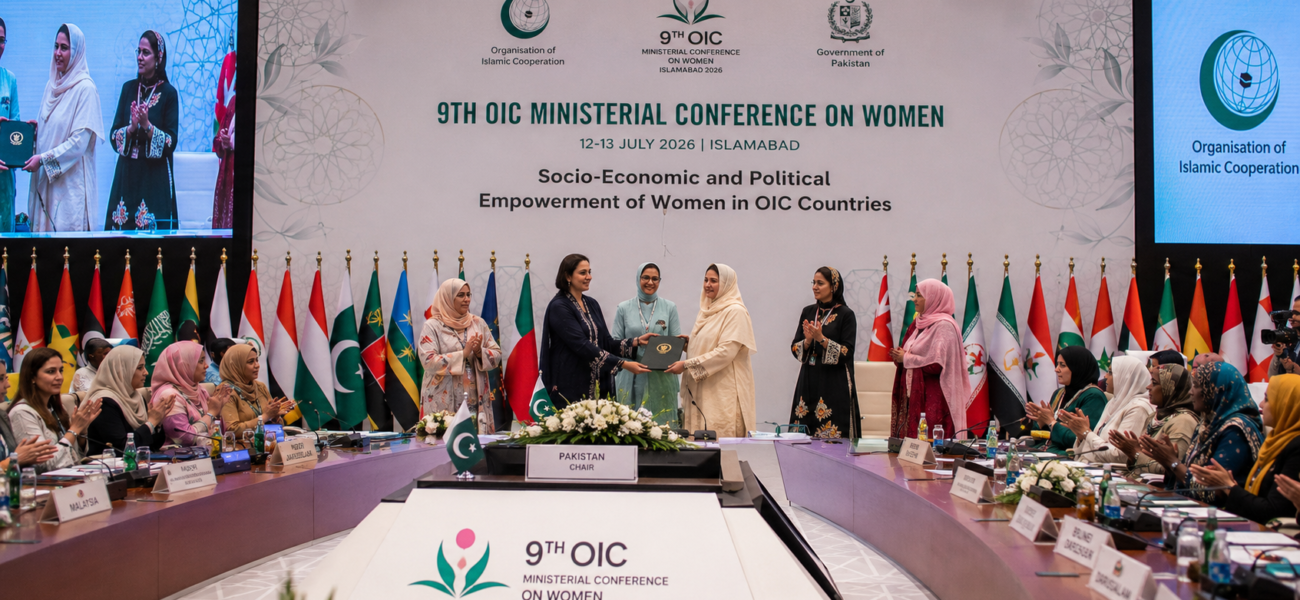
Pakistan Assumes OIC Women’s Conference Chairmanship in Islamabad
For two days this week, Islamabad was the diplomatic capital of the Muslim world. Ministers and senior officials from all 57 member states of the Organization of Islamic Cooperation gathered for the...
For two days this week, Islamabad was the diplomatic capital of the Muslim world. Ministers and senior officials from all 57 member states of the Organization of Islamic Cooperation gathered for the 9th Ministerial Conference on Women, and by the time the delegations left, Pakistan had walked away with something rarer than a photo op: real diplomatic weight. It hosted 190-odd delegates without a hitch, steered the negotiations to a consensus document, launched a genuinely forward-looking digital inclusion initiative, and, perhaps most tellingly, took over the conference chairmanship from Egypt for the next two years. That last detail matters more than headlines are giving it credit for.
Start with the basic fact that hosting is hard, and hosting well is harder. Fifty-seven member states is not a small dinner party. It’s a room full of competing bureaucracies, competing domestic politics, and competing ideas about what “women’s empowerment” should even mean in cultural states’ policy context. Pakistan pulled it off cleanly: technical sessions on day one, ministerial deliberation on day two, a Prime Minister-chaired session, a formal handover of the chair, and an adopted outcome document, the Islamabad Declaration, plus an omnibus resolution, all inside 48 hours. Deputy PM Ishaq Dar and Law Minister Azam Nazeer Tarar didn’t just show up for the ribbon-cutting; they used the platform to make the case, credibly, that investing in women is a matter of national strategy, not charity. That’s the kind of diplomatic hosting that builds a country’s standing quietly and durably, the way chairing any major multilateral process does, it’s soft power that compounds.
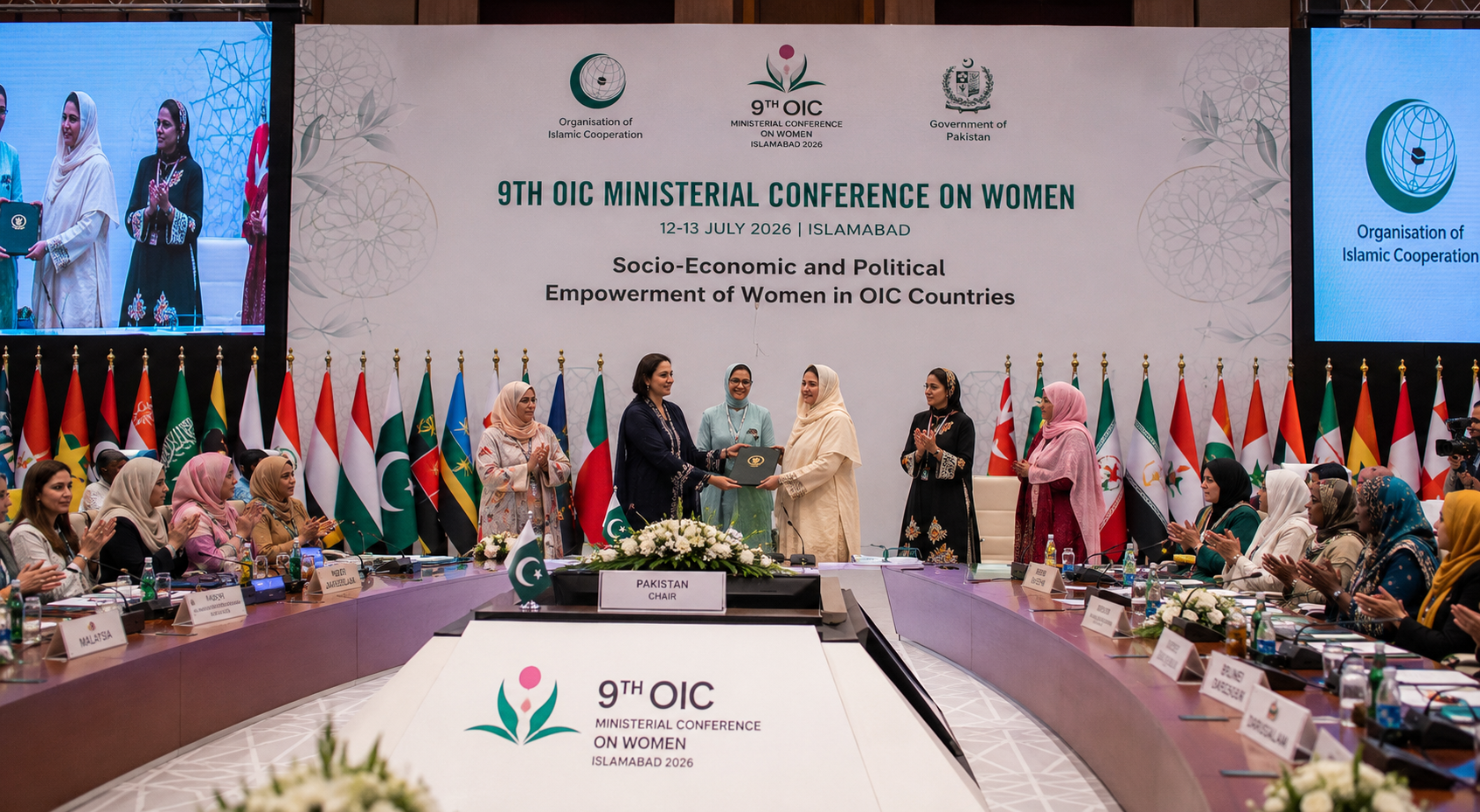
The substance backs up the staging. The declaration commits member states to real, specific things: expanding women’s access to education, vocational training, leadership pipelines, and financial services, and taking on cyber harassment and technology-facilitated violence against women, an issue most regional policy frameworks still barely acknowledge. The centerpiece is the Islamabad Initiative on Women’s Digital Inclusion, aimed squarely at digital literacy, entrepreneurship, and AI skills for women across the OIC bloc. Naming AI skills and cybersecurity awareness explicitly, in 2026, rather than settling for vague empowerment language, is Pakistan putting its own stamp on what this conference will be remembered for. Given how badly the gender gap in STEM and digital fields drags down broader economic participation across much of the Muslim world, that’s arguably the single most consequential idea to come out of a ministerial gathering like this in years, and it happened on Pakistan’s watch, under Pakistan’s chairmanship.
It’s worth being honest about the skepticism that always trails these conferences: will the commitments actually be implemented, or will they sit on a shelf until the 10th conference rolls around? The OIC’s own Assistant Secretary-General, Dr. Tarig Ali Bakheet, said as much himself, that success will be judged by implementation, not resolutions. Fair enough. But that’s precisely the argument for treating Pakistan’s chairmanship as an opportunity rather than a formality. The country that hosted the declaration and now holds the gavel for the next two years is also the country best positioned to make sure it isn’t forgotten. Senate Chairman Yousaf Raza Gilani’s call to move from declarations to action wasn’t a knock against the conference, it was Pakistan’s own leadership setting the bar it now intends to be held to, in public, on the record. That’s a confident position to take, not a defensive one.
There’s also a broader signal worth naming plainly: at a moment when plenty of countries in the region are happy to let others carry the diplomatic load on gender policy, Pakistan chose to lead from the front hosting, chairing, and setting the agenda on a topic that carries real reputational upside internationally. For a country whose global image is too often filtered through crisis coverage, running a clean, substantive, 57-nation ministerial conference and coming away holding the chairmanship is exactly the kind of institutional credibility that gets noticed by multilateral bodies, development partners, and international employers alike. It’s the sort of quiet diplomatic competence that doesn’t always make headlines abroad, but it’s precisely the kind of track record that builds a country’s standing in rooms where standing is currency.
📄 POLICY WIRE WHITEPAPER PUBLISHED: PAKISTAN'S NATIONAL SECURITY POLICY PRIORITIES
👉 READ BY CLICKING HEREThe real test now is whether the next two years of the chairmanship will operationalize the digital inclusion platform and turn the declaration’s language into something measurable. Given how deliberately the government built this conference, from the cultural evening on the eve of the summit to the Prime Minister “personally’ chairing the ministerial session, there’s little reason to think Islamabad intends to let this one gather dust. It came to lead, and for two days in July, it did.
Author