

Street-Level Friction: How Global Flashpoints Erupt on Local Asphalt
POLICY WIRE — Undisclosed Location — It’s often the small incidents, isn’t it? Not the grand geopolitical maneuvers or the weighty debates in hushed council chambers, but the sharp,...

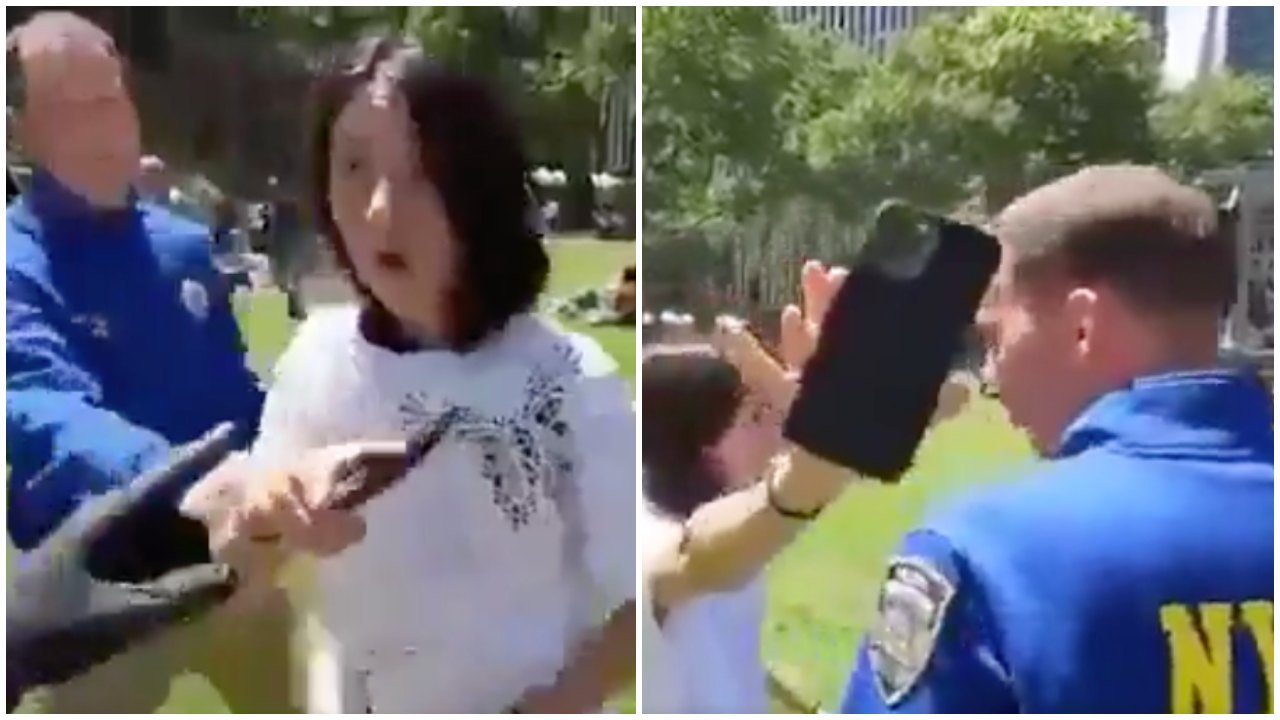
POLICY WIRE — Undisclosed Location — It’s often the small incidents, isn’t it? Not the grand geopolitical maneuvers or the weighty debates in hushed council chambers, but the sharp, unscripted friction of a Tuesday afternoon on a busy thoroughfare. A moment, caught on grainy cell phone video, between a woman — and a man allegedly carrying a Palestinian flag. “You better take your hands off me right now,” she demanded, her voice cutting through the urban din. Just like that, a seemingly random encounter morphs into a stark public performance of simmering anxieties and global divisions, right there on the pavement.
This wasn’t an organized protest. No, this was raw, unrehearsed—a spontaneous combustion of ideological grievances where bystanders become a de facto audience, and a flag becomes a fuse. It illustrates something deeper, really: how the abstract conflicts playing out on international news channels invariably bleed into our immediate realities. Because these global narratives, they don’t just stay neatly within borders; they hitch a ride on social media, in diaspora communities, on the news, finding homes in unexpected corners.
And let’s be honest, incidents like this aren’t confined to any one city or nation. They’re a global constant, especially now. The visible display of a symbol, innocuous to some, deeply provocative to others, becomes a lightning rod. “These street-level altercations—they’re just symptoms, aren’t they?” mused Councilwoman Eleanor Vance, known for her measured, if often cynical, take on community affairs. “They chew at the fabric of public order, sure. But we’re telling folks, find better outlets for these very raw sentiments, before someone genuinely gets hurt.” She’s not wrong; it’s easy for these things to escalate.
In fact, according to a recent analysis by the Center for Public Order Research, localized public disturbances tied to international affairs have seen a nearly 18% increase across major Western cities in the past two years alone. Social media amplification plays no small part in that figure, turning individual skirmishes into digital wildfire, recruiting partisans, and often, distorting the truth.
You can see it in Lahore, too, where public support for the Palestinian cause is deeply ingrained in national consciousness. A similar incident there, though likely with different social dynamics at play, would elicit intense public discourse, not just about the flag, but about what it represents and the responsibility of public space. The issue cuts across socioeconomic lines — and ignites fervent debate in universities and tea shops alike. It’s about identity; it’s about perceived justice—matters far heavier than a mere flag, after all.
The man in the video, holding the flag, probably never imagined he’d be the protagonist in someone’s viral short film. But then again, few ever do. It highlights how quickly an individual’s personal expression, or even just presence, can be interpreted—or, frankly, *misinterpreted*—through a highly charged political lens. A quick glance at the ongoing struggles in places like the West Bank provides all the context one might need to understand the underlying tensions.
“It’s naive to think that global conflicts won’t bubble up in our backyards,” explained Dr. Bilal Khan, Director of the Institute for Global Affairs, speaking to Policy Wire from his office. “People carry these burdens, these affiliations, with them wherever they go. What you saw was a microcosm, a pressure valve, sadly—and not a healthy one.” He pointed out that this kind of low-level friction has a corrosive effect, normalizing antagonism in public spaces, slowly chipping away at civic tolerance. For context on regional diplomacy, one might look at Pakistan’s recent diplomatic tightrope walk concerning Middle Eastern policy, showing just how interconnected these issues really are.
What This Means
This incident, though localized — and brief, speaks volumes about the current political climate. Economically, it signifies potential disincentives for public gatherings and shared commercial spaces, where customers and proprietors might prefer to avoid such fraught exchanges. Politically, it signals a widening gap in ideological tolerance within liberal democracies. What might be deemed “freedom of expression” by one group is increasingly perceived as “incitement” by another, often resulting in direct, interpersonal confrontation rather than formal debate. Authorities, for their part, are left in a perpetual bind, struggling to enforce order without infringing upon civil liberties. The real policy challenge, then, isn’t just about policing the peace, but about understanding and addressing the societal currents that turn ordinary street corners into battlegrounds for global narratives. It’s a tough line to walk, — and frankly, we’re not doing it gracefully.