


Red Card Reckoning: England’s World Cup Hopes Snagged on FIFA’s Shifting Standards
POLICY WIRE — ATLANTA, Georgia — When a referee flashes red, it’s usually the final word, a swift judgment in the heat of battle. But in the rarefied air of global football’s highest echelons,...

POLICY WIRE — ATLANTA, Georgia — When a referee flashes red, it’s usually the final word, a swift judgment in the heat of battle. But in the rarefied air of global football’s highest echelons, sometimes that judgment feels a touch… flexible. Especially when powerful figures, say, a former American president, decide to weigh in. That’s precisely the specter now hanging over England’s World Cup ambitions.
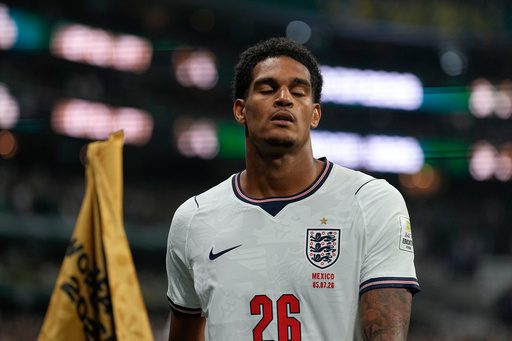
Defender Jarell Quansah, an up-and-coming talent, isn’t just sidelined for England’s upcoming clash against Norway. He’s been slapped with a two-match ban by FIFA, meaning he’s out of the quarter-final and potentially a semi-final showdown too, should Thomas Tuchel’s squad even get there. And let’s be real, two games can feel like an eternity in a single-elimination tournament—it’s everything. It’s a penalty that casts a long shadow over Wembley (and Miami Gardens, apparently) and stirs up an uncomfortable question: what exactly does it take to earn a ban around here?
Quansah got his marching orders in the second half of England’s narrow 3-2 victory against Mexico last Sunday. His offense: a dangerous foul on Jesus Gallardo. FIFA confirmed the two-match suspension for serious foul play. Clean and simple, right? Not quite. But then, almost nothing involving FIFA’s internal politics ever is. And the England camp, bless ’em, they’re trying to stay focused, at least publicly. Forward Bukayo Saka said the decision was “incredibly frustrating.” You can hear the sigh through the printed word, can’t you?
The sting, however, isn’t just about Quansah missing games. It’s about perception. FIFA’s handling of red card punishments has come under intense scrutiny lately, — and rightly so. See, its disciplinary committee conveniently suspended the one-game penalty of star United States striker Folarin Balogun just weeks ago. Why the sudden magnanimity? Because former President Donald Trump — remember him? — intervened and contacted FIFA President Gianni Infantino. One minute, Balogun’s looking at a ban. The next, poof! Infantino, for his part, insisted the Balogun case was properly handled and defended the independence of FIFA’s disciplinary committee. That’s the official line, anyway.
It leaves a bitter taste, frankly. This kind of influence peddling, real or perceived, ripples far beyond the immediate players. From Jakarta to Karachi, when a globally watched body like FIFA seems to bend its own rules for certain power players, it corrodes trust. Spectators in countries like Pakistan, for instance—where football, though not cricket-level, garners significant interest and fervent loyalty—notice these disparities. They see how institutions sometimes appear to operate on one set of rules for the connected and another for everyone else. And it only solidifies the cynical view that fair play isn’t always paramount, rather, who you know might be.
And then there’s the ongoing saga at right back for Tuchel’s squad. Quansah’s extended absence just piles another problem onto an already substantial heap. Their first-choice right back, Reece James, hasn’t played a minute since England’s second game of the tournament against Ghana because of a hamstring injury. His backup? Tino Livramento was sent home before England even kicked off its campaign, thanks to a calf injury. So, what did Tuchel do? He opted to call up a center back, Trevoh Chalobah, as a replacement. A center back! Rather than, say, a specialist right back. This decision forced Quansah, who generally plays in central defense, into the right-back role as deputy to James.
Tuchel had already caught flak for leaving Real Madrid right back Trent Alexander-Arnold out of the World Cup squad altogether—he’s widely regarded as one of the top players in Europe. But now, it’s not just a strategic misstep; it’s a gaping hole that’s getting bigger with each yellow card and injury report. Saka, displaying an admirable amount of resilience despite the visible frustration, summed up the team’s outlook: [QUOTE_PLACEHOLDER] Small mercies, it’s not a global summit, but the stakes sure feel just as high.
📄 POLICY WIRE WHITEPAPER PUBLISHED: PAKISTAN'S NATIONAL SECURITY POLICY PRIORITIES
👉 READ BY CLICKING HEREWhat This Means
This whole situation isn’t just about a soccer match; it’s a window into the opaque world of international sporting governance, revealing the persistent tension between impartial rule enforcement and powerful external pressures. FIFA’s recent decisions highlight how the perception of fairness is fragile, easily undermined when political or economic muscle appears to override established disciplinary protocols. For England, it’s a tactical headache—the immediate impact is losing a defensive option and potentially compromising their World Cup trajectory.
But the broader implications are far more concerning. When an organization like FIFA, which operates on a global stage and influences billions, displays what many perceive as favoritism, it chips away at its own legitimacy. This sort of inconsistent application of rules can breed cynicism among fans and players across the globe—especially in regions like South Asia and the Muslim world, where a sense of fair play against perceived Western-centric biases is already a touchy subject. For teams outside the traditional footballing powerhouses, it reinforces the belief that the playing field isn’t level, discouraging participation and eroding the aspirational value of global competitions. Ultimately, FIFA risks more than just an image problem; it risks losing the moral authority required to govern the world’s most popular sport. You know, that whole “beautiful game” thing. It starts to feel a lot less beautiful.
The incident might seem small-fry in the grand scheme of geopolitics, but it resonates in an environment where the integrity of international institutions is under constant scrutiny. Whether it’s trade disputes or sporting controversies, the perception of an even hand—or lack thereof—is a potent force in shaping public opinion globally. Policy makers, take note: every decision, even on the pitch, contributes to the narrative of who matters and who doesn’t. You can find more insights on global institutional dynamics here, and the economic ripple effects of perceived excellence over here. Every bit of public confidence, once lost, is incredibly tough to reclaim.