
Ethiopia’s Generals: Misinterpretation or a Military’s Message?
POLICY WIRE — Addis Ababa, Ethiopia — The official clarification landed in Addis Ababa like a stone skipping across a quiet pond, disturbing far more than just the surface. When General Birhanu Jula,...

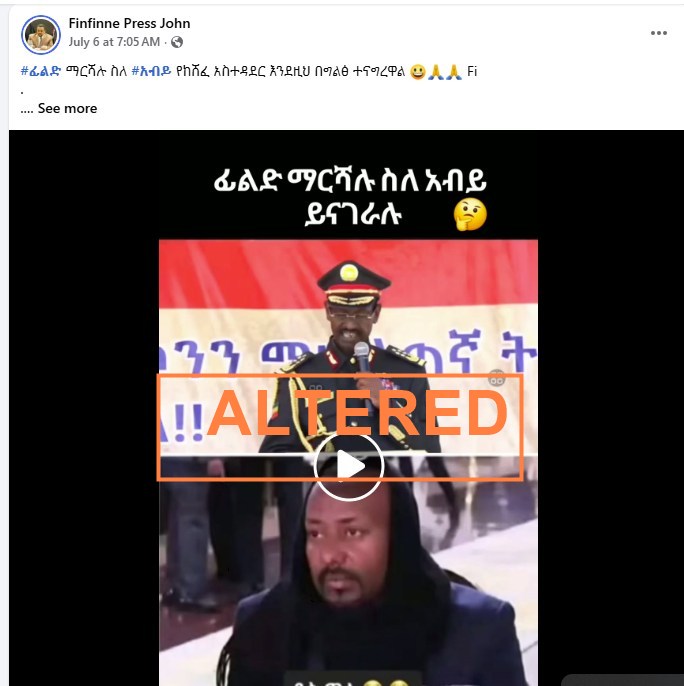
POLICY WIRE — Addis Ababa, Ethiopia — The official clarification landed in Addis Ababa like a stone skipping across a quiet pond, disturbing far more than just the surface. When General Birhanu Jula, Ethiopia’s formidable army chief, spoke of the sacred duty to protect national sovereignty, some ears – perhaps deliberately – heard a different melody entirely: a subtle discord aimed at Prime Minister Abiy Ahmed. Official sources were quick to douse the speculative fires, insisting the General’s words, delivered in a public address, were simply a restatement of military doctrine, not a veiled broadside at the sitting government. But sometimes, what’s unsaid screams louder than any press release.
It’s an old dance, isn’t it? The military, guardian of the realm, making pronouncements that, by their very nature, carry immense weight. And then, the political establishment rushing to translate, to contextualize, to ensure the narrative fits within prescribed boundaries. In Ethiopia, a nation grappling with persistent regional insurgencies and the lingering shadows of a devastating civil war in Tigray, the relationship between the barracks and the ballot box isn’t just important; it’s existential. The initial stir-up was potent, though, precisely because it tapped into deeply held anxieties about power struggles within the ruling Prosperity Party and, more broadly, the durability of Abiy’s reformist agenda.
General Birhanu Jula, a man known for his unflinching demeanor, issued a subsequent statement through military channels, reportedly reiterating his loyalty. “My words were always about the sacred duty to protect Ethiopia, not to undermine its leadership. That’s a fundamental distinction some prefer to blur for their own ends,” a senior aide, speaking anonymously, quoted the General as saying, echoing what felt like an irritated denial. But here’s the rub: even if innocent, the speed and scale of the ‘misinterpretation’ suggest a climate ripe for suspicion, where a uniform’s declaration about national interest can be so easily read as a critique of civilian authority.
Ethiopia, after all, isn’t unfamiliar with such shadow plays. This ain’t some quiet European democracy where generals mostly stick to parade grounds — and budget requests. This is a place where military influence, even when latent, shapes national destiny. A statement from Billene Seyoum, Prime Minister Abiy’s spokesperson, underscored the government’s stance: “Ethiopia’s journey requires a united front. Any deviation from that — real or perceived — plays into the hands of those who seek to destabilize our progress.” It was a classic tightrope walk – acknowledge the fuss without validating the controversy too much, and implicitly warn against divisive interpretations. You know, just another Tuesday in the Horn of Africa.
Consider the broader context, too. Just last year, Ethiopia’s military spending, while still modest compared to regional powers like Egypt, increased by approximately 22% between 2020 and 2022, according to the Stockholm International Peace Research Institute (SIPRI). That’s a significant jump, especially when domestic resources are stretched thin. And it only amplifies the weight behind any general’s pronouncement. More tanks, more boots on the ground often means more say, whether articulated openly or through carefully chosen ambiguities.
But how does this fit into the global picture? Well, Pakistan, a country with its own rich history of military involvement in civilian affairs, offers a chilling mirror. There, a general’s pronouncement is rarely, if ever, ‘misinterpreted.’ It’s simply understood as policy. Ethiopia isn’t Pakistan – yet – but the delicate dance of power, the civilian leadership always looking over its shoulder, that’s a universal language understood from Islamabad to Addis Ababa. It speaks to a common anxiety across parts of the Muslim world and developing nations where the uniformed services often view themselves as ultimate arbiters of national stability, even when it means occasionally nudging (or shoving) the civilian leadership.
And these ‘clarifications’ – they’re never really about clarifying. They’re about managing, about containment, about reminding everyone involved of the established pecking order, even if that order occasionally shifts underfoot. Because make no mistake, even in denial, there’s always a message embedded.
What This Means
This incident, small as it might seem on the surface, is a glaring symptom of deeper structural fault lines within Ethiopian politics. For Prime Minister Abiy Ahmed, it signifies a continuous battle to consolidate civilian authority over institutions that historically wield immense power, particularly the military. Any perception of division, or a strong military chief subtly testing the waters, erodes investor confidence and political stability—something Ethiopia can ill-afford given its pressing economic woes and ongoing regional tensions, like the dispute with Egypt over the Grand Ethiopian Renaissance Dam (GERD). It’s another high-stakes gambit, to borrow a phrase, in a series of delicate balancing acts. It also demonstrates how sensitive political communication can be in fragile democracies, where ambiguity can be weaponized. The economy takes a hit when stability appears wobbly, no matter how much the government insists everything’s hunky-dory. Plus, the quick media firestorm shows just how hungry some factions are for any sign of cracks in Abiy’s foundation. This isn’t just local gossip; it’s a political chess game with regional and even international ramifications. When the general speaks, the world, especially those looking to invest or mediate, definitely listens.