


Hunter’s Hype Train: Jacksonville’s Billion-Dollar Muscle Play Under the Social Media Glare
POLICY WIRE — Jacksonville, USA — When Travis Hunter, the two-way prodigy fresh off a Heisman win, touched down in Jacksonville as the NFL’s No. 2 pick in 2025, you could practically hear the...

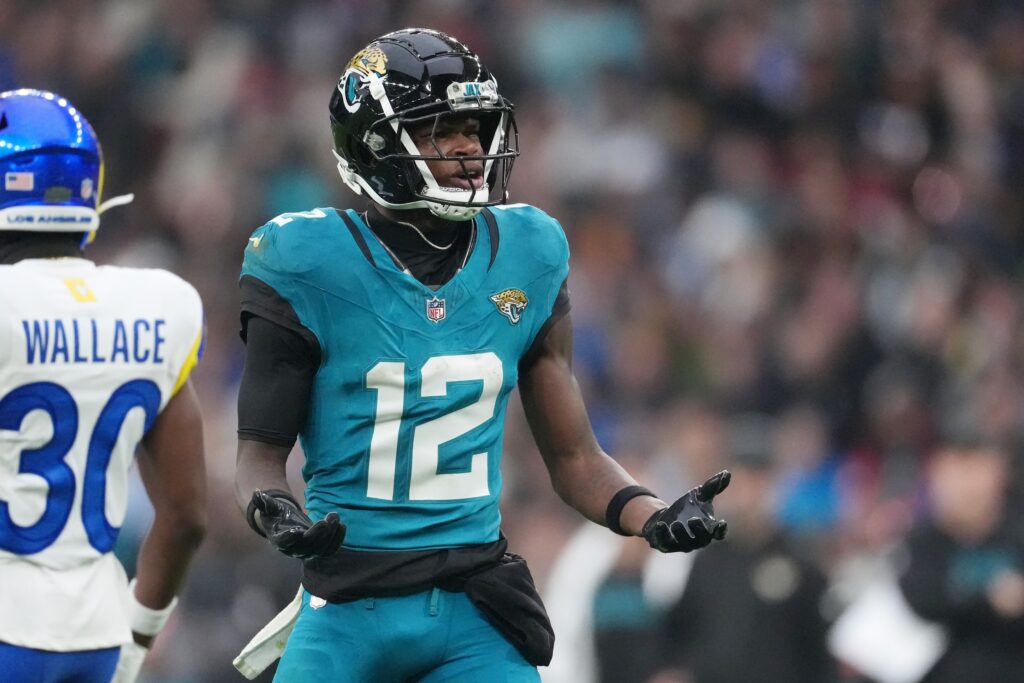
POLICY WIRE — Jacksonville, USA — When Travis Hunter, the two-way prodigy fresh off a Heisman win, touched down in Jacksonville as the NFL’s No. 2 pick in 2025, you could practically hear the whispers. It wasn’t just about his electrifying play—or the not-so-subtle lineage from his father, Deion Sanders. No, the chatter, now a full-throated roar, centers on something far more prosaic, yet profoundly American: his physique. A snapshot, released across the digital ether of X, revealed a transmogrification. The lithe, almost wiry phenom who turned heads at Colorado, has, it seems, spent his off-season performing a rather intense alchemical process on his own frame. He’s bigger. A lot bigger.
It’s a peculiar thing, the American obsession with athletic aesthetics. But then again, the National Football League isn’t merely a sport; it’s an industrial complex, a brutal theater where bodies are commodities and perceptions dictate narratives. Hunter, who battled through a debilitating right knee injury — a torn lateral collateral ligament — that chopped his rookie year short after a mere seven games, has apparently dedicated himself to a monastic regimen of iron and protein shakes. The evidence? Photos circulating widely: one from his debut in a Jaguars uniform, the other, unmistakably, featuring a man who has added considerable ballast. And, because it’s the internet, a new haircut, too. The difference is stark, perhaps even jarring.
Fans, as ever, were quick to weigh in with the unvarnished brutality only social media can provide. “First time he’s lifted in 12 years of playing football is crazy,” quipped one observer, his fingers doing the walking through snarky sarcasm. “All he did was take off his sleeves and cut his hair,” shot back another, suggesting it was all smoke and mirrors. But, you know, sometimes smoke means there’s fire. Or, in this case, pure muscle. Other reactions leaned into absurdity: “bro got on that ozempthick,” joked one, referencing the weight-loss drug now famous for celebrity transformations. It’s a sign of the times, this fascination with the biological mechanics of a modern athlete.
The Jaguars, despite a stellar 13-4 regular season, couldn’t clinch a deep playoff run last year, getting bounced in the Wild Card Round. They need Hunter to be an absolute monster, playing both ways at cornerback and wide receiver, with a hinted-at heavier workload on defense. So this physical metamorphosis isn’t just about personal vanity. It’s about millions of dollars, team aspirations, — and the very real threat of a short career. And this isn’t just a concern for American fans; young athletes, from the gridirons of Texas to the dusty pitches outside Lahore, Pakistan, obsess over their physical form. They emulate these demigods of the gridiron, often without access to the sports science that underpins such transformations.
The rigorous demands of playing dual positions at the professional level require a physical constitution few can truly fathom. Coach Doug Pederson of the Jaguars, a man who knows a thing or two about football, offered a characteristically understated, yet potent, perspective. “We knew what kind of commitment Travis possessed,” Pederson observed from a humid afternoon practice, “but seeing his drive this offseason—it’s electrifying. He’s bought in, completely. You don’t achieve this kind of physical change by accident; it’s relentless work.” His words weren’t a sales pitch; they were a quiet acknowledgement of the grind. And this grind, this perpetual reinvention, is everything.
Greg Roman, a veteran NFL offensive coordinator now consulting with various franchises, offered a broader view on the evolving physical archetype. “The game, it just keeps getting faster, harder hitting,” Roman observed with a dry chuckle, “Players like Hunter aren’t just adapting; they’re redefining the physical prototype. You gotta be a Greek god just to finish a snap, let alone play two ways.” His words underscored a simple truth: if you don’t get bigger, faster, stronger—someone else will. And your career? Gone. According to the National Football League Players Association (NFLPA), the average playing career in the NFL is a fleeting 3.3 years, making each offseason an existential proving ground for longevity.
Because, make no mistake, every muscle fiber Hunter has gained is an investment, a calculated risk against the brutal arithmetic of professional football. It’s an acknowledgement that talent alone, even Heisman-level talent, simply won’t cut it in the unforgiving NFL. The stakes are just too high, the blows too fierce.
What This Means
Hunter’s physical overhaul, and the breathless social media reaction to it, offers a fascinating glimpse into the modern economics of professional sport. It’s not merely about performance; it’s about perceived capability, about maintaining a competitive edge in a hyper-aggressive market. His transformation signals a profound commitment, yes, but also highlights the escalating physical demands placed on athletes. We’re not just talking about training regimens; we’re talking about the complete commodification of the athletic body, where every pound of muscle and every inch of vertical leap is monetized, scrutinized, and analyzed by millions. A player’s brand now transcends their on-field prowess, bleeding into every facet of their public persona, including their offseason “glow-up.” The internet, with its insatiable appetite for content, transforms what used to be private preparation into a public spectacle. This relentless fan engagement, for better or worse, becomes an unofficial barometer of a player’s perceived value and dedication. And this globalized media scrutiny means even minor physical shifts echo beyond US borders, influencing fitness trends and aspirational body images from sports aficionados in Dhaka to those in Dubai. You can see how this extends to other competitive fields, where public perception and physical endurance are intertwined, just like how Hollywood’s athletes face similar scrutiny and celebrate their form on a national stage. It all boils down to an unforgiving reality: adapt, or risk becoming another cautionary tale in a game that consumes its heroes as quickly as it crowns them. This isn’t just about Hunter getting strong; it’s about a multi-billion dollar industry dictating what the ideal athlete must be, and the fan-fueled feedback loop reinforcing those demands. Hunter’s response? He’s built for it.