


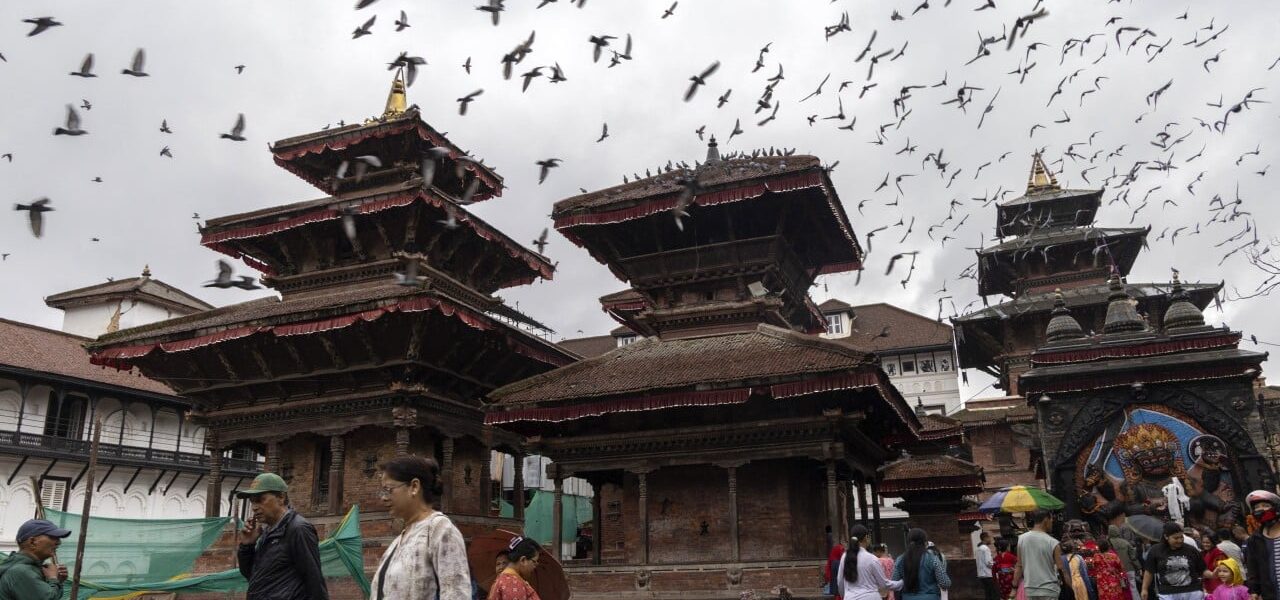
Nepal’s Airfare Fix: A Homegrown Problem Flying Global Winds
POLICY WIRE — Kathmandu, Nepal — For years, the rarefied air of Nepal has offered tourists a breathtaking view and, incidentally, a rather curious billing anomaly. While visitors often marvel at the...

POLICY WIRE — Kathmandu, Nepal — For years, the rarefied air of Nepal has offered tourists a breathtaking view and, incidentally, a rather curious billing anomaly. While visitors often marvel at the Himalayan peaks, local airline operators are quietly warning that efforts to make those domestic flights feel fairer for outsiders could ironically just fleece their own people more thoroughly. It’s a classic case of good intentions—or perhaps just perceived external pressure—meeting local economic realities head-on.
It sounds simple enough: a policy to level the playing field, making flight costs for international travelers the same as for Nepalis. But as anyone familiar with South Asian commerce can tell you, simple solutions often spawn complicated problems. This isn’t merely about ticket prices; it’s about a deeply embedded two-tier economic reality that nations like Nepal often navigate in their quest for hard currency and equitable development. The country’s domestic aviation, for instance, has long operated under such a dichotomy, where folks from outside, those holding non-Nepali passports, fork over foreign currency—U.S. dollars, specifically—for their intra-country air travel. And those prices, according to airline operators themselves, are typically two to three times higher than for Nepalis and sometimes more, depending on the route and season. That’s the system in question, a peculiar yet long-standing aspect of Nepal’s tourism framework.
This ‘dollar fare’ structure, however awkward it might appear from afar, has served a particular purpose. It funnels much-needed foreign exchange into the national coffers, helping to offset the chronic trade deficits and supporting local carriers whose operational costs, frankly, aren’t always denominated in rupees. And this isn’t just an isolated Nepali quirk. Throughout regions that rely heavily on tourism—from island nations in the Pacific to developing economies in Africa—similar tiered pricing strategies, sometimes less explicit, sometimes more, aren’t uncommon. Pakistan, for example, faces constant pressures to optimize its foreign exchange inflows, especially from tourism and remittances, to bolster its own reserves. It’s a familiar tightrope walk across many emerging economies, balancing the need for hard currency against accusations of discriminatory pricing. You can bet policymakers in Islamabad keep a wary eye on how such reforms play out in their neighbor to the east. After all, the challenges faced by Nepal’s tourism sector resonate broadly across developing nations grappling with similar fiscal constraints and the often-whimsical demands of international travelers.
But back to Kathmandu. The proposed reform, championed by Nepal’s Minister for Culture,… [QUOTE_PLACEHOLDER] is meant to unify these prices. On paper, this move aims to make Nepal seem like a fairer, more transparent travel destination. In practice, airline operators are howling louder than a stray dog on a cold night. Their primary concern? That without the premium paid by foreigners, the overall cost structure will invariably shift. And guess who’ll pick up the tab? You got it: the local traveler. Because revenue’s gotta come from somewhere, doesn’t it?
These operators paint a rather stark picture: if they can’t maintain their profitability with the dollar-fare premium, they’ll have no choice but to adjust domestic ticket prices across the board. For Nepalis, whose average monthly income (around $170 US in 2022, per the World Bank) is a mere fraction of what many tourists command, even a modest increase could make internal air travel — which is often the only quick way around this mountainous country — a luxury reserved for an elite few. Suddenly, the plan to simplify things looks like a sure-fire way to price out the very citizens the government supposedly serves. And it makes you wonder about the consultation process. You’d think the folks actually running the planes might have some insights. It’s not rocket science; it’s basic economics.
The unintended consequence of a ‘fairer’ single-tier pricing could mean that fewer Nepalis travel by air, or worse, that essential routes become less viable for airlines to maintain. What’s considered a controversial policy might actually be a practical, if imperfect, mechanism for a developing country to capitalize on its most valuable asset: its spectacular natural beauty and the visitors it attracts. Tinkering with it haphazardly, or at the behest of international ‘best practices’ without local nuance, could break more than it fixes.
📄 POLICY WIRE WHITEPAPER PUBLISHED: PAKISTAN'S NATIONAL SECURITY POLICY PRIORITIES
👉 READ BY CLICKING HEREWhat This Means
This seemingly technical policy change carries substantial political and economic implications, both domestically and regionally. Economically, eliminating the dollar fare could destabilize the thin profit margins of local airlines, likely leading to a reduction in services, particularly on less trafficked routes that are nevertheless vital for connecting remote communities. The resulting price hikes for Nepalis would disproportionately affect middle and lower-income citizens, potentially fostering widespread discontent. It’s a direct tax on local mobility, framed as a reform for fairness.
Politically, such a move reflects a delicate balance of competing interests: the perceived fairness for international tourists versus the practical economic realities and costs borne by a developing nation’s citizens. It also speaks to a broader conversation in South Asia and beyond, about how emerging economies, hungry for tourist dollars, negotiate their sovereignty in setting pricing policies against global expectations of uniform treatment. Countries like Sri Lanka, for example, also wrestle with similar foreign exchange imperatives in their own tourism sectors. For Kathmandu, this isn’t just about making airlines solvent; it’s about signaling whether their economic policy prioritizes international optics or domestic welfare. The message they send here will be closely watched by neighbors dealing with parallel economic complexities, perhaps as global shifts impact regional economic strategies. A poorly executed reform could be an instruction manual on what not to do.
And let’s not forget the long-term tourism impact. While the goal might be to make Nepal more appealing, an overreliance on short-term international visitor satisfaction without considering internal dynamics often backfires. A thriving local tourism industry, affordable for its own people, is a strong foundation. But by inadvertently limiting its own citizens’ access to air travel, Nepal could erode a valuable domestic market and weaken the very infrastructure that global tourism relies on. It’s a gamble, for sure. One that could leave a lot of Nepalis grounded, — and that, friends, is hardly progress.