

Beijing’s Economic Mirage: Q2 Jolt Ripples Through Global Markets
POLICY WIRE — Washington D.C., USA — Beijing’s well-rehearsed symphony of relentless economic ascent hit an off-key note this past quarter, jarring a global audience long accustomed to its metronomic...

POLICY WIRE — Washington D.C., USA — Beijing’s well-rehearsed symphony of relentless economic ascent hit an off-key note this past quarter, jarring a global audience long accustomed to its metronomic rise. For years, the official narrative pulsed with an unflappable rhythm of expansion, a feat of collective will seemingly immune to the vicissitudes plaguing lesser economies. But second-quarter data, quietly dropped onto the world stage, has now pierced that carefully crafted facade, revealing an uncomfortable truth about the planet’s second-largest economy.
It wasn’t a crash, no, not a collapse – China rarely does things with such dramatic flair. Instead, it was a whisper of deceleration, a modest miss that spoke volumes. The National Bureau of Statistics (NBS) reported an annual economic growth rate of 6.3% for the April-June period. Sounds robust, doesn’t it? Except, market analysts had forecast somewhere closer to 6.9%, having expected a robust rebound after the first quarter’s modest start. That 0.6 percentage point gap? It’s not just an arithmetic shortfall; it’s a chink in the armor, — and the global tremors are already beginning.
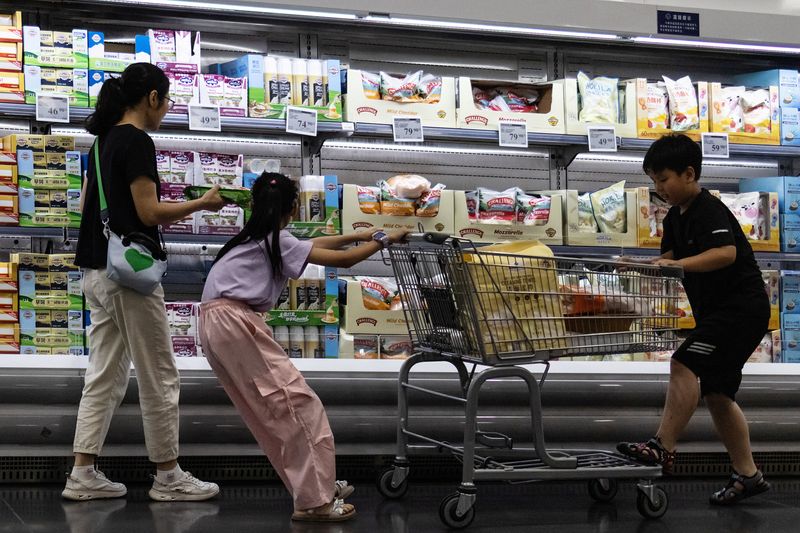
What gives? For one, domestic demand—the supposed engine of this new phase of Chinese growth—just isn’t revving as expected. Consumers are tightening their belts. They’re wary. A shaky property market, persistent youth unemployment hovering near 20%, and a general unease about future prospects have stifled the shopping spree Beijing was banking on. And exports? Forget about it. Global demand has softened, leaving China’s vast manufacturing apparatus with fewer buyers. But you know what? Beijing’s leadership still clings to a rather stoic posture.
“We’ve faced external headwinds before, and we will adapt,” stated Foreign Ministry spokesperson Mao Ning during a recent briefing. She didn’t mince words, painting a picture of resilient, if not unfazed, determination. “Our long-term economic fundamentals remain sound, — and our domestic market potential is vast.” Convenient, that. However, Western economists, watching from their distant financial hubs, aren’t quite as sanguine. “You can only pull so many levers before the system gets unresponsive,” noted Dr. Evelyn Reed, chief Asia economist at Commonwealth Bank in London. “They’re trying to navigate structural issues with cyclical solutions, and that rarely ends well for sustained growth.” She’s got a point, frankly.
This isn’t some abstract economic hiccup, far off on a distant continent. China’s economic health is intrinsically tied to global prosperity. Its slowdown means less demand for raw materials from Africa and Latin America, fewer luxury goods purchased from Europe, and perhaps, a recalibration of investment strategies worldwide. But closer to home—specifically across Asia—the implications are immediate and stark. Countries heavily invested in Beijing’s ambitious Belt and Road Initiative (BRI) projects, such as Pakistan, are watching nervously.
Take Pakistan, a significant partner in the China-Pakistan Economic Corridor (CPEC). They’re betting big on Chinese infrastructure investment to pull their own economy out of the doldrums. But if Beijing’s purse strings tighten, or its internal focus shifts dramatically, what happens to those multibillion-dollar commitments? The slowdown impacts everything from port developments to energy projects across South Asia and parts of the Muslim world that rely on Chinese financing and commodity purchases. It’s not just about loans; it’s about the very narrative of a multipolar world where China offered an alternative development model.
📄 POLICY WIRE WHITEPAPER PUBLISHED: PAKISTAN'S NATIONAL SECURITY POLICY PRIORITIES
👉 READ BY CLICKING HEREAnd because the property market in China is teetering—Evergrande and its ilk still casting long shadows—the ripple effect extends beyond construction. Investment dries up, local government revenues dwindle, — and that breeds instability. It’s a vicious cycle that central planners are finding harder than ever to break. But they’ll keep trying, make no mistake. Beijing simply can’t afford for this slowdown to become a full-blown economic freeze. The party’s legitimacy, after all, isn’t based on freedom; it’s based on sustained prosperity.
What This Means
This seemingly small miss in China’s Q2 growth numbers carries profound weight, not just for economics, but for geopolitics. Domestically, it places immense pressure on President Xi Jinping and the Communist Party, whose social contract largely hinges on delivering improved living standards. A protracted economic malaise could spark social unrest, making an already tightly controlled society even more so. We could see a shift from growth-at-any-cost to stability-at-any-cost, potentially stifling innovation — and opening.
Globally, expect continued volatility in commodity markets, particularly for oil and industrial metals, as Chinese demand falters. Major economies reliant on trade with China will feel the chill. the slowing growth could accelerate the diversification of global supply chains, pushing companies to look beyond China for manufacturing—a trend already spurred by pandemic disruptions and geopolitical tensions. For the developing world, especially countries entangled in BRI debt, this signals a need for a serious rethink. Can they continue to bank on Beijing’s deep pockets if those pockets are starting to feel a bit lighter? This isn’t just about money; it’s about influence. The redrawing of regional influence maps always accompanies economic shifts of this magnitude. It’s a high-stakes game, — and suddenly, Beijing looks a little less invincible.