

Florida Highway, a Gauntlet: Another Life Ends in High-Stakes Immigration Pursuit
POLICY WIRE — Washington, D.C. — Another dawn, another highway, another grim statistic painted onto the sprawling canvas of America’s border security efforts. But this isn’t just about a tragic...

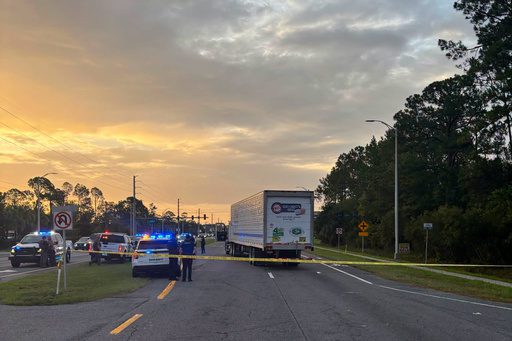
POLICY WIRE — Washington, D.C. — Another dawn, another highway, another grim statistic painted onto the sprawling canvas of America’s border security efforts. But this isn’t just about a tragic road fatality in St. Augustine, Florida. It’s about the relentless, grinding pressure of an immigration dragnet that—yet again—has left a body in its wake. The immediate cause of death? Being run down by a tractor-trailer. The deeper cause? A policy framework that, critics argue, pushes desperate individuals into perilous flight, often with deadly outcomes.
It went down early on a Tuesday, before the coffee had properly kicked in for most Floridians. Four individuals, perhaps just trying to make it to the next paycheque, were caught in the orbit of federal agents at a convenience store parking lot. These weren’t routine traffic stops. These were operatives from Immigration — and Customs Enforcement (ICE) and Homeland Security Investigations. And when the uniform showed up, folks bolted. It’s an instinctive, perhaps self-destructive, response to a threat that feels existential. [QUOTE_PLACEHOLDER]
One man, identified only as a 28-year-old in initial reports, sprinted across a busy thoroughfare, straight into the path of a massive semi-truck. Florida Highway Patrol Sgt. Dylan Bryan said in an emailed statement, ‘a man running from an encounter with immigration and other federal agents in Florida was struck and killed by a tractor trailer on Tuesday, authorities said.’ He wasn’t some isolated outlier, either. It was the third death in a week involving encounters with U.S. Immigration and Customs Enforcement agents, after similar fatalities — one by gunshot in Texas, another in Maine. For a system supposedly about orderly processes, it’s sure getting messy.
The incident marks a somber milestone: ‘at least the 10th death involving encounters with immigration agents since President Donald Trump launched his mass deportation campaign last year.’ This isn’t just an accident rate; it’s a pattern, etched in blood on American asphalt and soil. And for all the official disavowals—claims that pursuit often isn’t even happening when these individuals meet their untimely end—the reality on the ground feels starkly different.
Let’s not forget the sheer velocity of desperation these folks operate under. A Mexican national, the Department of Homeland Security confirmed it was ‘investigating an incident resulting in the death of a Mexican national,’ highlighting the geographical origins of many caught in this dragnet. But it’s not just Mexico. Honduras, Guatemala—they’re all represented in these grim statistics. They’re running from poverty, from gang violence, from the lack of opportunities back home. For some, getting to the U.S. means a chance, however slim, to send remittances back, maybe put food on their family’s table thousands of miles away. The stakes are immense, — and they often gamble everything.
Consider the reverberations, for instance, across the global South, from Manila to Mumbai, from Dhaka to Dakar. While these incidents play out in Florida and Texas, the news—amplified by global media and increasingly by social platforms—reaches communities where perceptions of America, both as a land of opportunity and as a rigid, unyielding enforcer, are shaped. When news filters back to villages in Pakistan or townships across the Muslim world that individuals are dying during encounters with U.S. immigration agents, it doesn’t just register as a local news item; it fuels narratives about perceived American callousness or an immigration system that’s seen as inhumane, regardless of the nuanced policy details.
This kind of reporting can, in subtle ways, affect everything from diplomatic relations to the messaging pushed by state-sponsored media in rival nations, providing ready-made fodder for those who seek to paint a negative portrait of American societal values and justice. It contributes to a broader sense of distrust in institutions already viewed with suspicion by some corners of the world, deepening existing ideological chasms. That’s why these stories, while seemingly contained to our borders, have a ripple effect that extends far beyond, touching on how we’re perceived on the world stage, especially among potential allies and migrant-sending countries.
State Rep. Angie Nixon, a Democrat hailing from Jacksonville, didn’t pull any punches, calling the death a ‘tragedy that resulted from an out-of-control agency.’ And she’s right, it doesn’t exist in a vacuum. She noted, ‘Whether it’s ICE agents gunning down a father in the streets of Houston, shooting a young man in Maine or conducting operations right here in Northeast Florida that result in a deadly crash, the outcome is the same: fear, chaos and death.’
We’ve seen this movie before. Last summer, Roberto Carlos Montoya Valdez, from Guatemala, perished near a Home Depot in California. Another chase, another impact, another life extinguished. And then there was Josué Castro Rivera, from Honduras, killed by a pickup truck in Virginia in October, having ‘resisted heavily and fled’ during what authorities called a ‘targeted, intelligence-based’ operation. The pattern here isn’t random. It’s consistent, — and it speaks to the intensifying, aggressive tactics deployed by federal agents.
The Mexican government, for its part, isn’t standing idly by. They’ve requested state attorneys general in the U.S. to take a hard look at these deaths. They’re looking for ‘possible criminal prosecution’ of those involved, pushing back against what they see as impunity. And you’ve gotta wonder: when does aggressive enforcement cross the line into state-sanctioned endangerment?
What This Means
This latest fatality, alongside its chilling predecessors, isn’t just about an individual accident. No, it signifies a broader and deeply troubling erosion of humanitarian considerations within immigration enforcement, one that often seems to elevate deterrence over dignity. Politically, these incidents pour gasoline on the fire of an already scorched debate about border policy, empowering critics of ICE while hardening the resolve of its supporters. For the agency, it translates into sustained — perhaps unmerited — accusations of an ‘out-of-control agency,’ forcing public relations damage control that often feels too little, too late. But don’t count on a swift change in policy; the political capital invested in ‘tough on immigration’ stances makes real shifts challenging.
Economically, there’s an unspoken cost here. These enforcement policies, while seemingly designed to save resources by reducing undocumented immigration, inadvertently generate staggering human capital losses—both directly through fatalities and indirectly through fear-induced displacement. It creates an underclass living in shadows, fearful of interacting with any official authority, impacting everything from labor participation to public health efforts. Also, consider the economic pressure placed on home countries. A consistent message of fatal risk on American soil does nothing to stem the tide of those seeking better lives; it just makes the journey more desperate and the risks more extreme. Nations like Pakistan, contending with their own economic hardships and significant expatriate communities, observe such U.S. enforcement approaches. And let’s be frank: it gives them little incentive to view U.S. foreign policy or diplomatic overtures in a positive light, especially when a lack of concern for migrant lives is perceived.
The U.S. government faces an increasingly complex problem. How do you maintain national sovereignty without inflicting profound, often fatal, harm on individuals seeking refuge or economic opportunity? The current strategy—evidenced by these tragic deaths—seems designed to instill a potent mixture of ‘fear, chaos and death’ in migrants. It’s a method that works, at least in the short term, but carries a heavy moral and diplomatic toll, staining the country’s global image and eroding the very humanistic values it often espouses on the international stage. But it’s probably a toll deemed acceptable by a certain segment of the populace, meaning we’ll see more headlines like this, not fewer. And for a deeper dive into policy and perception, consider this related piece on ICE Pauses Pursuits, or how other global dynamics affect policy in Beijing’s Growth Slowdown.