


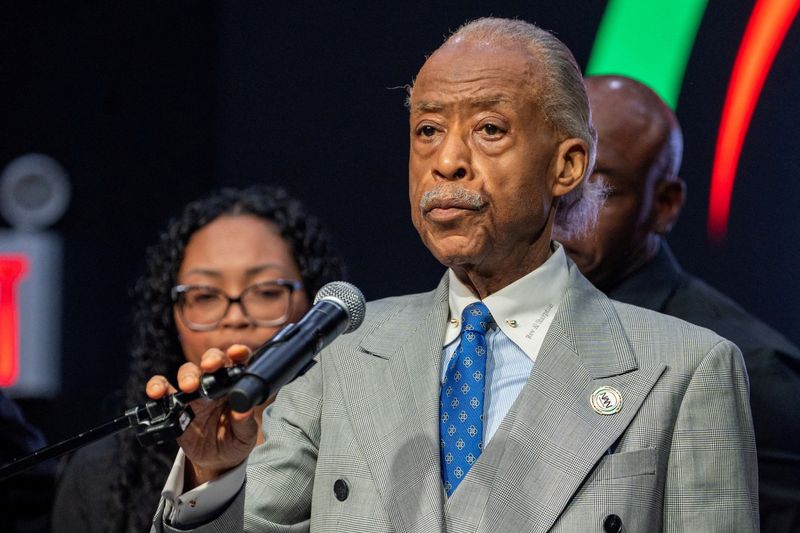
D.C.’s Drumbeat Returns: Civil Rights Coalitions Unveil ‘March on Washington’ Amid Franchise Fears
POLICY WIRE — Washington, D.C. — The cherry blossoms haven’t even shed their petals, yet a familiar, disquieting sense of dread has settled over the nation’s capital. It’s that old...

POLICY WIRE — Washington, D.C. — The cherry blossoms haven’t even shed their petals, yet a familiar, disquieting sense of dread has settled over the nation’s capital. It’s that old whisper, the kind that heralds a reckoning—one about who gets to cast a ballot and whose voice actually matters. Nobody’s really surprised, are they, when the struggle for basic democratic access seems to cycle back with such depressing regularity? But this time, it feels particularly sharp, doesn’t it?
It was never going to be an easy season. Not with legislative battles over electoral processes heating up faster than an August sidewalk. Now, a broad coalition of civil rights groups, fed up with what they’re calling a systematic attack on the very fabric of America’s democratic process, has formally announced plans for another large-scale March on Washington
. It’s an audacious move, resurrecting an echo from half a century past, meant to spotlight the erosion of voting protections across state lines.
They’ve put out the call, saying [QUOTE_PLACEHOLDER]—a sentiment that certainly cuts to the chase, if nothing else. The organizers, comprising a veritable who’s who of advocacy organizations, aren’t just raising an alarm. They’re hitting a full-blown siren. But you know what? That’s probably fair given what they’re up against.
State legislatures have been busy, very busy indeed, implementing a flurry of laws that critics contend make it harder for certain demographics to vote. From strict photo ID mandates to curtailed early voting periods and wholesale purges of voter rolls, it’s a strategy as subtle as a sledgehammer, many observers say. And it’s sparked a kind of righteous anger, reminding many of older, darker times when ballot access was overtly denied based on skin color or station. But hey, it’s not just about history looping—it’s about direct consequence.
This pushback, epitomized by the upcoming March, resonates far beyond America’s borders. For countries like Pakistan, still grappling with its own tumultuous journey through democratic experimentation, America’s struggles with internal electoral fairness offer a stark reflection. The manipulation of voter lists, the sudden appearance of new ID requirements, the constant wrangling over provincial election oversight—these aren’t alien concepts in places where democracy remains fragile. Seeing Washington, D.C.—supposedly the shining city on a hill—grapple so publicly with basic electoral integrity offers a sobering lesson, one often discussed in Karachi’s intellectual circles or amongst students in Lahore, about the unending nature of civic struggle. If even the world’s oldest continuous democracy can stumble this hard, what hope is there for newer, less stable ones? It’s a question that makes you stop — and think.
Organizers say the March will demand federal legislative action to restore and expand protections initially enshrined in acts like the Voting Rights Act. [QUOTE_PLACEHOLDER]. They’re not pulling any punches. Studies from the Brennan Center for Justice, a non-partisan law and policy institute, indicate that over 400 restrictive voting bills have been introduced in state legislatures since the last election cycle, with a significant number becoming law. That’s a lot of bills, and it certainly feels like a lot of deliberate policy choices being made, often far from the glaring spotlight of national media.
📄 POLICY WIRE WHITEPAPER PUBLISHED: PAKISTAN'S NATIONAL SECURITY POLICY PRIORITIES
👉 READ BY CLICKING HEREThe activists behind this renewed effort are aiming for maximum disruption, certainly; maximum attention, absolutely. They’ve lined up speakers from every corner of the progressive movement, and they’re hoping to draw hundreds of thousands to the capital’s arteries. [QUOTE_PLACEHOLDER]. And the White House? It’s been predictably guarded in its immediate comments, offering boilerplate reassurances about supporting fundamental rights without quite—you know—getting into the legislative trenches needed for real reform. Because, let’s be honest, it’s a mess, a proper political tar pit right now, with bills perpetually stuck in congressional purgatory.
This March isn’t just a protest. It’s an exercise in political theater, a high-stakes gambit to re-galvanize public support and pressure Congress to act, to remember its own words about safeguarding universal suffrage. But will it be enough? That, my friends, is the billion-dollar question.
What This Means
This announced March on Washington
isn’t simply a show of force; it’s a strategic re-escalation in the battle for electoral legitimacy, casting long shadows over the next election cycle. Politically, it cornerstoNes the growing chasm between a Republican Party increasingly comfortable with stricter voting measures and a Democratic Party desperate to federalize voting standards. It’ll undoubtedly become a wedge issue, mobilizing progressive bases while perhaps fueling backlash from those who view such federal intervention as overreach. But it also presents a genuine legislative challenge, forcing lawmakers to confront uncomfortable truths about electoral access and equity—especially when facing down a tide of angry citizens in their own backyard. And for members on the fence? It could be the very thing that sways their hand one way or the other.
Economically, while a single march likely won’t tank the Dow, the broader context of persistent political instability always sketches an uneasy line on investors’ radars. Businesses thrive on predictability; a nation consistently debating its core democratic functions offers the precise opposite. Long-term, if faith in democratic outcomes erodes, you can bet your bottom dollar on it affecting consumer confidence and perhaps even foreign investment, particularly in sectors where regulatory stability is paramount. Political unrest, even peaceful protest—often seen by international observers with wary eyes—doesn’t exactly project an image of steadfast economic prowess. And there’s a real cost to the time and effort politicians dedicate to these often partisan-driven skirmishes, diverting focus and resources from pressing economic challenges like inflation or infrastructure development.