


Internal Decay: New Mexico Deputies Busted for DEA Tipping; Global Implications Surface
POLICY WIRE — Albuquerque, USA — When the fabric of trust frays from the inside, it doesn’t just unravel; it rips. Such is the grim lesson emanating from New Mexico, where the justice system...

POLICY WIRE — Albuquerque, USA — When the fabric of trust frays from the inside, it doesn’t just unravel; it rips. Such is the grim lesson emanating from New Mexico, where the justice system recently peered into the shadowlands of local law enforcement—and didn’t much like what it saw. This isn’t just about a couple of bad apples; it’s about the deeper currents eroding institutional integrity, here and far beyond America’s high desert landscape.
It sounds like something from a procedural drama—deputies working against their federal counterparts. And yet, this particular drama played out for real in Bernalillo County. We’re talking about officers ostensibly dedicated to public safety, reportedly acting on motives as petty as professional jealousy. Imagine that—federal agents attempting to do their job, only to be kneecapped by locals who, investigators say back in 2021, Jessen Jr. and former BCSO detective Kyle Linker, were tipping off suspects because they thought DEA agents were trying to steal their targets. [QUOTE_PLACEHOLDER]
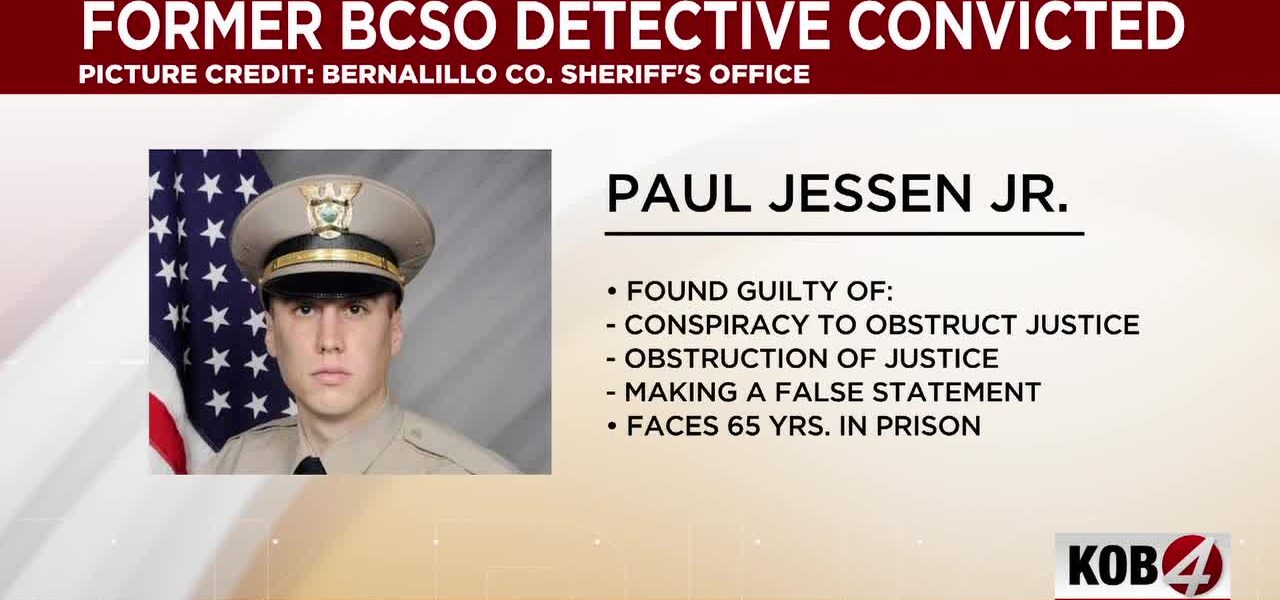
Paul Jessen Jr., a former Bernalillo County Sheriff’s Office detective has been convicted of tipping off DEA targets. That’s a direct hit to the perceived professionalism and shared mission across law enforcement agencies, regardless of whether they wear a federal or local badge. A jury delivered the verdict earlier this week, finding Jessen Jr. guilty of obstructing justice, — and making false statements. No surprise, really, given the circumstances.
His co-conspirator, former BCSO detective Kyle Linker, didn’t roll the dice with a jury. Instead, Linker plead guilty to the charges and was sentenced to eight months in prison and seven months of probation. Eight months isn’t exactly a life sentence, is it? Jessen, on the other hand, faces up to 65 years in federal prison. A stark difference in consequence for apparently similar transgressions—illustrating, perhaps, the justice system’s varying appetites for a protracted fight versus a clean plea bargain.
But think about what this means for the broader fight against narcotics. Drug syndicates aren’t just local operations anymore; they’re intricate global networks that stretch from the cartel hubs of Latin America all the way across the Atlantic, into the vast, often ungoverned spaces of Africa and, critically, through the logistical conduits of South Asia. The illicit drug trade, according to the United Nations Office on Drugs and Crime’s (UNODC) 2023 World Drug Report, generates hundreds of billions of dollars annually, with an estimated global illicit drug market value potentially exceeding 300 billion USD. That’s a staggering sum—enough to warp economies, corrupt officials, and fuel regional instability. When internal mechanisms of law enforcement begin to falter, even for reasons seemingly benign, the implications aren’t confined to a county line in New Mexico.
Consider the ripple effect. Each compromised law enforcement officer, whether in Albuquerque or across the Arabian Sea, sows seeds of doubt. In places like Pakistan, a nation often struggling with both internal corruption and the proximity to the world’s largest opium-producing region—Afghanistan—the perception of law enforcement integrity is a delicate thing. Incidents where police are found to be aiding, or even inadvertently benefiting drug operations, feed into public cynicism, making effective anti-narcotics work immeasurably harder. And because it’s already a struggle to get communities on board in areas rife with distrust, an event like this makes it all that much tougher to recruit informants, maintain intelligence pipelines, or secure popular support for crackdown operations.
📄 POLICY WIRE WHITEPAPER PUBLISHED: PAKISTAN'S NATIONAL SECURITY POLICY PRIORITIES
👉 READ BY CLICKING HEREWe’ve seen how geopolitical shifts and economic vulnerabilities in regions like the Middle East or around the Strait of Hormuz create fertile ground for illicit trade to flourish. It’s not a stretch to imagine that a system vulnerable to internal friction, even in a comparatively stable nation, creates similar cracks for those willing to exploit them. That internal competition between DEA and local BCSO agents—that idea of ‘stealing targets’—is precisely the sort of fractured internal dynamic that could, on a grander scale, undermine global counter-narcotics efforts, leaving doors ajar for powerful criminal elements. Jessen faces up to 65 years in federal prison, a stark reminder of how severely the government views this betrayal.
What This Means
This New Mexico case, for all its local specificity, really throws a spotlight on a universal challenge: maintaining uncompromised integrity within the institutions tasked with upholding law and order. From a policy perspective, it necessitates not just tougher internal controls and ethical training, but also a more seamless operational understanding between agencies. When state and federal bodies see each other as competitors rather than collaborators, the real victors are always the criminal enterprises they’re ostensibly fighting.
Politically, incidents like this feed into a broader narrative of government and institutional untrustworthiness—a narrative already thriving on social media and in parts of the public discourse. This erodes citizen confidence not just in police, but in the entire justice apparatus, leading to greater community disengagement. Economically, while this specific incident won’t crash the New Mexico stock exchange, the underlying dynamics of police corruption, however isolated, contribute to an environment less stable for investment and business—creating additional strain on a state like New Mexico, already grappling with other significant challenges. It’s a reminder that even seemingly small internal battles can have disproportionately large, systemic implications, both at home and abroad. They don’t just put operations at risk; they undermine the very credibility essential for effective governance.