

Beijing’s Electric Dream: Cracks Emerge in China’s EV Juggernaut
POLICY WIRE — BEIJING — They promised an electric future, didn’t they? Clean, silent, inexorably forward-moving. The very vision of modern progress, spearheaded, so it seemed, by a meticulously...

POLICY WIRE — BEIJING — They promised an electric future, didn’t they? Clean, silent, inexorably forward-moving. The very vision of modern progress, spearheaded, so it seemed, by a meticulously planned industrial complex in the heart of East Asia. But even carefully orchestrated prophecies sometimes hit unexpected potholes. Or, in this case, a jarring reverse.
China, the world’s undisputed kingpin of electric vehicle production and consumption, is finding its dominant narrative shifting. Not downwards in terms of sheer numbers—let’s be clear, they’re still moving millions—but certainly sideways, maybe even a little backwards in terms of unchecked growth and easy profit. This isn’t a collapse; it’s more like a particularly bad case of the jitters after a long, frenzied party. A subtle recalibration, perhaps. Or perhaps, something far grittier.
For years, Western capitals watched with a mixture of awe and unease as Beijing funneled billions into its New Energy Vehicle (NEV) sector. Subsidies, infrastructure, preferential policies—the whole works. And it worked. Until it didn’t quite work so perfectly anymore. Analysts are now openly whispering about market saturation, ferocious domestic price wars that bleed profit margins drier than the Gobi, and a consumer base that, post-pandemic, isn’t quite as flush or as keen on early adoption.
It’s not just a slump; it’s a symptom of a much larger economic pulse. “Every rapidly expanding sector experiences phases of adjustment. This is merely a testament to the maturation of our market and the intensifying, yet healthy, competition amongst innovators,” remarked Li Wei, spokesperson for China’s Ministry of Industry and Information Technology, in an oddly calm official briefing recently. But for domestic manufacturers, that “healthy competition” often feels more like a knife fight in a phone booth—many won’t walk out.
The Great EV Reversal?
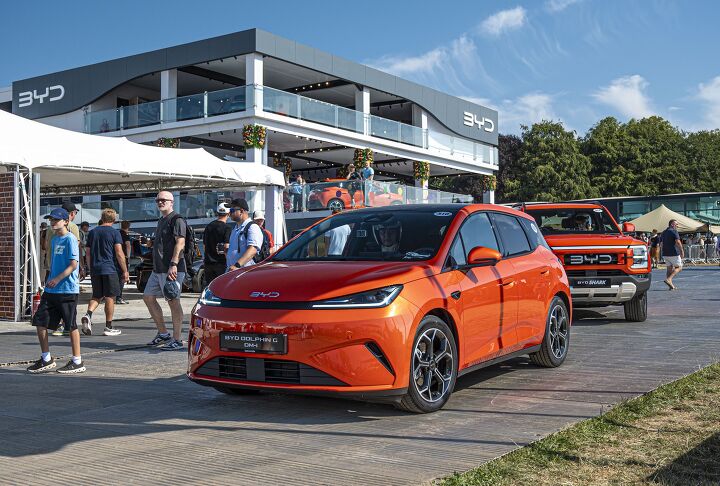
You’ve got giants like BYD still making hay, sure. But then you’ve got dozens of smaller players, those wannabe Tesla-killers, staring down an abyss. What was once a thriving landscape, brimming with startups, has become a graveyard for ambitions—and investor capital. The China Association of Automobile Manufacturers (CAAM) recently reported that electric vehicle sales growth slowed to 23.5% year-on-year in Q1 2024. That sounds respectable, I guess, until you remember the triple-digit leaps and bounds it was making just a couple of years prior. This deceleration hits differently, you know?
The impact ripples outwards, too. Pakistan, for instance, a cornerstone of China’s Belt and Road Initiative, has been quietly cultivating its own aspirations for EV adoption and even local assembly. Cheap Chinese imports, often priced below anything locally sustainable, were always part of the plan. But if Beijing’s domestic demand falters, does that simply mean a larger, perhaps desperate, glut of EVs aimed at export markets like Pakistan and others across the Muslim world? Or does it mean Chinese manufacturers pull back, hoarding capital — and expertise at home as things get tougher?
📄 POLICY WIRE WHITEPAPER PUBLISHED: PAKISTAN'S NATIONAL SECURITY POLICY PRIORITIES
👉 READ BY CLICKING HEREDr. Anya Sharma, a geopolitical economist at the Asian Futures Institute, doesn’t mince words. “What’s happening in China’s EV market isn’t just an automotive story. It’s a bellwether for Beijing’s industrial strategy. If they can’t manage this immense capacity internally, they’ll inevitably look to offload it—subsidized, of course—onto countries that can ill afford to develop their own industries, especially within their sphere of influence across South Asia. It’s not just about selling cars; it’s about exporting industrial policy.” It’s a harsh calculus, isn’t it? A game of thrones, but with charging ports.
And then there’s the international pushback. European nations, long wary of a flood of inexpensive Chinese EVs threatening their own legacy automakers, are tightening regulations, threatening tariffs. It’s a complicated, volatile brew. Beijing wants to lead the world in new technologies; it has pumped an ungodly sum into this vision. But the world—and even its own citizens—aren’t always going to play along perfectly with the script.
What This Means
This isn’t just about whether Geely sells fewer sedans than projected. It’s about the underlying stability of a significant chunk of the global economy — and China’s strategic ambitions. Politically, a prolonged slump risks domestic unrest among a growing middle class that’s been sold on prosperity. It might even force Beijing into more aggressive trade postures, potentially exacerbating already tense relationships with Western powers who see the EV market as the next frontier for technological dominance. But this kind of economic jostling isn’t confined to grand geopolitics. The price of allegiance in these shifting economic tides is real, felt by nations relying on China’s sustained growth.
Economically, if this slowdown deepens, you’re looking at significant job losses in manufacturing, a crisis of confidence in a sector once deemed bulletproof, and potentially, a global supply chain re-evaluation. Less demand for raw materials like lithium and cobalt might seem like good news for prices, but it destabilizes mining communities and emerging economies dependent on those exports. if Beijing gets serious about offloading excess capacity abroad, it will redefine competition for automakers worldwide, affecting local industries in places like Turkey, Indonesia, and, yes, Pakistan. Nations grappling with their own domestic stability gambits will find these currents particularly disruptive. Because ultimately, when a leviathan sneezes, the world catches a cold—electric or otherwise.