

The White Sox’s Bet on Japanese Power: A Geopolitical Metaphor for a Slumping Market
POLICY WIRE — Chicago, USA — When you’re stuck in the mire, chasing a ghost of past glories, sometimes you clutch at anything—a stray comment, a polling uptick, or, in the strange, economic microcosm...

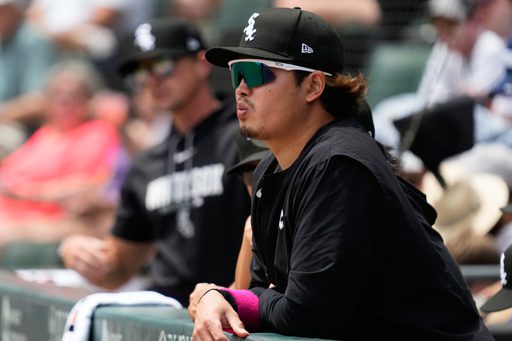
POLICY WIRE — Chicago, USA — When you’re stuck in the mire, chasing a ghost of past glories, sometimes you clutch at anything—a stray comment, a polling uptick, or, in the strange, economic microcosm of Major League Baseball, a star player returning from injury. The Chicago White Sox, a franchise whose performance frequently approximates a distressed bond market, are banking hard on the return of Japanese slugger Munetaka Murakami this Friday. It isn’t just about baseball, of course; it’s about a multi-million-dollar investment, sagging morale, and the faint, persistent whiff of desperation.
Murakami, out with a strained right hamstring since May 29, is slated to rejoin a lineup that’s been flailing, hitting a paltry two runs and 15 hits over their recent three-game series against the Boston Red Sox. Their recent form is as bleak as a quarterly earnings report deep in the red. The team currently holds a 47-45 record, barely treading water in a division as sluggish as the AL Central itself. The very notion of their [QUOTE_PLACEHOLDER] is debatable—they’re, charitably, in a virtual tie with Cleveland. They’ve dropped three in a row, six of eight overall. It’s hardly the picture of an athletic juggernaut, is it? More like a regional power teetering on the edge of a sovereign debt crisis.
His return feels less like a strategic masterstroke and more like a CEO announcing a ‘game-changing’ product after months of dismal sales figures. Murakami, who grabbed his right hamstring during a 4-3 victory over the Detroit Tigers, made two tune-up appearances with Triple-A Charlotte, going 2 for 7 with a double. His brief rehab stint seems to have been enough to convince White Sox manager Will Venable, who told reporters, [QUOTE_PLACEHOLDER]. One can almost hear the sighs of relief from the team’s upper management, perhaps imagining stock prices (or attendance figures) nudging back into the black.
But can one man truly reverse a systemic decline? At the time of his injury, the 26-year-old Japanese rookie was indeed a statistical marvel, ranking among major league leaders with 20 homers, 41 RBIs, 43 runs, and a .947 OPS. This kind of raw power is an economic commodity, pure and simple, acquired through a hefty $34 million, two-year contract signed last December. And it’s not just a physical presence; there’s a psychological component too. White Sox outfielder Andrew Benintendi was quoted saying, [QUOTE_PLACEHOLDER]. He’s talking about ‘energy,’ sure, but what he really means is confidence, market stability, a reason to believe the tide might turn. When a major import from the Pacific Rim falters, the ripple effect isn’t confined to the dugout.
The White Sox went a disappointing 17-18 while Murakami was sidelined—a losing record for a team desperately trying to carve out a winning narrative. This period of absence highlighted just how much capital, both financial — and emotional, they’ve invested in him. And Venable underscored the larger stakes, stating, [QUOTE_PLACEHOLDER]. It’s about more than just activating a player; it’s about activating hope for a disillusioned fan base, or perhaps, for investors wary of prolonged underperformance. Think about it: a foreign player, arriving with fanfare, then sidelined, now making his comeback—it’s a narrative not unlike the cautious optimism surrounding renewed foreign direct investment in emerging markets like, say, Pakistan or Indonesia, after periods of political instability or economic downturn. They’re pinning a lot on this fellow.
📄 POLICY WIRE WHITEPAPER PUBLISHED: PAKISTAN'S NATIONAL SECURITY POLICY PRIORITIES
👉 READ BY CLICKING HEREWhat This Means
This saga, superficially about America’s pastime, plays out with clear geopolitical — and economic undertones. The arrival of an Asian superstar like Murakami isn’t just a boon for the White Sox; it represents the globalization of talent, a key indicator of market interconnectivity. His lucrative contract and the high expectations mirror the economic calculations nation-states make when securing high-skilled immigration or striking trade deals with key regional players. But when that investment, that talent, gets sidelined, the system shows its fragility. It’s a microcosm of the supply chain woes that can hobble global economies, or the political volatility that can scare off crucial overseas partners. A nation, or a team, that invests heavily in a ‘silver bullet’ solution—be it a star player or a specific economic policy—without addressing underlying structural weaknesses, is often doomed to cyclical disappointments. It’s a recurring theme for teams (and nations) hoping a single foreign policy triumph or an infusion of external talent will fix inherent internal shortcomings. Think of countries in South Asia—let’s say Bangladesh or even parts of the UAE—attracting skilled foreign labor for specific, high-tech sectors. Their immediate economic uplift can be real. But what if those skilled workers face unexpected challenges, bureaucratic hurdles, or, worse, a sudden health crisis that puts them out of commission? The initial boost might wane, exposing other, unresolved domestic issues. This isn’t just a baseball story; it’s a policy dilemma. Will Murakami’s return be a genuine turnaround catalyst, or merely a temporary market correction masking deeper structural challenges? Only time—and the unforgiving scoreboard—will tell.
But the pressure’s on, no doubt. The franchise needs more than just a momentary spark. They need sustained momentum, that elusive consistent performance that tells stakeholders their investment is sound, not just a desperate gamble. The team, struggling in what’s effectively a two-horse race, looks an awful lot like a political party after a divisive election, trying to re-energize its base with a familiar, charismatic face. And here we’re, watching this unfold—just another Tuesday in the grand, absurd theater of sports, business, and, somehow, politics. For more insights into market fluctuations tied to athletic fortunes, one might consider the Angels’ Melodrama Mirrors Broader Malaise.