


Shadow Outbreak: Congo’s Ebola Fight Drowns in Invisible Chains, World Holds Breath
POLICY WIRE — Goma, DRC — The grim dance is a familiar one, but this time, the steps are tragically obscure. Health officials in Eastern Congo aren’t just fighting a virulent disease; they’re...

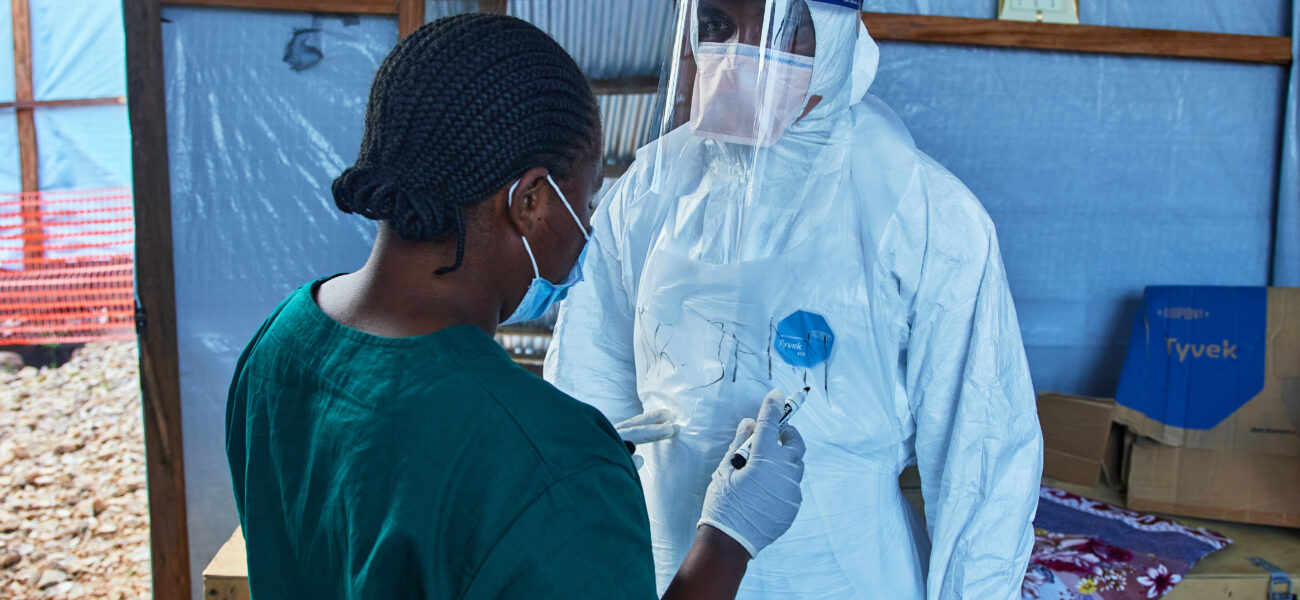
POLICY WIRE — Goma, DRC — The grim dance is a familiar one, but this time, the steps are tragically obscure. Health officials in Eastern Congo aren’t just fighting a virulent disease; they’re wrestling with ghosts, with epidemiological chains that vanish into the mist of insecurity and mistrust. Most of the fresh Ebola infections springing up across North Kivu Province don’t connect to known cases—a terrifying statistical black hole suggesting the outbreak isn’t merely outrunning the response, but operating in an entirely different dimension.
It’s like trying to extinguish a fire by stomping only on the visible flames, while unseen embers smolder everywhere. But they’re not just embers; they’re human lives. We’re talking about new infections materializing from thin air, or at least, from sources that baffled surveillance teams can’t trace. This isn’t just a hiccup in contact tracing; it’s a gaping hole, a failure that screams volumes about the deepening complexity and entrenched problems plaguing public health efforts in the region. One official, a doctor on the ground, lamented, “We’re pushing rocks uphill, trying to contain an enemy that keeps changing its disguise. Every time we identify a cluster, three more pop up without any logical origin. It’s absolutely disheartening.”
The numbers don’t lie. A World Health Organization (WHO) report indicates that a staggering 55% of new cases registered over the past weeks emerged from these unidentified transmission chains. That’s more than half—an absolute catastrophe for any disease containment strategy, let alone for one as deadly and easily transmitted as Ebola. When you can’t see the links, you can’t break them. And when you can’t break them, the virus laughs, then spreads.
“We’re fighting ghosts in the dark,” stated Dr. Jean-Jacques Mbungani, the Congolese Minister of Public Health, his voice tinged with frustration during a recent press conference. “Every time we think we’ve cornered this virus, it reappears, sometimes weeks later, from connections we simply can’t trace. It’s exasperating—and dangerous.”
But the problem goes beyond mere logistics. It’s political. It’s societal. The eastern DRC, specifically provinces like North Kivu — and Ituri, are battlegrounds for dozens of armed groups. Security is a joke. Trust in external authorities—and even internal ones—is practically nonexistent, a legacy of decades of conflict and exploitation. Health workers—the frontline soldiers in this biological war—are routinely threatened, sometimes even attacked. And this, of course, isn’t lost on the communities they’re trying to help, creating a perfect storm for a pathogen that thrives on close human contact and a population too wary to trust modern medicine.
Because how do you contact trace effectively when people flee for their lives from violence, crossing district lines, sometimes even national borders? How do you isolate the sick when fear of stigmatization, or the desperate need to care for family, drives people underground? The answers aren’t simple, — and the current strategy clearly isn’t catching up. You see, the outbreak isn’t just medical; it’s a social — and political phenomenon too. And this one’s got legs, even without visible chains.
📄 POLICY WIRE WHITEPAPER PUBLISHED: PAKISTAN'S NATIONAL SECURITY POLICY PRIORITIES
👉 READ BY CLICKING HEREConsider the geopolitical echoes. Unchecked diseases in one corner of the world don’t just stay there. A senior WHO official, speaking anonymously, didn’t mince words. “The world views these outbreaks through a myopic lens, assuming they’ll be contained within certain geographical confines. But these pathogens don’t carry passports. An uncontrolled outbreak anywhere poses a threat everywhere, potentially devastating regions like the densely populated urban centers across South Asia, for instance, where the human cost of a similar scale of contagion would be catastrophic. The complacency is frankly stunning.” Imagine Dhaka or Karachi grappling with what Goma is enduring. It’s a sobering thought.
What This Means
The Democratic Republic of Congo’s struggle isn’t just about Ebola; it’s a stark reminder of what happens when governance collapses, when aid becomes entangled in local politics, and when human empathy stretches thin. The invisible chains of this outbreak represent the hidden cost of instability. Economically, repeated outbreaks decimate already fragile local economies, disrupting trade and driving away what little foreign investment might exist. It forces already impoverished communities further into a cycle of desperation, with long-term implications for everything from agriculture to infrastructure. Politically, the lack of effective control—or even transparent data on control efforts—erodes what little public trust remains in the government and international organizations. This breeds further resentment, providing fertile ground for the very armed groups that hinder intervention efforts.
From a global health perspective, the situation is a flashing red light. It highlights the vulnerability of the entire international system. If a contained outbreak in a conflict zone can become this elusive, then the models for pandemic preparedness—especially concerning novel pathogens or re-emerging threats—are deeply flawed. For nations like Pakistan or those in the broader Muslim world, already facing their own internal health and socio-political challenges, the message is chilling. Border controls can only do so much; true security comes from eradicating the threat at its source. But eradicating Ebola in the DRC requires more than medicine; it demands an honest reckoning with conflict, poverty, and decades of fractured trust.