


Europe’s Shield or Empty Promise? Nations Unveil Ambitious Missile Defense Bloc
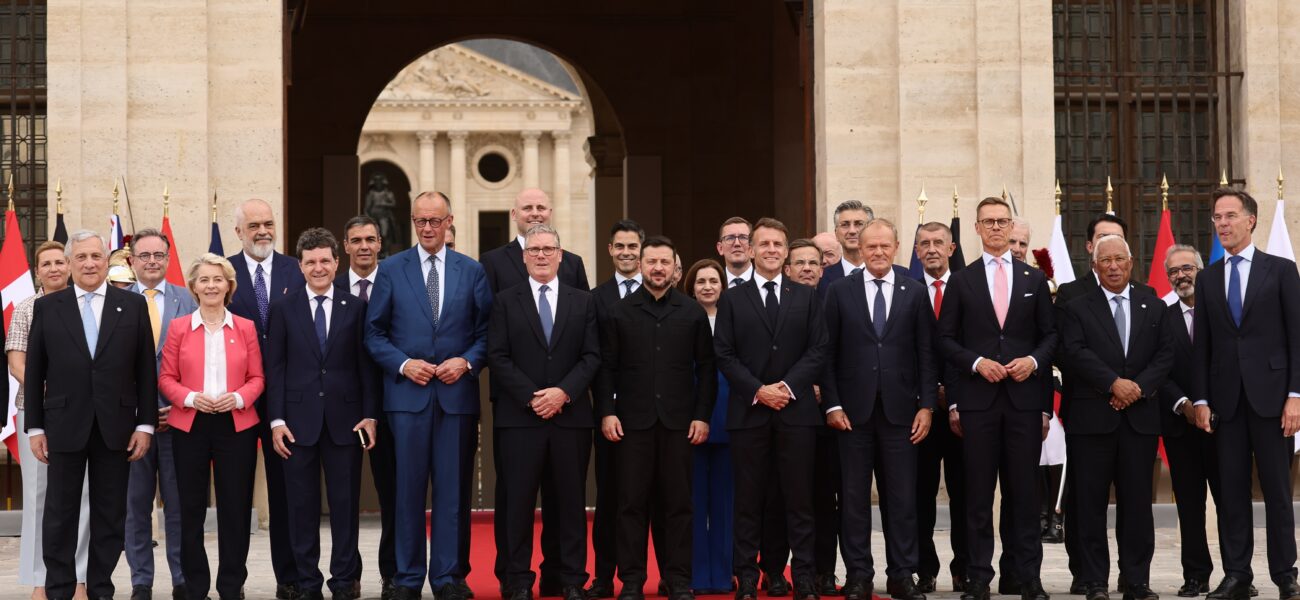
POLICY WIRE — Brussels, Belgium — It’s often the quiet moments, not the grand pronouncements, that truly tell a story. While ten European nations, alongside Ukraine, crowed about a new coalition for...

POLICY WIRE — Brussels, Belgium — It’s often the quiet moments, not the grand pronouncements, that truly tell a story. While ten European nations, alongside Ukraine, crowed about a new coalition for ballistic missile defense this week, the conspicuous lack of comment from certain Eastern capitals spoke volumes. Because, really, who’s this multi-billion-dollar shield actually *for*?
The formal declaration, issued from what’s been dubbed the ‘Brussels Air Defense Summit,’ laid out ambitions for an integrated system, one meant to protect the continent from the burgeoning threat of long-range projectiles. No small feat, that. This isn’t just about intercepting some rusty old SCUD; we’re talking about hypersonic glamour missiles, the stuff of bad spy thrillers and very real strategic nightmares. But it’s an open secret that much of this grand scheme, for all its pan-European packaging, feels distinctly aimed eastward. And who can blame them?
The new alliance brings together, rather uneasily, partners like the United Kingdom, Germany, France (though Parisian enthusiasm seems… modulated), and Poland, alongside newer NATO members and, of course, Kyiv itself. This isn’t an ‘Iron Dome’ for all of Europe—it’s far more complex and politically fraught. It aims for a layered defense, combining existing — and nascent technologies. “We’ve witnessed the devastating impact of unchecked aggression on civilian infrastructure,” remarked Ukrainian Defense Minister Oleksiy Reznikov, his voice reportedly tinged with a weariness born of months on the front lines. “This coalition isn’t merely about technology; it’s a commitment to a future where deterrence is real, not just a concept bandied about in diplomatic salons.” That’s a fair point, one must concede. The missiles have certainly gotten *real* lately.
But the practicalities? Oh, they’re messy. Standardizing systems, sharing sensitive intelligence, deciding who gets protected first when the big one actually flies—it’s a logistical migraine waiting to happen. Consider the staggering cost, too. Estimates suggest developing and deploying a truly comprehensive Europe-wide system could run into the hundreds of billions. Back in 2022, Germany alone announced a €100 billion special fund for its armed forces, a significant chunk of which is earmarked for air defense modernization, reflecting a continent-wide scramble for capabilities. (Source: German Federal Government statements, 2022).
General Charles Q. Brown Jr., Chairman of the U.S. Joint Chiefs of Staff, offered a slightly more tempered endorsement, stating, “Integrated air and missile defense remains a critical component of collective security. This collaborative effort signifies a growing understanding across allied nations that proactive, networked defenses are essential to safeguarding our shared interests and territories.” Diplomatic speak for, “Look, guys, you gotta protect yourselves. And we’ll help, but don’t expect us to do all the heavy lifting.”
📄 POLICY WIRE WHITEPAPER PUBLISHED: PAKISTAN'S NATIONAL SECURITY POLICY PRIORITIES
👉 READ BY CLICKING HEREAnd let’s not pretend this is a clean, purely European affair. The shadows of global power plays, economic reliance—say, for advanced components or even just plain manufacturing capacity—and long-standing arms deals linger. Even something as seemingly localized as a European missile shield finds itself intersecting with the broader geopolitical chessboard, including the complexities of technology acquisition where, for instance, Germany’s reliance on various global supply chains becomes a quiet but persistent undercurrent in its defense calculus. It’s a tricky game. Any significant defense alignment in one theatre naturally prompts ripples elsewhere, including places like Pakistan, which routinely reviews its own integrated air defense networks in light of regional tensions and evolving capabilities in neighboring states. After all, everyone wants to know if they can duck the storm.
What This Means
This nascent coalition, despite its considerable operational hurdles, represents a significant recalibration of European security strategy. For Ukraine, it’s a tangible step towards deeper integration with Western defense architectures, potentially providing layers of protection critical to its long-term sovereignty. For NATO, it offers a de-facto strengthening of its eastern flank without necessarily invoking Article 5 for every new system deployed, sidestepping some political sensitivities. However, the move is almost certainly going to be framed by adversaries as an escalatory step, potentially accelerating the development or deployment of offensive missile systems designed to defeat such defenses. Economically, expect a boom for defense contractors and a renewed push for domestic arms production, a strategic independence play Europe has long desired but rarely executed effectively. Politically, it signals a deeper, perhaps irrevocable, divide between nations seeking collective defense against perceived threats and those from whom the threats emanate. The lines are drawn, literally, in the sky.