


Germany’s Unseen Overlord: Beijing’s Economic Blitz Reshapes Berlin’s Industrial Soul
POLICY WIRE — Berlin, Germany — For decades, the phrase “Made in Germany” was shorthand for precision engineering, quality, and economic prowess. But peek behind the neatly drawn curtains of Europe’s...

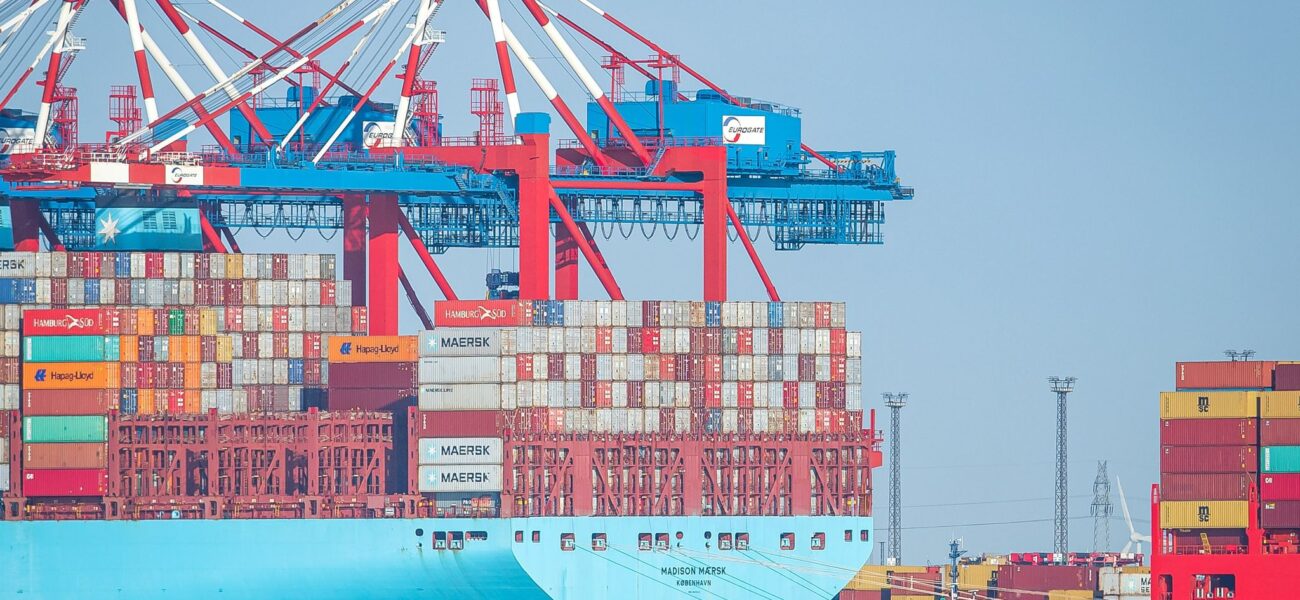
POLICY WIRE — Berlin, Germany — For decades, the phrase “Made in Germany” was shorthand for precision engineering, quality, and economic prowess. But peek behind the neatly drawn curtains of Europe’s economic powerhouse today, and you’ll find a less flattering, increasingly disquieting truth: its storied factories are, at an ever-accelerating clip, becoming mere reception points for a deluge of goods stamped “Made in China.” This isn’t just about shifting market shares; it’s a silent, bloodless reconquest, reshaping Germany’s industrial soul whether Berlin likes it or not.
It’s not just a subtle drift, it’s a demonstrable deluge. Look at the balance sheets, and you’ll see China’s industrial might is pouring into Germany’s consumer and industrial sectors with a ferocity that belies Berlin’s polite pronouncements about “de-risking.” While German policymakers fuss about securing supply chains and reducing dependency on Beijing, the actual trade figures tell a blunt, unvarnished story: Chinese exports to Germany aren’t just growing; they’re surging, leaving German imports trailing in their wake, looking somewhat out of breath.
And let’s be frank: the sheer volume is, quite frankly, a gob-stopper. Germany’s Federal Statistical Office recently reported a stark imbalance. In the last financial year alone, Chinese imports to Germany leapt by nearly 18% year-on-year, a truly robust performance for Beijing’s exporters. Conversely, German goods heading eastward barely registered a pulse, crawling up a paltry 3.5%. This isn’t parity; it’s an economic skew, and it begs a pile of uncomfortable questions for Europe’s industrial stalwart.
This dynamic isn’t exactly fresh news, but its acceleration certainly gives pause. “We’re navigating an exceptionally complex global landscape,” offered a senior German Economy Ministry official, requesting anonymity to speak freely. “Of course, diversifying our supply chains is paramount, but China remains an undeniable force—its market is vast, and its production capacity, well, it’s virtually unmatched. You don’t just cut ties with that kind of economic gravity.” He paused, perhaps contemplating the ironies. But for Beijing, it’s business as usual—and it’s blooming.
“Our economic engagement with Germany is one of mutual benefit, reflecting the robust global demand for Chinese innovation and manufacturing efficiency,” stated Wang Lei, a spokesperson for China’s Ministry of Commerce, in a recent media briefing that felt less like diplomacy and more like a victory lap. “It shows the discerning choices made by international consumers and industry leaders who seek value and quality.” And who’d argue with ‘value’ when it arrives by the container-ship load, ready to undercut domestic alternatives?
But the true story isn’t just in the numbers between these two giants. It’s also about the wider chessboard. Look east, to Pakistan for instance—a key node in China’s Belt and Road Initiative (BRI). The flow of Chinese goods into Pakistani markets, often enabled by Beijing’s infrastructure investments, paints a remarkably similar picture of burgeoning influence and economic asymmetry. Whether it’s consumer electronics in Karachi or specialized machinery in Frankfurt, the pattern is consistent: China produces, and the world consumes, often more from China than it sells back. It’s an economic one-way street, expanding from the dusty roads of Central Asia right up to the Autobahns of Germany.
This evolving trade relationship, or perhaps better termed, a strategic realignment, challenges the very notion of ‘economic security’ in the West. It forces Germany—and by extension, the entire European Union—to confront a stark paradox: the more it talks about decoupling or de-risking, the more entangled it seems to become in China’s ever-tightening economic embrace. And it’s not just about gadgets; it’s about critical industrial components, renewable energy technology, and the everyday stuff that keeps an advanced economy humming.
📄 POLICY WIRE WHITEPAPER PUBLISHED: PAKISTAN'S NATIONAL SECURITY POLICY PRIORITIES
👉 READ BY CLICKING HEREWhat This Means
Germany’s surging dependence on Chinese imports, juxtaposed with its lagging exports, sketches a particularly troubling economic landscape for Berlin. This isn’t just about an unfavorable balance of trade; it’s a direct threat to the long-term viability of specific German industries—many of which can’t compete with China’s manufacturing scale or pricing. It spells an era where ‘Made in Germany’ could well become a niche brand, rather than a global standard.
Politically, this imbalance severely handcuffs Germany’s strategic autonomy. How loudly can you criticize human rights abuses or geopolitical aggressions when your industrial base is deeply tethered to your antagonist’s supply chains? The push for ‘de-risking’ starts to look like a desperate scramble, more PR exercise than genuine policy, as economic realities bite hard. It puts the entire EU bloc in a tricky spot, too, as Berlin’s vulnerabilities translate into continental fragility. When Europe’s largest economy leans heavily on Beijing, the collective bargaining power of the EU erodes considerably. Just look at the challenges India faces trying to untangle its plastic problem from its massive, imported waste stream – a stark reminder of deep supply chain complexities.
Economically, expect sustained pressure on German wages, manufacturing employment, — and innovation capacity. Why invest heavily in costly R&D for products when cheaper, similar Chinese alternatives are just a cargo ship away? It’s a vicious cycle that prioritizes short-term cost savings over long-term industrial resilience. But these kinds of structural shifts are notoriously slow to correct. And as Beijing keeps pumping out goods, Germany keeps opening its ports—it’s a dynamic that defines the new global order, much to the quiet chagrin of traditional economic powers.
The subtle erosion of German industrial supremacy at home by Chinese imports signals a broader tectonic shift. This isn’t just a business cycle blip; it’s a reorientation of global manufacturing power, and Europe—despite its bold pronouncements—is finding itself increasingly on the receiving end. One has to wonder: how long until the legendary industrial might of Germany becomes a legend relegated to history books, while its future is firmly minted in China?